
“For I know that in me (that is, in my flesh) dwelleth no good thing… O wretched man that I am! Who shall deliver me from the body of this death?” (Romans 7:18-24)
The Epistle and the Experience
When the Apostle Paul wrote to the church at Rome, admitting that a war raged within his own members, he was not offering abstract theology. He was naming the human condition. Romans 7 is not a detached doctrinal treatise; it is a confession. It is the apostle’s testimony of a life caught between conviction and contradiction, desire and dysfunction. Paul exposes the tension between who we are called to be and who we find ourselves becoming under pressure.
Long before I learned how to parse Greek verbs or engage Pauline dualism through exegetical method, I recognized that tension. I recognized it in my father.
My father, Allen L. Hollie Sr., spent much of his life incarcerated. Our relationship did not unfold through proximity or presence, but through paper — letters sent from behind prison walls. Those letters were filled with Scripture, wisdom, longing, regret, and hope. They were handwritten epistles — ink and Spirit interwoven. They taught me early that even behind iron bars, the Spirit of God can still breathe. They taught me that confinement cannot cancel calling and that grace often speaks most clearly from places society has written off.
A Child’s Visitation and a Lifetime of Questions
My earliest memory of my father is not a ball game, not a birthday celebration, not a Saturday morning breakfast. It is a prison visitation room. I still remember the metallic echo of the gate slamming shut behind us, the hum of fluorescent lights overhead, and the cold smell of concrete floors beneath our feet. My siblings and I walked into a world that children should never have to navigate.
When visitation time ended, I clung to my father’s neck and began to cry. He held me and tried to comfort me as best he could, saying,
“Don’t cry — everything’s going to be all right.”
That sentence became both my comfort and my contradiction. Everything in me wanted to believe him, yet nothing around me seemed to confirm that promise. When you grow up visiting a parent behind bars, your innocence matures too early. You learn to carry questions that your heart is not yet equipped to answer. You learn that incarceration does not just remove a person — it removes stability, affection, security, and consistency from an entire household.
Even today, when I walk into correctional facilities to minister, I still hear the faint echo of that gate closing behind me. I still feel the weight of that childhood ache. Incarceration becomes a generational shadow long before society ever names it a statistic.
Captivity as Condition and Crisis
Theologically, captivity is humanity’s oldest inheritance. Sociologically, it has become America’s most enduring crisis. The United States incarcerates a higher percentage of its citizens than any nation on earth. According to the Federal Bureau of Prisons, approximately 43% of people released from federal custody are rearrested, and the Government Accountability Office reports that nearly half return to prison within three years.(1) These figures do not merely describe individual outcomes; they expose a system designed to recycle bodies through confinement.(2)
For families — especially Black families — involvement with the criminal legal system is rarely a single event. It becomes a systemic ecosystem that shapes identity, finances, emotional health, educational opportunities, and spiritual formation. Research has consistently shown that incarceration produces multi-generational consequences, particularly for children left to navigate instability, stigma, and loss.(3)
Returning citizens encounter legalized barriers including employment discrimination, housing bans, revoked professional licenses, voter disenfranchisement, and limited access to health care and education. Recidivism, then, is rarely about moral deficiency; it is about structural obstruction — a cycle reinforced by policies that punish long after a sentence has been served.(4)
The same communities most heavily policed are often the least resourced. This is not accidental. It is historical. It is structural. It is what I call America’s ecclesiology of exclusion — a moral architecture that determines who is worthy of restoration and who must remain bound. Legal scholar Michelle Alexander has argued that mass incarceration functions as a racialized system of social control — one that extends punishment far beyond prison walls and into housing, employment, civic participation, and generational mobility.(5)
The Renewing of the Mind
Scripture insists that transformation begins internally.
“Be transformed by the renewing of your mind” (Rom. 12:2).
The data confirms what theology proclaims. A landmark RAND Corporation study found that incarcerated individuals who participate in educational programs are 43% less likely to return to prison(6), and that every dollar invested in prison education saves $4-5 in re-incarceration costs.(7)
When the mind is renewed, hope is restored. When hope is restored, behavior can change. But renewal requires access, investment, and community support. When systems withhold education, mental health care, and stable reentry pathways, they do more than punish individuals — they perpetuate bondage. Many returning citizens desire freedom but are released into conditions that function like captivity without bars.
Letters as Liturgy
My father’s letters were theology in motion. Like Paul, he wrote honestly about struggle while clinging stubbornly to hope. In one letter, he outlined what he called the “Hollie bloodline” — a generational map of gifts, strengths, vulnerabilities, and spiritual warfare. He warned me,
“Destiny without discipline becomes destruction.”
Those letters became roadmaps for my own life. They taught me that sanctification and struggle coexist, that holiness is formed in tension, and that grace often works its deepest miracles in the shadows of failure. His handwriting taught me what formal theology later confirmed: Grace can carve its way through concrete.
Release & Freedom
Years later, I stood beside my father’s hospital bed as nurses and correctional officers removed the shackles from his wrists. Guards stepped back. For the first time in decades, he was unbound. I prayed — not for healing, but for rest. He looked at me and whispered, “OK.”
That one syllable carried the weight of tetelestai —“It is finished.” Freedom finally arrived, not through parole or policy, but through Providence.
In Greek, eleutheria means more than release; it means restoration to purpose. Freedom is not simply escape from a system — it is reclamation of identity. When I preached my father’s eulogy, titled “Finally Free,” I realized I was not naming death. I was proclaiming redemption.
His earthly release was delayed. His eternal release was guaranteed. After my father transitioned from his earthly assignment to his eternal home, and the warden told me that I could have his remains, I couldn’t help but feel perplexed at how easy it was for me to gain access to him in death and not in life.
Connecting the Personal to the Systemic
My story is not exceptional. It is representative. Millions of children grow up navigating prison visits, financial strain, emotional confusion, inconsistent communication, social stigma, and the quiet grief of What could life have been? Families of the incarcerated carry burdens never acknowledged in policy language.
They carry disappointment and resilience, shame they did not create, and hope they cannot afford to lose.
Recidivism, then, is not merely returning to a cell. It is returning to a cycle — a cycle systems reinforce and society normalizes.(8)
Throughout Scripture, God is consistently revealed as the One who brings prisoners out of dungeons (Isa. 42:7), proclaims liberty to captives (Isa. 61:1), hears the cries of the oppressed (Exodus 3:7), and breaks chains at midnight (Acts 16:26).
Jesus inaugurates his ministry with unmistakable clarity:
“He has sent me to proclaim release to the captives.” (Luke 4:18)
The gospel is not merely about saving souls for heaven. It is about reordering life on earth toward justice, mercy, and restoration. If Christ’s ministry frees captives, then the church’s ministry must confront the cages — both physical and spiritual — that keep people bound.
Imagining What the Church Can Do
If the church is to embody liberation, here is where we must begin:
-
Create spaces of belonging for returning citizens — spaces free from suspicion and full of dignity.
-
Advocate for fair housing, employment reform, and sentencing justice.
-
Support families of the incarcerated, especially children navigating silent trauma.
-
Teach a theology of restoration, not respectability.
-
Partner with reentry organizations — not as saviors, but as companions.
Recidivism decreases when community increases. Paul ends Romans 7 not with despair, but with gratitude:
“I thank God through Jesus Christ our Lord.”
My father’s life — and perhaps your own — testifies to this truth:
Deliverance is not reserved for the perfect. It is offered to the willing, the weary, and the wounded. Freedom is not the conclusion. Freedom is the beginning of becoming.
My father is finally free. And by God’s grace, so are we.
Endnotes
(1) Federal Bureau of Prisons. (2016). Recidivism among federal offenders. U.S. Department of Justice.
(2) U.S. Government Accountability Office. (2019). Federal prisons: BOP can improve monitoring of recidivism reduction programs (GAO-19-670).
(3) Federal Bureau of Prisons. (2016). Recidivism among federal offenders. U.S. Department of Justice.
(4) Travis, J., McBride, E. C., & Solomon, A. L. (2005). Families left behind: The hidden costs of incarceration and reentry. Urban Institute Press.
(5) Alexander, M. (2010). The new Jim Crow: Mass incarceration in the age of colorblindness. The New Press.
(6) RAND Corporation. (2013). Evaluating the effectiveness of correctional education. RAND.
(7) Education and Vocational Training in Prisons Reduces Recidivism, Improves Job Outlook, Rand Corporation, August 22, 2013, https://www.bja.gov/Publications/RAND_Correctional-Education-Meta-Analysis.pdf
(8) Travis, J., McBride, E. C., & Solomon, A. L. (2005). Families left behind: The hidden costs of incarceration and reentry. Urban Institute Press.
____
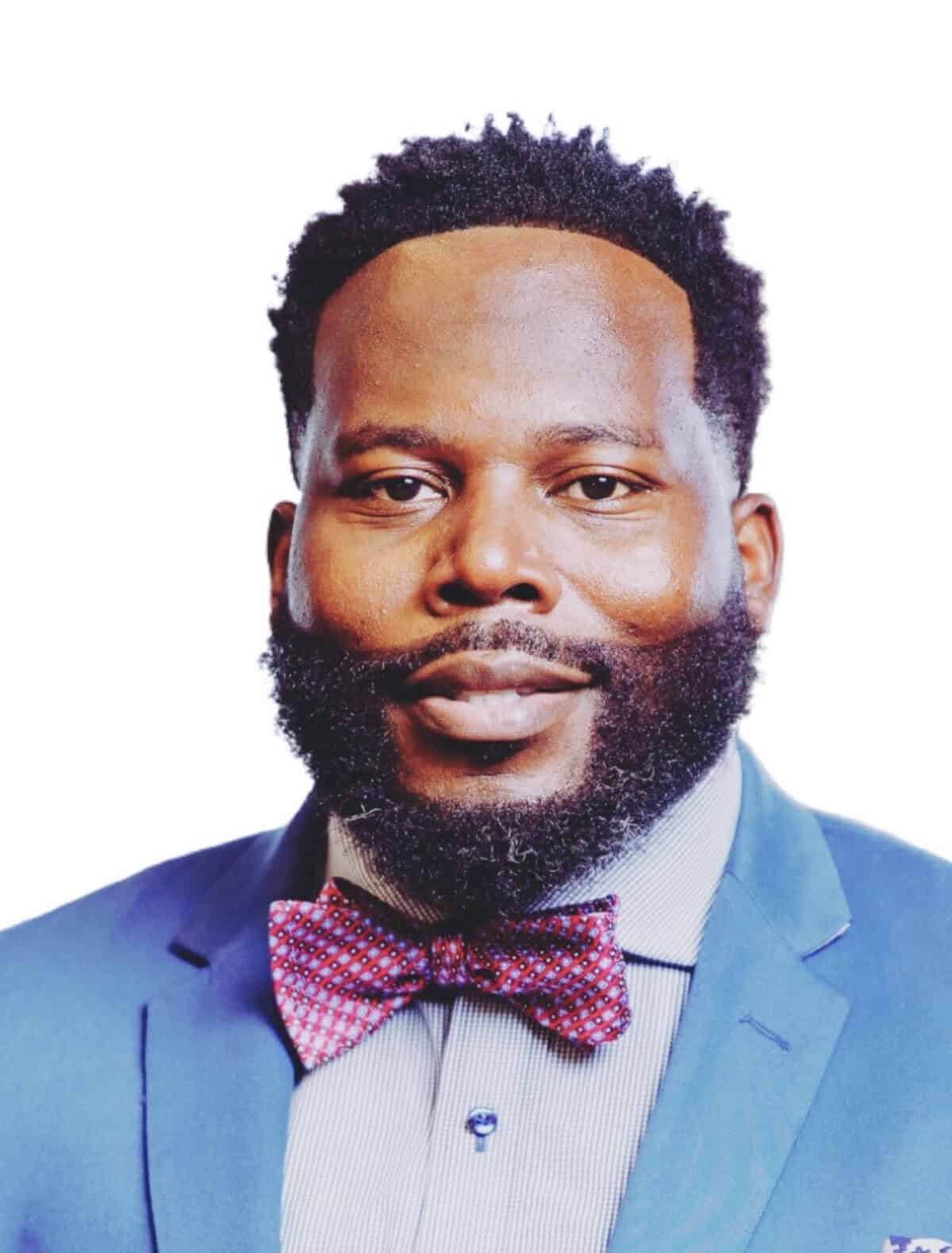 Rev. Dr. Allen L. Hollie Jr. is the Founder and Lead Pastor of All Grace Church in Atlanta, Georgia, and the Founder of ALL Free CDC, a community development organization focused on reentry, family stabilization, and restoration for returning citizens. As a pastor, educator, and justice-minded leader, his work sits at the intersection of faith, incarceration, and community renewal. Shaped by both theological training and his own lived experience, Dr. Hollie’s ministry centers on liberation-focused discipleship and dismantling cycles of recidivism through grace-driven community engagement.


One Response
Thank you Dr Hollie for such a powerful, insightful and moving message concerning recidivism and incarceration. Thank you for reminding us of the responsibility we have to bless those who are returning home. After reading your work I recognize that we fail to embrace those who have been incarcerated because we are too busy thinking of ourselves. Too busy trying to discover our own freedom from the prisons of defeat, trauma, selfishness, and individualism. I accept the call that you have sent out and will began to explore ways that we can support families of the incarcerated. Again thank you for blessing us with that compelling message from the heart.