 I can still feel my eyebrows arch when I think about the words my mother spoke to me during a rough patch as a (very) young adult.
“Amy, I don’t want you to suffer, but that is actually not my prayer for you.”
I’m pretty sure my response was something like, “Thanks a lot, Mom.” (Insert all the sarcasm of a late teenager.)
But she followed that declaration with words that have anchored me in every hard season since:
“I know you will walk through hard things. My prayer is that the God of hope will hold you and that you will grow.”
The God of hope.
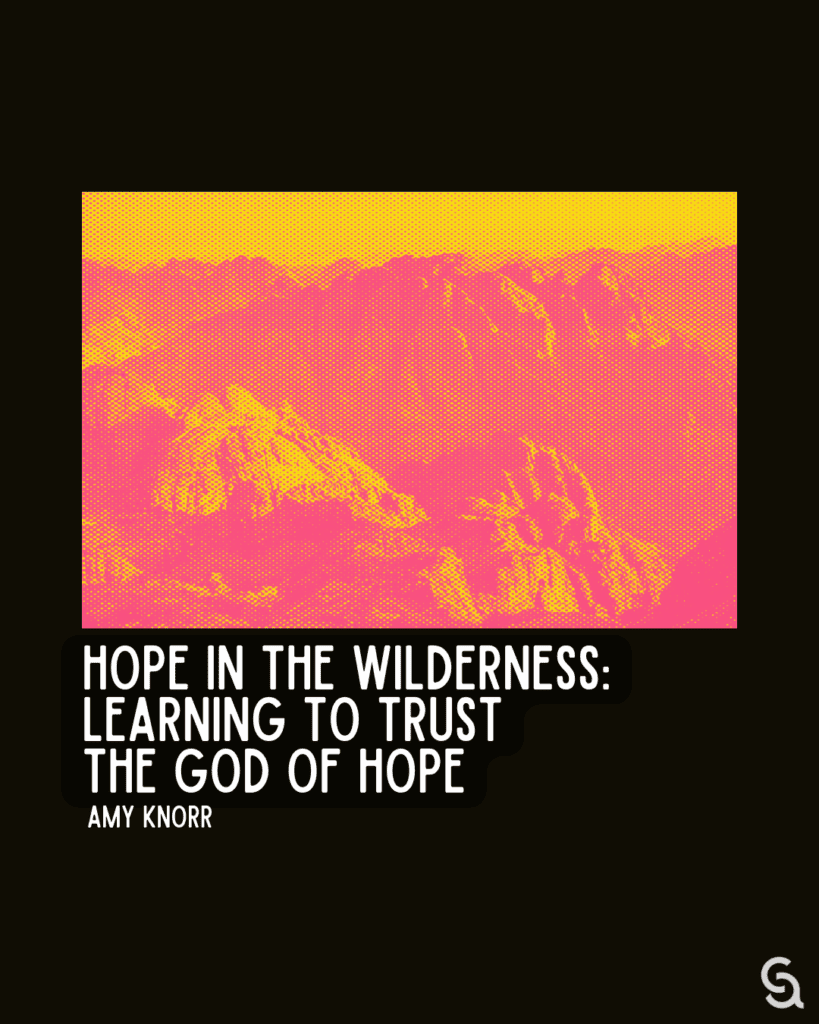
I can’t think of that description of God without remembering the ancient stories. The God who ushered Adam and Eve out of the garden. The God who led the Israelites out of Egypt. The God who made a way home again.
Each story carries a promise of hope: the serpent’s head would be crushed, deliverance would come, Messiah would arrive to save. What is hope, then, if not looking ahead with certainty toward the redemption and justice that will come? That hope is life and breath — especially in light of the wilderness that so often comes first.
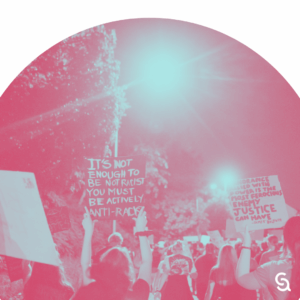
This has seemed like a wilderness year, hasn’t it? Challenging terrain and tenuous footing. Chaotic cultural spaces and dangerous personal conversations. And many in our communities are facing even deeper dangers.
Hope, in its more secular definition, has felt hard to come by. So perhaps it is fitting to reflect on wilderness during Advent — this season of preparing for the deepest Hope that came, that lives within us, and that will return.
Historically, Advent was a time of fasting — a clearing out, a preparing for the advent, the coming, of Jesus born and Jesus returning. Wilderness and Advent are bound together by this shared call to preparation and to the deepening of hope.
God led the Israelites out of Egypt and toward promise, but not by the near way. God led them into the wilderness because “the people might change their minds and return to Egypt.”
They did not yet know God in the way that would allow them to trust and confidently hope in God — to be formed into a people who could “look death in the face and not turn back.” So God led them into a physical place where they would learn dependence: trusting God to guide, sustain, and protect them. God led them into a place where they could be — if they so chose — changed.
Fast forward 1,500 years, and you have John the Baptist, whose mission, the angel said, was to “go on before the Lord…to make ready a people prepared for the Lord.” So the people went out into the wilderness to hear him, to be baptized, to be made ready for the kingdom of God. Fast forward again, and here we are — still being made ready. We live in the already, the almost, and the not yet. And it is in the not yet that we are prepared to fully see the already and to live into it, learning again to trust God for guidance, sustenance, and protection.
About a year ago, I heard a pastor I deeply respect say that the Bible basically has three chapters: Home, Lost, Home Again.
This is an oversimplification, of course, but the simplicity caught me. Long ago, in the garden, we were beautifully and securely home. Then came lies, fruit, and a sorrowful decision to go it alone. Lost, lost, lost — out into the wilderness we went. And so many years later, it is still easy to walk through this wilderness world like hope-worn travelers, unprepared for the light and glory of Home Again.
And yet, we know the Great I Am and the fulfilled hope of Immanuel, God With Us.
So then. God led the Israelites into the wilderness. John was called out into the wilderness to call others there. The Holy Spirit led Christ into the wilderness. And perhaps we, too, are led into Advent this year through our own personal and communal wilderness.
In every case, there is hope that the promised end will come. And in the shifting sand of wilderness wandering, there is an invitation to deepen our hope. Chaplain Amie Cross once wrote that change is the “cacophony backdrop for which the powerful and poignant statement, ‘I Am,’ brings hope.”
And so I return to my mother’s words — a burning bush for me in the midst of my first of many wilderness seasons:
“May the God of hope hold you, and may you grow.”
There’s something of Frederick Buechner’s echo in her words, too:
“Here is the world. Beautiful and terrible things will happen. Don’t be afraid. I am with you.”
Oh, my soul. Oh, our collective soul.
Here is the world. Beautiful and terrible things are happening.
Look death in the face, keep going, grow. The I AM — the deepest hope — is holding us through all the chaos and cacophony of this present wilderness.
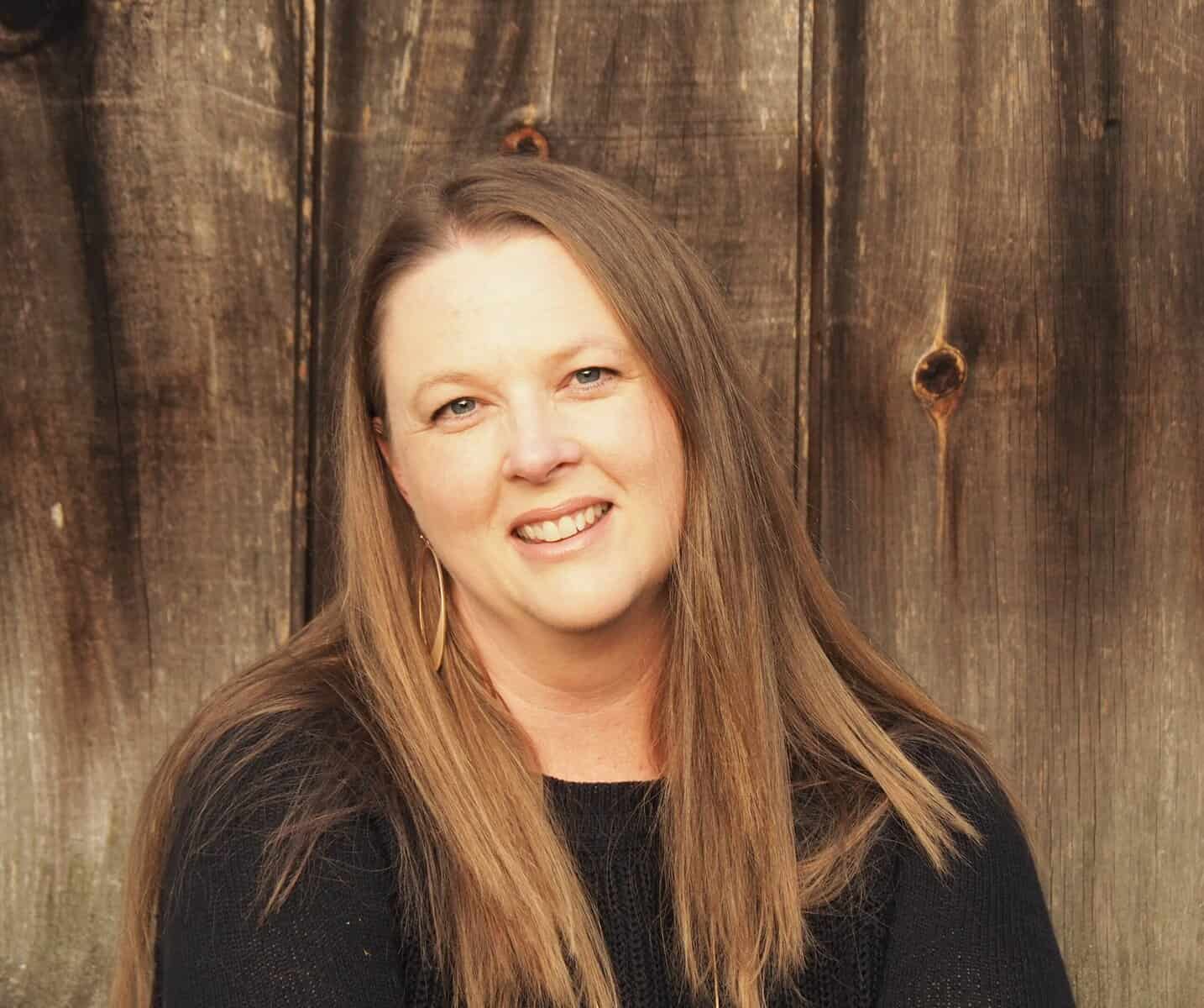
Amy Knorr is a spiritual director and digital community architect who loves to nurture contemplative spaces in real life and online. Amy spends her days facilitating one-with-one spiritual direction, group workshops/retreats both in person and in digital meeting spaces, and in growing and shepherding digital communities like The Neighborhood, The Black Barn Online, and RealRest. She earned a BA in English from Texas A&M, an MA in Christian Formation from North Park Seminary, and a certificate in spiritual direction from the C. John Weborg Center for Spiritual Direction. She was awarded a Louisville Institute grant to study the cultivation of intentional online spaces for the purpose of spiritual formation, and is currently writing about her findings. Amy lives with her husband and two teenage girls in the Amish country of Pennsylvania. When she’s not writing, speaking, or facilitating community, you can find Amy on a trail with her big, goofy Goldendoodle, in the garden fighting weeds and rabbits, or in her library with a good book and a cup of tea.