
 (Editor’s note: As we enter Holy Week, we’re holding space for the parts of the story that feel unresolved — the places where loss lingers and hope is hard to see. These reflections by our CSA staff invite us to pay attention to what God may be doing in the middle of it, not just after it.)
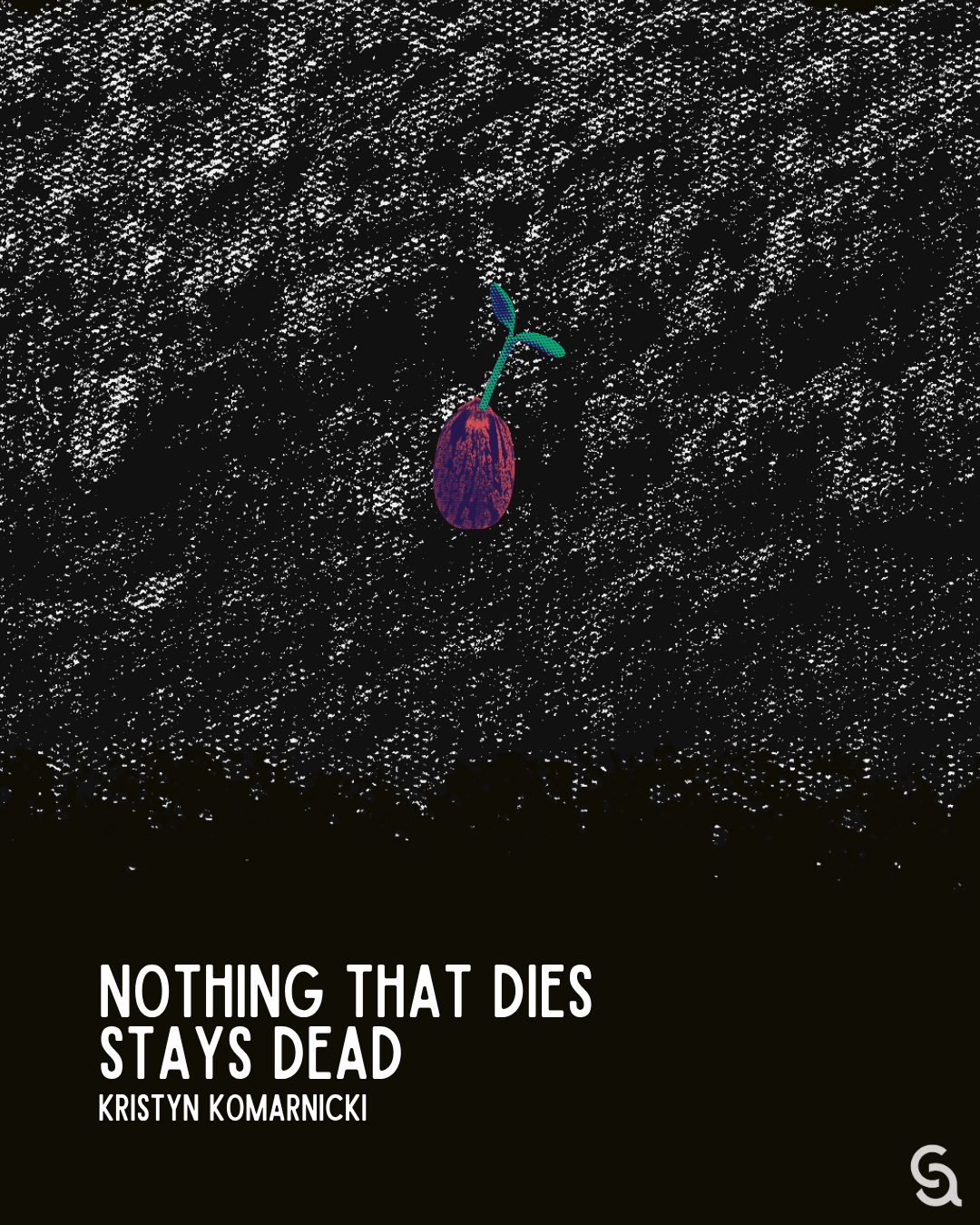
“Nothing that dies stays dead.” Theologian Tamice Spencer-Helms said this in a recent conversation with podcaster Connie Chen. It shouldn’t have surprised me, after 50+ years of following Jesus, but it did. Maybe it was the way the two of them spoke about death and its signs — with frankness and without panic — as something to pay attention to, something that can teach us about life.
This got me thinking about the loved ones I’ve accompanied toward death’s narrow door — how they felt about the road they were traveling, the intimacies we shared along the way, the physical and mental changes that I learned to read like a sailor reads the night sky.
And I realized how rarely I take that same grieving-but-attentive posture toward the signs of spiritual and cultural dying all around me.
However, it’s Lent now, with its insistence that we look death in the eye but also—incredibly, as if we can manage existential multitasking any better than the mundane kind—that we be on the lookout for resurrection. So I turned to John 12:1-36, which is dripping with all of that.
It’s about a week before Jesus’ crucifixion. Some people are throwing a party for Jesus, who has recently raised his friend Lazarus from the dead. While the food is being served, a female guest pours perfume over Jesus’ feet, wiping it in with her hair. Just as the pungent fragrance starts to overwhelm the guests, Judas postures that the money she just “wasted” would have better served the poor (though he’s in the habit of skimming ministry funds for himself).
Jesus cuts him off: Leave her alone. She’s preparing my body for burial. I’ll be dead soon.
Outside, curiosity seekers gather, trying to get a look at both Lazarus and Jesus, whose celebrity threatens the religious leaders, who immediately expand their current plan to kill Jesus: Lazarus has to go, too.
As if that isn’t enough action for one weekend, the next day, a crowd gathers and proclaims Jesus KING OF ISRAEL. They wave palm branches and shout praise at him. His friends, meanwhile, are confused.
Later, Jesus starts musing aloud that he’s about to be “glorified,” an event that apparently involves death. Seeds need to die and be buried if they are to produce life, he says, explaining that people work the same way—You have to lose your life to keep it.
Jesus again announces that he will die soon. Although he doesn’t love the idea, he says this is precisely what he’s come to do.
Suddenly, a voice comes from heaven—or is it thunder?—saying, “I have glorified my name, and I will glorify it again!”
Jesus tells those around him that this announcement is for their sake, not his. “I have to die so that all people will be drawn to me.”
Understandably, the people have questions, but Jesus drops a few poetic, not-very-clarifying lines about light and darkness, inviting them all to become “children of light.” Then he slips out the back. Just disappears.
Apart from Jesus’ total disregard for social expectations (I mean, how many cues does he ignore, how many taboos does he break in this short passage?), what strikes me most is his attitude toward the decay all around him.
On the one hand, he just resurrected his friend — first weeping for him, then calling him out of the grave — so clearly, he’s pro-life. On the other hand, he promotes death as necessary, even generative, and he embraces his own death, albeit with anguish. So, he’s clearly pro-death. Right?
This is where I sit, in this time and place: vulnerable to all kinds of death, as confused as any disciple, longing for life and wholeness, but caught in the tension between dialing 911 and volunteering for deathwatch, between desperately grasping for life-saving measures and sitting with the reality (even the necessity) of death — wondering what resurrection has to do with any of this, what the Resurrected Jesus has to say about it.
So I sit…and wait. Which is pretty much the hardest thing for me to do.
I begin to wonder if, in the end, Jesus is asking me not to try to eliminate this tension, but rather to refuse to try to resolve it.
The fact is, I do see life pushing back on death.
I see it in the precious children of God who dare to dialogue with their sexual, gender, and/or theological “other.” I see it in relationships that soften after years of estrangement.
I see it in justice workers who refuse to surrender, even when every inch of ground they’ve ever gained is threatened or even retaken by powerful forces. I see it in bodies that bravely keep breathing after devastating diagnoses, in friends who continue to show up for their own recovery so that they can show up for those who love them. I see it. It’s there.
But if I’m honest, resurrection often feels…late. Or hidden. Or, worse, indistinguishable from loss.
Lazarus walks out of the tomb, but that doesn’t erase the four days of soul-shredding grief his sisters endured. Jesus speaks of glory, but it sounds more like a eulogy. The crowds shout “King!” one day and remain mute the next. Even the voice from heaven is mistaken for thunder.
It may be true that “nothing that dies stays dead,” but a lot of things stay dead long enough to make me doubt.
I think this is the part I resist. Not death itself, but the protracted season of confused, sad, hollow-hearted waiting — where nothing looks like life, where the seed is buried and nothing green is visible, where calling 911 feels frantic and calling hospice feels like giving up, and neither feels like faith.
Maybe resurrection asks something more unsettling of us than belief in a life “after.” More than hope.
Maybe it asks for attention —
to decay,
to the slowing of vital signs,
to what is being cleared away.
And also attention to the small, easily missed signs of life that don’t announce themselves, but are, in fact, small miracles:
fragrance filling a room,
a crowd gathering without quite knowing why,
a rumbling in the sky that might just be the voice of God.
Nothing that dies looks like life again right away — certainly never fast enough to suit my timeline. But ultimately, I trust that resurrection is already happening — quietly, insistently — in ways I am invited to look for — and even begin to see — through eyes of faith
“Therefore we do not lose heart. Though outwardly we are wasting away, yet inwardly we are being renewed day by day…” (2 Cor. 4:16)
 Kristyn Komarnicki is director of dialogue and convening at CSA. The creator of the Oriented to Love dialogues about sexual/gender diversity in the church, Kristyn gathers Christians of different sexual orientations, gender identities, and theological convictions together so they can begin to know, understand, and love each other, in search of a unity that is deeper than agreement.