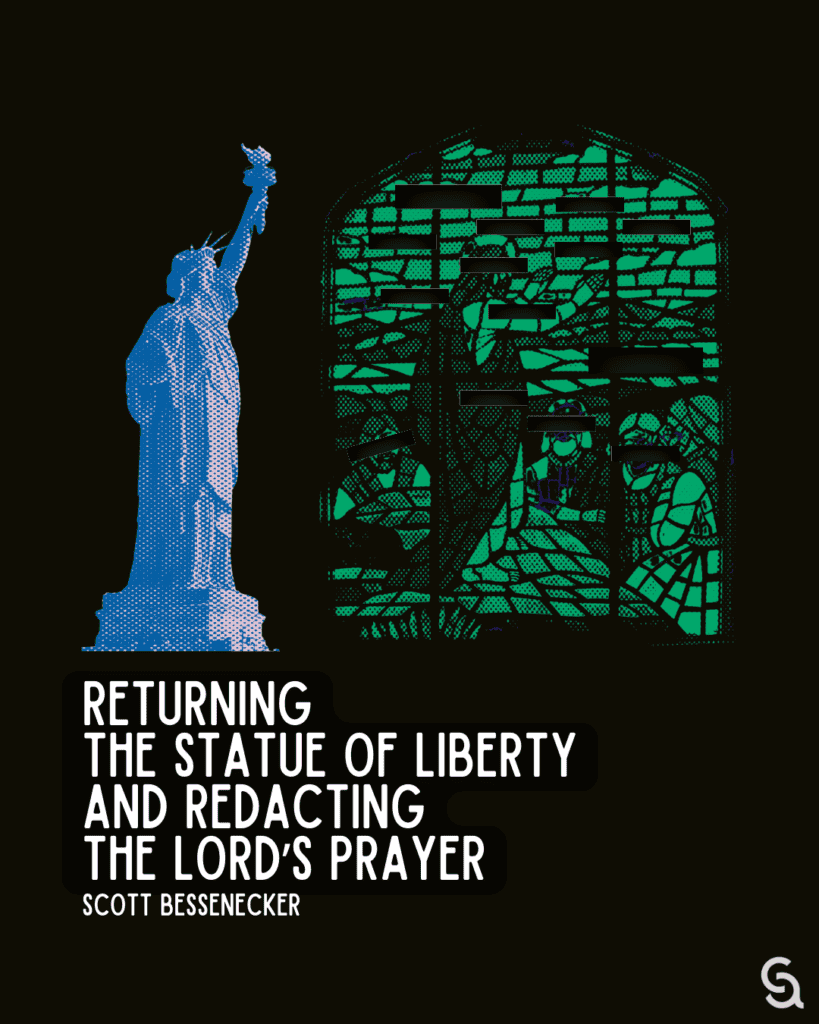
 It’s time for America to return the Statue of Liberty.
This “Mother of Exiles,” who calls to the tired, poor, huddled masses, has become a promise that no longer reflects reality. France, which gifted the statue to the United States, currently shelters nearly 10 times as many refugees per capita as the U.S. Even the UN Human Rights Commissioner has raised concerns about what is happening in our country.
About the time the Statue of Liberty was dedicated in 1886, my Eastern European relatives found refuge in the United States. They were poor, undocumented, and did not speak English — and yet the Statue of Liberty meant what it said. Immigrants lived and married within their ethnic enclaves, some without ever learning English. They took jobs in coal mines and factories — jobs no one else wanted. Midwestern cities like Minneapolis, Milwaukee, and Chicago welcomed them. That was a time when the Statue of Liberty still carried real meaning.
For the Karen people of Myanmar today, that meaning feels far less certain. Marginalized because of both their Christian faith and ethnic identity, they have endured the brutality of a military government that sought to dispossess them — a regime the United States has sanctioned. Surely, one might assume, the Karen people would find a welcome among fellow followers of Jesus in America. And what of that Midwestern hospitality? Minneapolis should be a safe haven of liberty for an oppressed religious minority.
Instead, many asylum seekers have encountered a country whose actions echo the very systems they fled. They were drawn here by a Statue and a Constitution that speak boldly of equality, life, and liberty — promises that now feel painfully hollow. This is especially troubling given America’s long history of welcoming refugees —economic, political, and religious — often led by people of faith.
On Earth as It Is in Heaven?
Jesus gave his followers just one prayer.
At its heart is a hopeful plea for God’s reign of shalom to come on earth as it is in heaven. Unless we imagine heavenly ICE agents breaking down doors or detaining those awaiting interviews at the pearly gates, it is difficult to reconcile that prayer with what is happening in places like Minneapolis and elsewhere.
I understand that many desire a clear and orderly immigration system. But we do not currently have one. Instead, we have a system marked by decade-long waiting periods, costs our immigrant ancestors could never have afforded, and decision-making that can feel arbitrary. This is layered onto a history of immigration policy shaped by racial bias — from the Chinese Exclusion Act of 1882 to the Immigration Act of 1917, which barred people from India, Southeast Asia, and much of the Middle East.
Even apart from this broken and biased system, Christians who pray for God’s will to be done on earth cannot support the kind of state-inflicted fear, intimidation, and trauma being visited upon children and families, including those with legal status. To do so would require us to quietly revise the very prayer Jesus taught us to pray. In effect, we would need to redact the Lord’s Prayer.
I am aware — and grateful — that many faith leaders are actively opposing the cruelty of this moment. Even Christians from conservative traditions are speaking out. Still, the American church does not have a spotless record when it comes to welcoming the stranger or defending the oppressed. Alongside Christians who fueled the Abolitionist Movement and the Civil Rights Movement were others who believed their faith compelled them to support slavery, oppose interracial marriage, or remain silent during Japanese internment.
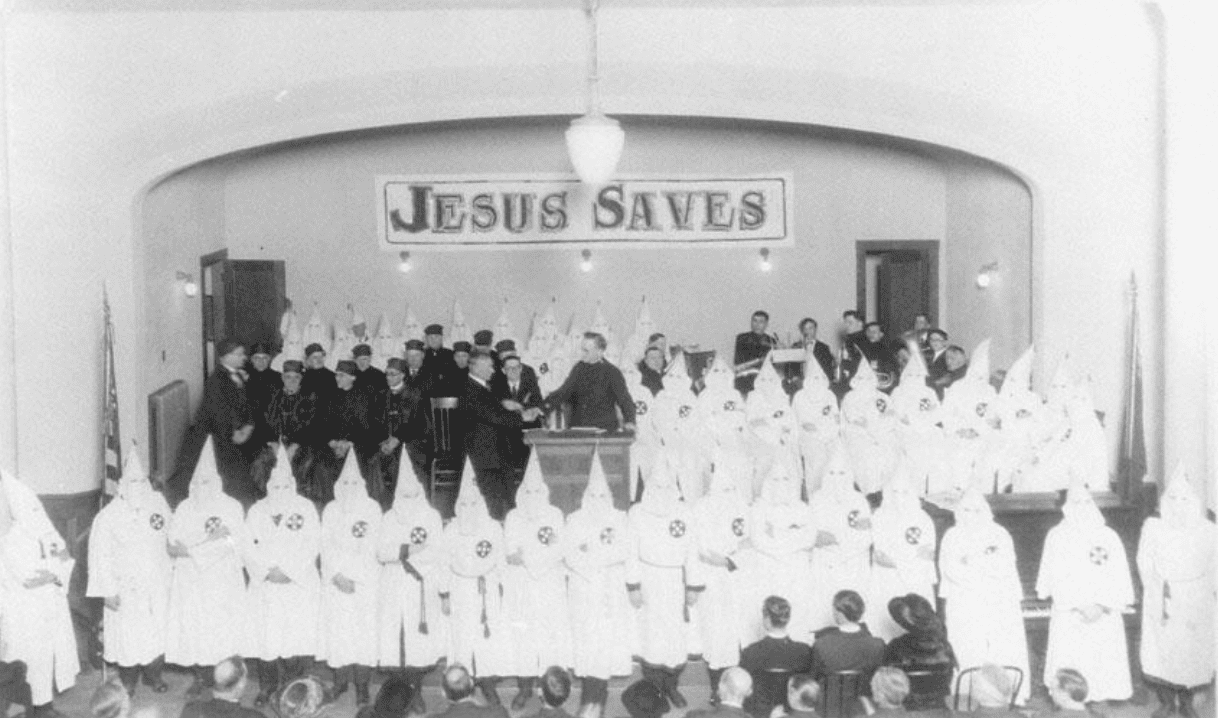
When the Church Colludes with Empire, It Collides with God
During World War I, American and British theologians produced propaganda asserting their moral superiority — just as German theologians did the same. History reminds us that whenever the church aligns itself too closely with the nation it inhabits, it risks finding itself at odds with God. Jesus was clear: We cannot serve two masters.
When allegiance to Caesar and empire takes precedence, the values of that empire will inevitably conflict with the values of God’s kingdom. Human empires rule through fear, judgment, and violence. God’s kingdom is marked by love that casts out fear, mercy that triumphs over judgment, and healing that replaces violence. Collusion with empire will always result in a collision with God.
Jesus taught his followers to live in the world without becoming of it. Salt, light, and leaven — these were his metaphors for the church’s presence in the world. In Minneapolis and beyond, salt restores flavor to what has become tasteless, light exposes deeds done in darkness, and leaven lifts what has been pressed down.
How to Respond
Those of you who live in Minneapolis or other cities experiencing ICE raids know far better than I how to join networks already caring for those who are being harmed. I speak here to those of us who live elsewhere.
Call Authorities to Account
When Paul and Silas were beaten and imprisoned without trial in Philippi (Acts 16), Roman officials later attempted to release them quietly. Paul refused, calling them publicly to account (Acts 16:37–39). Whether or not accountability results in investigation or prosecution, the church has a responsibility to protect the vulnerable and confront abuses of power. This may involve public protest or engaging elected officials — but always with the aim of justice and protection for those most at risk.
Practice Communal Lament
“By the rivers of Babylon we sat and wept when we remembered Zion” (Ps. 137:1). When God’s shalom is shattered by the violence of empire, God’s people gather not only in anger but also in grief. Beneath outrage often lies profound sadness. Scripture invites us to weep together and cry out when suffering is widespread and unjust.
Live in Solidarity
The most profound act of solidarity is God becoming flesh. Perhaps that is why Paul urged the Galatians to “Carry each other’s burdens, and in this way you will fulfill the law of Christ” (Gal. 6:2). Jesus wept alongside Martha and Mary at Lazarus’ tomb. Never underestimate the power of a phone call or a note that says, “I see you. How can I support you?” Even when change feels distant, presence matters.
Forgive Without Forgetting
Forgiveness is hard, especially when harm is ongoing or unacknowledged. Extending forgiveness toward institutions like the church or the state can feel even more complicated. Yet when Jesus was abused by state authorities, he extended forgiveness (Luke 23:34). Forgiveness does not mean withholding accountability or extending trust prematurely. It means refusing to let bitterness and hatred poison our souls.
Unless we are planning to return the Statue of Liberty or quietly revise the Lord’s Prayer, followers of Jesus are called to provide refuge to the refugee, challenge the actions of empire, and practice the way of Jesus through solidarity, lament, and forgiveness.
____
 Scott Bessenecker is Director of Global Engagement and Justice for InterVarsity. Look for his forthcoming book: Bad Religion, Good News: An Honest Guide for the Spiritually Disappointed, by Herald Press.