
 One of the most pressing challenges facing the Christian faith right now is not simply political division, but moral inconsistency and the lack of courage to speak out against blatant injustices that are anti-Christian, wrong, destructive, and harmful to vulnerable people and targeted communities.
This silence becomes dangerous when leaders who divide, cause social and political harm, and abuse power escape accountability while Christians choose to look the other way. This moral and ethical failure harms the church’s public witness, and the Epstein files have made that reality increasingly difficult to ignore.(1,2)
When Silence Speaks: Moral Inconsistency in the Church
For many who have observed the rise of White Christian Nationalism and its impact, it has not only altered how Christianity is received on social media and in the public square, but it has also produced a numbing silence when injustices and social issues demand a response.(3) While many Christians have spoken courageously about injustice, White Christian Nationalism and its entanglement with certain politicized expressions of evangelicalism has become one visible expression of a deeper problem within the church.(4)
For many observers, the conflation of faith with a MAGA political identity has influenced and is shaping how Christianity is publicly understood at this moment, which should concern all of us who follow Jesus.(5) This silence becomes especially damaging when leaders who have caused division, spoken harmful words publicly, and abused power are not held accountable for their actions or for policies that harm everyday people who are also loved by the same God they profess to believe in.
This form of silence is dangerous because it reveals inconsistency and double standards. Segments of the American church, particularly within politicized expressions of evangelicalism, are often perceived as applying moral standards selectively. Such selective outrage weakens the credibility of Christian witness and stands in sharp contrast to the life and ministry of Jesus.
Power, Accountability, and the Trouble with Selective Outrage
One example of this tension can be seen in the public debates surrounding the release of materials widely referred to as the Epstein Files under the Epstein Files Transparency Act. The publication of millions of pages of records has intensified public scrutiny and renewed debate about powerful individuals and institutions.(6,7)
What they have revealed about powerful people, not only those who occupy political office but wealthy people whose influence spans business, education, finance, sports, political parties, media, and elite social networks, has unsettled many and, in my opinion, has given the church a mirror in the wake of what is taking place in the social and political climate.(8)
It is forcing the church to ask where it stands when injustice, social harm, and the abuse of power are exposed and whether we will, as Dr. Jemar Tisby says, embrace an ethic that understands that “justice takes a side.”(9)
This past week, people tuned in to watch Attorney General Pam Bondi face pointed questioning about the Epstein files(10,11), and many watched with the same hope survivors have carried for years, that someone with institutional power would finally treat their pain as more than a political inconvenience and take seriously the trauma that they have been carrying since they were underage children who experienced this type of sexual exploitation.
Yet what unfolded, along with the surrounding coverage, left a familiar aftertaste: deflection, outrage, and the persistent sense that public conversations still struggle to center those who were harmed when the powerful are in view.(12)
When survivors’ experiences were raised, many viewers were left with the impression that their pain was not meaningfully centered. Exchanges during the hearing raised further questions about transparency, redaction, and accountability, with lawmakers on both sides of the aisle pressing for clarity regarding withheld and heavily redacted documents. At one point, when asked directly about the files, Bondi shifted the conversation to economic performance, saying:
“The Dow is over 50,000 right now. The S&P at almost 7,000, and the Nasdaq smashing records. Americans’ 401(k)s and retirement savings are booming. That’s what we should be talking about.”(13)
For many watching, especially survivors, this shift reinforced the sense that their pursuit of accountability was once again being sidelined. What has been particularly disheartening is that as these files continue to shape public discourse, and as powerful political and cultural figures become subjects of reporting, speculation, and debate, some Christians have responded not with reflection but with defensiveness.
I have even come across social media podcast clips and articles that have referred to exploited children as “underage women”(14,15), which is not just inaccurate language. It is also a type of harmful framing that belittles the seriousness of assault, exploitation, sex trafficking, and abuse done to children, essentially attempting to soften harm to make it easier to defend the men in power connected to it.
What Kind of Church Are We Becoming?
Knowing how frequently abuse and exploitation have been concealed or minimized over the years is deeply troubling and forces us to confront difficult questions about the church’s response to survivors. This concern is heightened by the many instances in which church leaders themselves have been exposed for similar patterns of abuse and institutional protection. Women and survivors cannot be treated casually. Their experiences should never be minimized by public officials, church leaders, or institutional responses that risk obscuring truth and accountability.
Men, in particular, should be first in line to protect, support, and stand with those seeking justice for harms inflicted upon victims as children. In many ways, the public exchanges surrounding these hearings reveal that we are living in a time of profound moral and ethical weakness.
As a father of a daughter, I cannot accept a version of Christianity that teaches her the church is safe while excusing or minimizing abuses of power.(16) I cannot tell her that truth matters while watching conversations repeatedly drift away from exploitation and toward political or economic distractions. It is time for the church and Christians who are aligned with this sort of protection of injustice to decide whether they will be faithful in speaking out against what is unjust through a biblical justice lens, or continue to placate selective outrage only when it helps support a form of Christian faith that is wrecking the witness of the true church of Jesus.
It is time to grapple with selective outrage now, specifically because research consistently shows that sexual assault is significantly under reported and that false reporting rates are comparatively low even in churches, while at the same time when survivors speak publicly, they face retaliation, harassment, and character assassination because of people’s cult-like allegiance to people in power.
What kind of church are we handing to our children? One that protects its image or one that protects people who exploit, abuse, and harm children? One that defends power or one that defends dignity?
If you are a parent of a daughter, let me ask you, if our daughters learn that churches protect institutions more fiercely than it protects them, what is it teaching them? I would suggest that it will impact how they see the gospel. They will see it not as good news but as conditional news, good only for those already secure in power.
For those who follow Jesus, this moment is crucial because as much as those who want to uphold this rot of political loyalty and avoid speaking up about political injustice, the world in which we live calls for us to have a public theological witness, because the Epstein files show that the lessons here are theological, moral, ethical, political, and social.
If we believe Scripture, it reminds us that speaking up is necessary when it comes to injustice committed against those whom God loves. Proverbs 31:8–9 calls for vocal advocacy for those without a voice. It says:
“Speak out for those who cannot speak, for the rights of all the destitute. Speak out; judge righteously; defend the rights of the poor and needy.”(17)
Rev. William Barber II said this about nationalism in an interview:
“…scriptures say that God loves all people and that if a nation is going to embrace Christian values, then one must know what those values are, and they certainly aren’t discriminatory or exclusive…and explains his view of the word “evangel” which means good news and that when Jesus used that phrase it was in his first sermon, which was a public policy sermon…in the face of Caesar, where Caesar had hurt and exploited the poor…explaining that he embraces the kind of evangelicalism that Jesus embraces and that is to start where Jesus started, preaching good news to the poor.”(18,19)
Imagine if Jesus had remained silent. When a woman was dragged before him in John 8 and publicly shamed, Jesus did not protect the crowd’s authority. He defended her dignity. Silence would have preserved order and would not have held those who dragged her accountable. Jesus covers her shame by standing with her. While many Christians remain committed to their political loyalties, it forces us to ask whether we are misrepresenting the Jesus we encounter in the New Testament.
Rev. Benjamin Cremer recently wrote,
“It should break every Christian’s heart that our faith was used as a political tool to bring our country to where it is today.”(20)
Silence in moments like this is never neutral. When Christians remain quiet in the face of harm, sexual abuse, injustice, and immorality, that silence distorts the love of God in the eyes of those who have already been traumatized and experienced harm. If the church is to maintain moral credibility, it must choose ethics, morality, and truth-telling over silence in the face of clear moral evil.
Endnotes
(1) Russell Moore, “The Church Sexual Abuse Crisis Should Prepare Us for the Epstein Files,” Christianity Today, November 19, 2025, https://www.christianitytoday.com/2025/11/church-sexual-abuse-crisis-epstein-files.
(2) “A Christian’s Response to the Epstein Files,” Houghton STAR, October 31, 2025, https://www.houghtonstar.com/2025/10/31/a-christians-response-to-the-epstein-files.
(3) Robert P. Jones, Christian Nationalism Goes Back Further Than You Think, Time, August 31, 2023, https://time.com/6309657/us-christian-nationalism-columbus-essay/.
(4) Edward Lempinen, “Crisis of Faith: Christian Nationalism and the Threat to U.S. Democracy,” Berkeley News, September 20, 2022, https://news.berkeley.edu/2022/09/20/crisis-of-faith-christian-nationalism-and-the-threat-to-u-s-democracy/.
(5) PBS NewsHour, “What Is Christian Nationalism and Why It Raises Concerns about Threats to Democracy,” PBS, February 1, 2024, https://www.pbs.org/newshour/show/what-is-christian-nationalism-and-why-it-raises-concerns-about-threats-to-democracy.
(6) U.S. Department of Justice, “Department of Justice Publishes 3.5 Million Responsive Pages in Compliance with the Epstein Files Transparency Act,” January 30, 2026, U.S. Department of Justice, https://www.justice.gov/opa/pr/department-justice-publishes-35-million-responsive-pages-compliance-epstein-files.
(7) The law, passed by overwhelming bipartisan margins in both chambers of the U.S. Congress and signed on November 19, 2025, required the Attorney General to publish all non-classified records in the Department of Justice’s possession concerning Epstein within 30 days. The statute also mandated a complete, unredacted list of names of all government officials and politically exposed persons appearing in the files. The single vote against the bill in the House came from a representative who argued the measure could expose family members and innocent bystanders to undue harm.
(8) “The Latest Epstein Files Release Includes Famous Names and New Details About an Earlier Investigation,” PBS NewsHour, January 31, 2026, https://www.pbs.org/newshour/nation/the-latest-epstein-files-release-includes-famous-names-and-new-details-about-an-earlier-investigation.
(9) Jemar Tisby, “Justice Takes Sides,” Jemar Tisby (Substack), accessed February 2026, https://jemartisby.substack.com/p/justice-takes-sides.
(10) C-SPAN, Attorney General Pam Bondi Testifies Before House Judiciary Committee, Part 1, January 2026, https://www.c-span.org/program/house-committee/attorney-general-pam-bondi-testifies-before-house-judiciary-committee-part-1/673053.
(11) “A Timeline of the Jeffrey Epstein Investigation and the Fight to Make the Government’s Files Public,” PBS NewsHour, https://www.pbs.org/newshour/politics/a-timeline-of-the-jeffrey-epstein-investigation-and-the-fight-to-make-the-governments-files-public.
(12) C-SPAN, Attorney General Pam Bondi Testifies Before House Judiciary Committee, Part 2, January 2026, https://www.c-span.org/program/house-committee/attorney-general-pam-bondi-testifies-before-house-judiciary-committee-part-2/673247.
(13) Ibid. C-SPAN, Attorney General Pam Bondi Testifies Before House Judiciary Committee, Part 2, January 2026.
(14) Kelly McBride, “NPR Described Jeffrey Epstein’s Victims as ‘Underage Women,’ Then Quickly Corrected the Error,” NPR Public Editor, December 4, 2025, https://www.npr.org/sections/npr-public-editor/2025/12/04/g-s1-100597/npr-described-jeffrey-epsteins-victims-as-underage-women-then-quickly-corrected-the-error.
(15) Ibid., U.S. Department of Justice, “Department of Justice Publishes 3.5 Million Responsive Pages in Compliance with the Epstein Files Transparency Act.”
(16) Edward Helmore, “US Southern Baptist Churches Facing ‘Apocalypse’ Over Sexual Abuse Scandal,” The Guardian, June 12, 2022, https://www.theguardian.com/world/2022/jun/12/southern-baptist-church-sexual-abuse-scandal.
(17) Proverbs 31:8-9, NRSVUE
(18) “Prominent Pastor Speaks Out Against Christian Nationalism as ‘Heresy,’” Faithful Citizens for Truth, accessed February 2026, https://www.faithfulcitizens4truth.org/pastor-speaks-out-against-christian-nationalism.
(19) PBS NewsHour, “Report Details Widespread Cover-Up of Sexual Abuse Among Southern Baptist Leaders,” May 23, 2022, https://www.pbs.org/newshour/show/report-details-widespread-cover-up-of-sexual-abuse-among-southern-baptist-leaders.
(20) Benjamin Cremer (@brcremer), Instagram post, February 2, 2026, https://www.instagram.com/p/DUR4uWejBUa/.
____
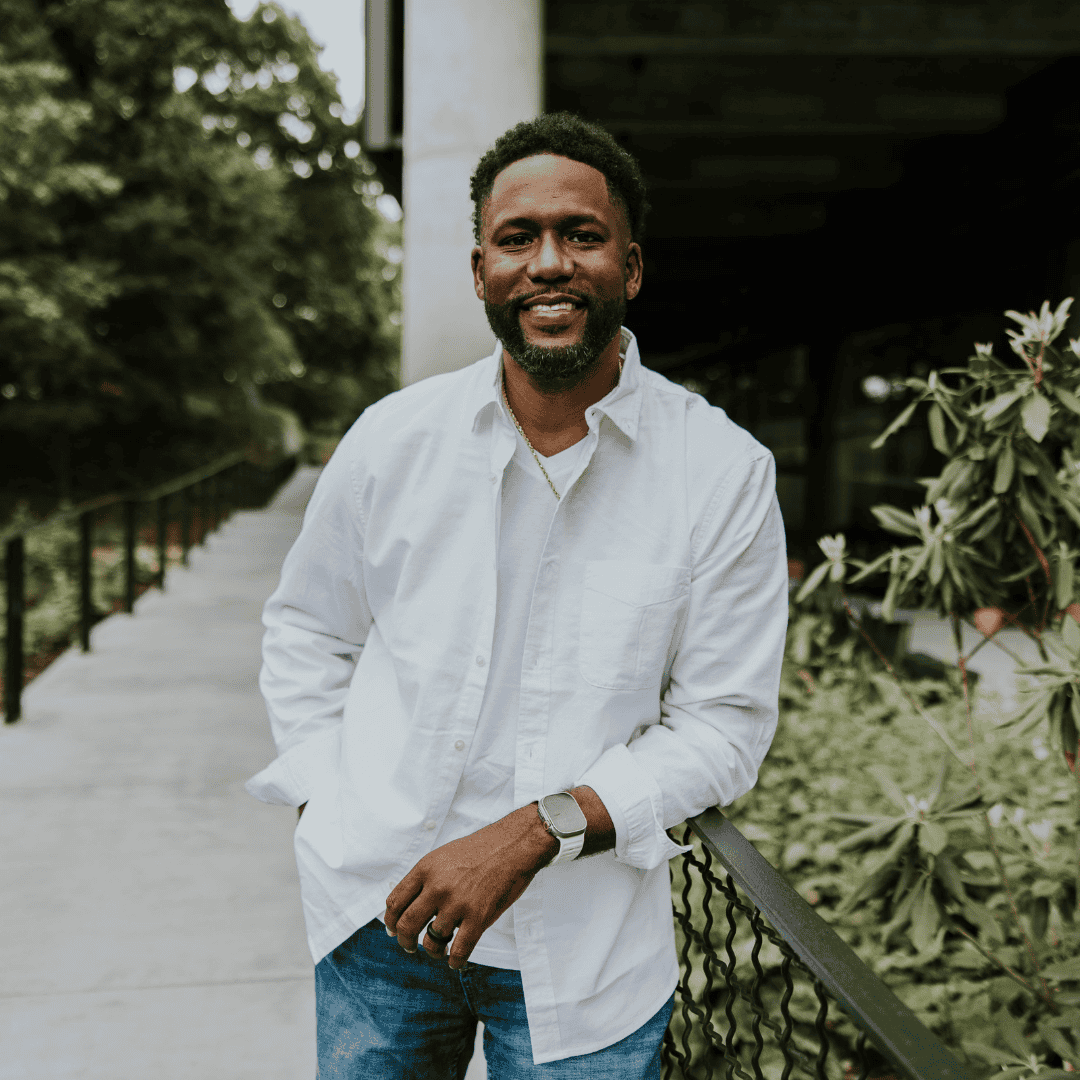 Dr. Terence Lester is a storyteller, public scholar, community activist, and author. He founded Love Beyond Walls, a nonprofit committed to raising awareness about poverty and homelessness, and teaches public policy and social change at Simmons College of Kentucky. His latest book, From Dropout to Doctorate: Breaking the Chains of Educational Injustice(IVP, 2025), traces his journey from high school dropout to PhD and issues a bold call for equity. Through his life and writing, he uses narrative, policy insight, and faith to challenge systems that leave people invisible and to inspire practical change. Lester is a CSA pundit.