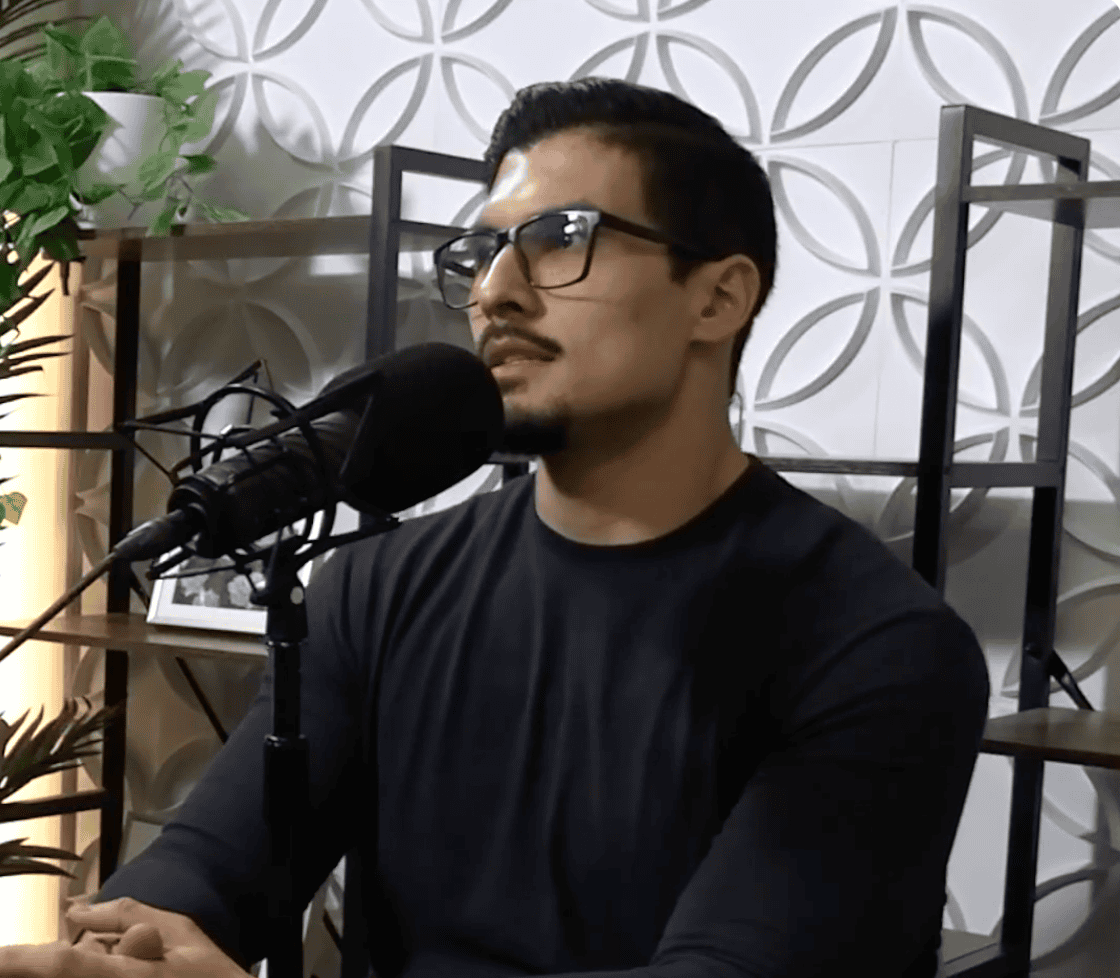
 On October 18, 2025, across from Radio City Music Hall, Pastor Justin Adour stepped into a small gathering of about 25 people and raised a tall sign overhead. It stood like a quiet beacon in Midtown’s chaos, proclaiming a single allegiance: “The only King we serve is our Lord & Savior Jesus Christ.”
Then he asked the group to bow their heads.
“Lord,” he began, “we are a people with a greater hope — one that reaches beyond any political party, beyond any government. As we step into this day, confronting the powers of this world, we do not stand in our own strength. We stand on mission, sent by our King. King Jesus.”
When the prayer ended, the group walked together toward Times Square to join thousands participating in New York City’s version of the nationwide “No Kings” protests.
For some Christians, the sight of believers joining a public demonstration like this is unsettling. Critics labeled the protests “anti-American” and suggested participants were being paid. Others questioned whether pastors or churches should involve themselves in demonstrations at all.
But for members of Redeemer East Harlem, the decision to show up publicly did not begin with politics. It began with proximity.
Redeemer East Harlem sits in a neighborhood long known as a place of arrival. Over generations, immigrants from around the world have passed through its streets — first Europeans, later Puerto Rican families, and today migrants from across Latin America and the Caribbean.
The neighborhood carries a long history of resilience and activism, but also ongoing challenges: housing instability, economic inequality, and the pressures of displacement as gentrification accelerates.
Those realities shape the congregation itself.
Roughly 150 people gather weekly at Redeemer East Harlem, including new arrivals to the city alongside longtime residents, immigrants alongside professionals, reflecting the neighborhood’s own diversity.
For many members, the issues debated in national headlines are not abstract policy questions. They are part of everyday life.
Immigration enforcement affects neighbors and family members. Housing insecurity shapes daily decisions. Economic pressure is woven into the rhythms of the community. In a context like this, questions about justice rarely remain theoretical.
Holding Mercy and Justice Together
Redeemer East Harlem’s approach grows out of a theological framework rooted in two biblical ideas often held together: tsedaqah and mishpat.
Tsedaqah refers to personal righteousness expressed through acts of mercy (e.g., feeding the hungry, caring for the poor, meeting immediate needs). Mishpat refers to public justice (e.g. the systems and structures that either protect or oppress the vulnerable).
Many churches are comfortable with the first. Food pantries, clothing drives, and charitable programs are familiar expressions of Christian compassion. But the second — asking why people are poor, why housing is unstable, why access to health care or education remains unequal — often pushes congregations into more complicated territory.
At Redeemer East Harlem, leaders say the two cannot be separated.
While the church actively serves its neighbors through practical acts of mercy, it also invites members to wrestle with the broader conditions shaping their community. That includes prayer, service, education, and sometimes public witness.
In recent years, some churches across the country have begun asking a deeper question: What does it mean not only to serve the vulnerable but to stand with them? For Redeemer East Harlem, that question intensified during the upheavals of 2020, when protests swept the nation following the murder of George Floyd. Out of those conversations emerged Pray March Act (PMA), a coalition connecting churches, organizations, and individuals across New York City who seek to pursue justice through prayer, education, and peaceful public engagement.
“PMA is a coalition,” Adour explains. “It’s a gathering of multiple churches and their congregations, coming together around shared convictions.” The coalition organizes citywide prayer gatherings, reading groups, and conversations with scholars and practitioners exploring questions of justice and mercy. It also hosts public events such as an annual Martin Luther King Jr march.
For participants, these gatherings are not primarily political demonstrations. They are spiritual practices, ways of embodying the belief that faith should shape how Christians respond to the world around them.
The Risk and Responsibility of Showing Up
Still, public witness carries risks. Many Christian leaders hesitate to participate in protests or demonstrations, even when they sympathize with the concerns being raised. Some worry about political entanglement. Others question whether demonstrations accomplish meaningful change.
Adour acknowledges those concerns, but says the conversation often looks different for people living among vulnerability.
“Folks carrying real vulnerability — whether economic, social, legal, or bodily — don’t get to theorize their way out of risk,” he says. “They feel the risks.”
Sometimes, he adds, the point of public witness is not measurable outcomes:
“Confronting an obvious injustice in a peaceful, public way was itself the point — not whether we can retrospectively measure its efficacy.”
Like many congregations wrestling with these questions, members and leaders weigh competing responsibilities: the call to love neighbors, the desire to avoid partisan polarization, and the need to maintain unity within the church. Congregant Tricia Dietz describes the spiritual nourishment she has found in PMA:
“PMA is so grounding. The last intercession meeting had great speakers and thoughtful discussion about the theology of the foreigner through Scripture, but what I had no idea I needed so deeply was the power of corporate prayer of lament. There was something very raw about crying out so honestly about everything happening in the world, in a room of diverse people coming from many different churches, all praying together, ‘We need you Jesus, we don’t know what’s going on, and don’t know how to fix it.’”
Christians themselves often disagree about where these boundaries should lie. But within this congregation, one conviction remains clear: Faith cannot be separated from concern for how people are treated.
Adour often points to the biblical prophets, particularly Amos, who condemned societies that maintained outward religious devotion while tolerating injustice toward the poor. If justice matters deeply to God, he argues, it must also matter to God’s people.
“We are ultimately under one King and one law,” he says. “We need wisdom in how we respond, but our faithfulness has to reflect God’s justice.”
Back in Midtown that October morning, the small group that had gathered outside Radio City Music Hall eventually disappeared into the crowds moving toward Times Square. They were only a tiny fraction of the thousands marching that day. Yet their presence raised a deeper question: What does faithful public engagement look like in a divided political moment?
For Redeemer East Harlem, the answer has taken shape through the slow work of living in a neighborhood, listening to its stories, and discerning together how faith should shape the church’s response. Sometimes that response looks like quiet acts of mercy — helping a neighbor, supporting a family in need. Sometimes it looks like prayer. And sometimes it looks like a small group of Christians stepping into a city street, holding a sign that reminds them where their ultimate allegiance lies.
“The only King we serve,” the sign declared that morning, “is Jesus.”
Ray Stanton is a freelance writer and author, contributing regularly to the New York Daily News and Christianity Today. Her work has also appeared in the Gospel Coalition, Smithsonian, National Geographic, Touchstone, Plough, Comment, and other national and international outlets. She worked as Redeemer Presbyterian’s (Founder, Timothy Keller) Director of short-term missions for over a decade, and her husband has worked as Redeemer’s CFO for 24 years.