
 (Editor’s Note: Racism is one of the most painful and misunderstood realities shaping both society and the church today. Many Christians want to engage these conversations faithfully but feel uncertain about where to begin, how to think biblically about race and justice, or how the church itself has contributed to racial harm throughout history. This four-part series from the Racial Justice Institute explores racism from theological, historical, and practical perspectives — helping readers understand what racism is, how Christian theology has been used both to uphold and confront it, what Scripture says about justice, and how churches can participate in meaningful repair and transformation today. Read Part 1, “What Is Racism?” here. Read Part 2, “How the Church Helped Construct Modern Racism” here.)
Some Christians hold back from social action because they link “social justice” to a particular political agenda — often one that’s partisan. Others have even built platforms claiming it’s just a Trojan horse for politics that go against true Christian values.
This can create the impression that Christian concern for justice is driven more by politics than by genuine faith. But the Bible, from beginning to end, pulses with concern for liberation, mercy, justice, and human dignity. We need to recognize these currents to see that justice work and human rights aren’t some outside contamination of Christianity. They spring right from its heart. Doing justice is living out our faith.
Here are several biblical stories and themes that provide theological grounding for Christian social justice advocacy, particularly anti-racist work.
The Exodus Story
God fights systemic oppression in the Exodus story when he frees the Hebrews from Egyptian bondage. Habiru (“Hebrew” in English) was a label for marginalized people: vagrants, merchants, shepherds, and such. The Egyptians looked down on them. They would not even eat with Hebrews (Genesis 46:34). In the Exodus story, that prejudice becomes a system of forced labor. When God liberates the Hebrews from bondage, the story reveals God’s opposition to systems of oppression and exploitation. This is why oppressed people throughout history have identified with this story. It shows that God sides with the marginalized.
Laws About Foreigners
The Torah commands the Israelites to be different from their oppressors. “The foreigner residing among you must be treated as your native-born,” YHWH commands. “Love them as yourself, for you were foreigners in Egypt. I am the LORD your God” (Leviticus 19:34).
The Story of Ruth
Some scholars say the story of Ruth was written to fight anti-Moabite sentiment in ancient Israel. At a time when leaders ordered people to divorce foreign spouses, the writer of Ruth wrote this novella to show the noble character of an outsider. The story also undermines rigid ideas about ethnic exclusion and outsider status by ending the story with a genealogy that connects Ruth to King David.
The Good Samaritan
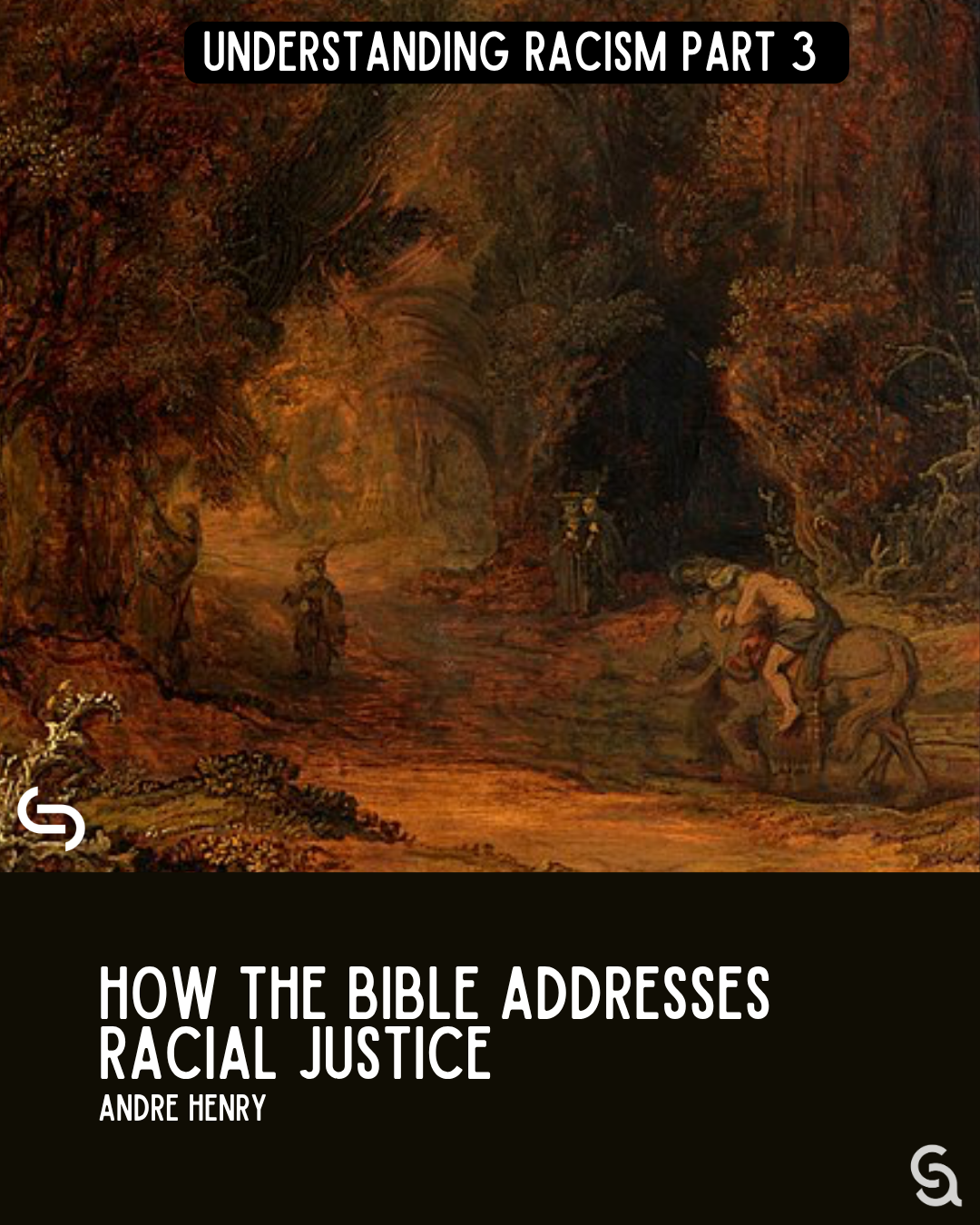
Jesus’ parable of the Good Samaritan confronted Judean anti-Samaritan bigotry. Judeans thought of Samaritans as spiritual and cultural inferiors for their mixed Assyrian-Israelite roots. By casting a Samaritan as the hero who aids a beaten Judean (unlike a priest and Levite), Jesus challenged the notion that Samaritans are inferiors — imagining a Samaritan who kept the law of Moses more faithfully than the parable’s Judean religious leaders.
Paul and Equality
As Gentiles joined the early church, ethnic hierarchy resurfaced. Some Jewish Christians felt superior to Gentile Christians. Paul tackled this head-on: “There is neither Jew nor Greek, slave nor free” (Galatians 3:28). Some modern Christians interpret these words in ways that bypass ongoing racial tensions and inequities. Yet Paul’s concern was precisely the ethnic and social divisions fracturing the early church.
James and Favoritism
James’ epistle condemns favoritism between rich and poor (James 2:1-9). Though his argument most obviously invokes notions of class divide, it also applies to racism, since race often creates underclasses. Funneling power, privilege, and resources to the favored few is a form of societal favoritism. As Jesus’ brother and a top early church leader, James held great influence. Early Christians took him seriously. We should, too. It shows that anti-oppressive values have been core to Jesus’ Way from day one.
Revelation and Empire
Historically, racism has been deeply intertwined with imperialism. Ideas about race were used to justify land theft, genocide, forced labor, and colonial expansion for the economic benefit of European empires.
When the apostle John imagines God setting the world right in the Book of Revelation, he imagines the dismantling of the greatest empire of his time: Rome. In Revelation 13, everyone takes the mark of the beast, and they all sing the beast’s praises in unison. That vision is a depiction of the way Empire subjugates the colonized. John juxtaposes this image with the heavenly realm, where there is a diverse group of people from every nation, singing to God in many languages (Revelation 7). When John imagines God setting the world right, he envisions the empire falling apart while angels sing “Hallelujah!”
Following the Current
It’s often said that you can find whatever you’re looking for in the Bible. These passages show currents of anti-oppressive sentiment throughout Scripture. Though these currents are at times contradicted by passages that can be read to support various forms of oppression, these passages tap into God’s deep heart for justice, helping those of us who are compelled to social action because of our faith to recognize and locate ourselves within a long Christian tradition of pursuing dignity, liberation, and human flourishing. Andre Henry is program manager of the Racial Justice Institute. He is a student of nonviolent struggle and social change, including studying leadership in nonviolent movements for social change through the Harvard Kennedy School. He holds a BA in Practical Theology and an MA in Theology with an emphasis in Biblical Languages.