
 A story attributed to Saint Francis of Assisi goes something like this: Once, Francis and another friar were walking past an ornate cathedral when the friar declares, “The church can no longer say, ‘Silver and gold I have not,’” referring to Peter’s words to a lame beggar at the Temple gate. Francis quipped, “Neither can she say, ‘Rise, take your mat and walk.’”
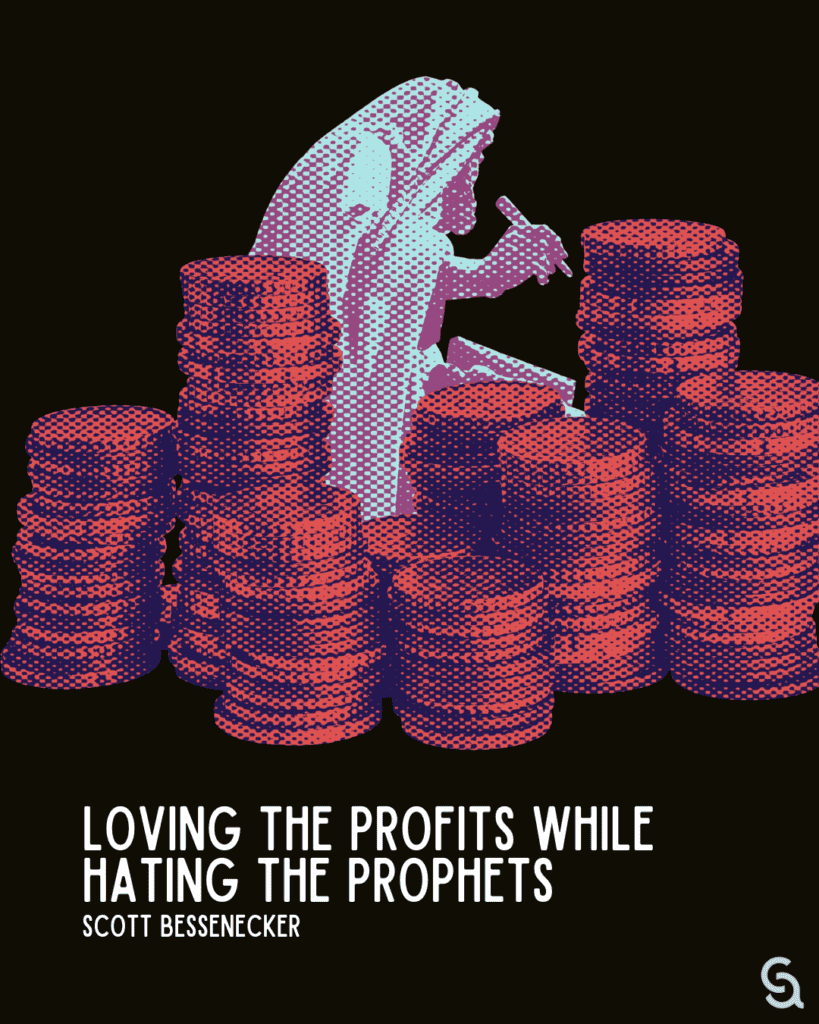
When the church opts into the power of wealth, it risks opting out of the power of God.
Nowhere does that reality feel truer than in the U.S. America’s economic rise was deeply entangled with slavery, land dispossession, and extraction-driven expansion, all the while often enjoying the blessing — or at least the accommodation — of large portions of the church. America dominated the textile industry at a time when cotton was king. That wealth was the fruit of a brutal strain of capitalism often described as plantation capitalism. America’s economic foundation expanded amid profound moral contradictions, and the church too often provided the salve to relieve a troubled conscience.
When Andrew Jackson’s Indian Removal policies forced the Seminole and Choctaw off their land, and enslaved people were sent to work the property they once occupied, many churches used pulpits and Scripture to defend what should never have been defended. Missionaries operated Indian boarding schools shaped by the chilling aspiration to “kill the Indian and save the man.”
True, many Quakers and Anabaptists were abolitionists and advocated for Native peoples, but there were enough respected church leaders advocating these systems to convince many churchgoers that slavery and cultural destruction were somehow compatible with God’s will. These arrangements also proved financially advantageous.
Paul wrote to Timothy that the love of money was at the root of many kinds of evil (1 Tim. 6:10), and America’s love of money required many kinds of moral compromise to achieve its economic dominance. Lamentably, the church often helped justify or ignore those compromises.
The Concentration of Wealth
The “Robber Barons” of America’s Gilded Age concentrated extraordinary fortunes into a few hands. Many were publicly devout Christian men who defended the accumulation of wealth as proof of God’s favor. “God gave me my money,” J.D. Rockefeller famously claimed. If wealth were truly a reliable indicator of divine favor, we would be forced to reconcile that belief with the monopolies, political influence, and labor exploitation that marked the era. After all, these men were pillars of their church communities and philanthropists.
The economic forces of the Kingdom of God are centrifugal, spinning wealth out to the margins, while the economic forces of empire pull wealth from the margins and concentrate it into fewer and fewer hands. Wealth disparity in the U.S. has been accelerating, creating a world where a small percentage of the population controls a vast share of resources. America increasingly reflects patterns familiar to historic empires, where extreme affluence exists alongside widespread precarity. No wonder Jesus warned his followers about the spiritual dangers of greed more than any other temptation.
For the most part, the American church has been either supportive of or silent about economic systems that consistently transfer security and opportunity away from the vulnerable.
The American Oligarchy
The problem with highly concentrated wealth is that those who possess it exert disproportionate influence over those who make the economic rules. This generally results in increasing wealth disparity.
A disproportionate share of the world’s wealthiest individuals reside in the United States, as does an extraordinary concentration of billionaires. If wealth represents power, then this reality should put the American church on alert; the policies and priorities of our country may not necessarily bend toward those whom Jesus centered — those at the social and economic margins.
America increasingly resembles an oligarchic system where individuals with great wealth influence media ecosystems, financial institutions, political structures, and regulatory frameworks.
What does “good news to the poor” look like in such a place? Can the marginalized be protected from powers arrayed against them, and can the wealthy themselves be rescued from spiritual bankruptcy?
In dozens of Gospel passages, Jesus warns his followers about the dangers of chasing after money and possessions.
This tracks with the ancient Hebrew prophets, like Isaiah, who rebuked God’s people for having “the plunder of the poor” in their houses (Isa. 3:14). Yet some corners of the American church have created theological frameworks that sacralize the pursuit of wealth and comfort. This prosperity gospel proclaims a view of God’s goodness where conspicuous consumption, individualized luxury, and freedom from hardship or illness appear central. Despite Jesus’ warnings, this theology implies it is possible to serve two masters — to gain the world without forfeiting one’s soul.
I met a Nigerian Christian leader who lamented the destructive effects of prosperity theology in his home country. He noted that pastors trained in certain American institutions returned with a radically altered imagination, shifting from a theology shaped by endurance and communal care to one preoccupied with material gain.
I have met people who possess great wealth yet live relatively simply, giving away much of their money. In fact, compared to those who lived in the first century, most Americans enjoy levels of comfort inconceivable even to kings and emperors of Jesus’ day.
I’ve come to conclude that it is not merely the existence of wealth or poverty that should offend us; it is their coexistence. It is Lazarus at the gate of the rich man (Luke 16:19-31). How, then, should we live in a world where the distribution of resources appears to contradict the kingdom Jesus proclaimed?
Striving for an Economic Morality
Model Simplicity
John the Baptist, preparing the way for Jesus, called people to produce the fruit of repentance (Luke 3). When asked what this fruit looks like, John offered deeply economic instructions: share clothing, reject exploitation, resist extortion, practice contentment. Jesus reinforced this posture, warning that life does not consist in the abundance of possessions (Luke 12:15). While Jesus did call some individuals to radical divestment, his broader teaching consistently oriented followers toward simplicity, generosity, and trust in God rather than accumulation.
Avoid a Commercial Mindset
We must be cautious about corporate capitalist logic infiltrating churches and ministries. When money becomes central, people risk becoming markets and growth is an unquestioned good. The gospel is not a commodity to consume but a way of life meant to reorder our desires. The church must resist becoming a Christianized version of empire.
Come Out of Babylon
The warning to the Laodicean church remains haunting:
“You say, ‘I am rich…’ But you do not realize that you are wretched, pitiful, poor, blind and naked.” (Rev. 3:17)
The tension between faithfulness and accommodation to empire has marked the church throughout history. Yet renewal movements continually arise, calling the church back to humility, simplicity, and solidarity with those on the margins.
As I trace the church’s story across centuries, I see this recurring struggle: the love of God and neighbor set against the seductions of wealth and power. Each time the church drifts toward comfort and control, prophetic voices emerge to call it back.
May we listen to those voices — following their example of theological fidelity, moral integrity, and service to those on the margins.
 Scott Bessenecker is Director of Global Engagement and Justice for InterVarsity. Look for his forthcoming book, Bad Religion, Good News: An Honest Guide for the Spiritually Disappointed, from Herald Press.