 The exposé landed on Facebook in mid-February 2022, a long screed calling me an anti-Christian pathological liar who deserved to be fired from my faculty job at a Quaker university, primarily because I led students away from Christ. Apparently, I “worshiped Critical Race Theory as religion,” and was “a nutcase who harbors an open disdain for Christians, and the majority of the residents in Newberg, as well as believes in censorship of any news outlets who do not agree with her personal world views.”
There was more about me and another colleague, about 6,000 words more, cobbled together from Twitter (now X) posts, often taken out of context; from interactions on community social media boards; and from stories knit together out of whole cloth (turns out, I’m not really a Christian romance author, a conclusion the exposé’s writer reached based on a satiric Tweet).
I’d become a target of the writer’s ire because I vocally opposed our local school board and its majority of Christian nationalists who were then causing havoc in our community.
The exposé was one of many published by a website that trafficked in local conspiracy theories, though the main writer was also platformed by several large right-wing radio programs, and his words led to death threats against a city leader. The constant churn of disinformation turned neighbors against neighbors, carving deep channels of resentment and distrust in an Oregon community already roiled by contentious elections and by racist incidents that made national news (see here, here, and here).
My hometown is only a microcosm for what is happening everywhere now, where a lack of truth-telling has had a disastrous impact on our world.
The ascendency of social media across numerous platforms, the speed with which unverified news stories are put into the world, algorithms that prioritize ragebait, politicians without moral fortitude to tell the truth: these elements have created a toxic environment where truth no longer seems to matter–certainly not in the way it once did.
When anything that challenges our worldview is labeled “fake news,” and when we are told there are facts and alternative facts, and when the line between a fact and opinion has become blurred in our lust for infotainment, it can be hard to know what the truth really is. So many of us end up discombobulated and confused, afraid by what we’re hearing, and no longer willing to search for the truth, preferring stories that confirm our biases. No wonder my town, the country, our world is so deeply divided, and so deeply broken.
Disinformation and the Dehumanization of Our Neighbors
Disinformation is a kind of dehumanization.
It dehumanizes those it targets, and it dehumanizes often as a way to provide power-over other people. It dehumanizes as a precursor to violence, and has been used as a way to oppress people already in the margins.
In my hometown, as elsewhere, that dehumanization has also eroded our trust in institutions, in our government, our schools, our churches, our aid organizations, our neighbors. Some days, I wonder if those institutions – and humanity – will ever be healed from the damage disinformation has done to them.
George Fox, the founder of Quakers, wrote about a “thick night of darkness” descended upon the world, and that feels like an apt description for the time we’re living in now. It’s so easy to feel total, unambiguous despair, longing for truth in a post-truth world.
As an English professor, one place I’ve found truth is in books, which has proven to be a good way to fight despair about our current historical condition. When I’m tempted to believe that this is the worst time ever in the world’s history, books (both fiction and nonfiction) remind me that bad actors have been a part of our world since its beginning, and that our own country was built on the pain and suffering of others.
Books also bear witness to resilience in the face of suffering, and their subversive power reminds me that, in the end, perverted power will not win.
The world’s narrative arc bends again and again to justice.
This might be one reason art is suppressed by tyrannical governments, as art and literature help us see the world as it is, and as it should be, a reminder of what it means to be human. And, I would say, it’s because we are not reading that we find ourselves so susceptible to disinformation, to the charms of distraction and the quick endorphin hit of TikTok and Instagram and Facebook posts that make us feel something intense, often based on something that’s intensely untrue.
What It Means to Steward Truth
Still, we can and should commit to stewarding truth, which means caring for and being responsible for the information entrusted to us. To steward truth, we need to patiently consider what we read and hear, investigate the sources of our information, and support credible news outlets rather than seeking only those that support our biases. Interrogating the information we receive takes time, a resource few of us feel we have right now, even as adults currently average 2.5 hours/day on social media alone.
Stewarding truth might also mean considering our relationship to social media itself. Refraining from sharing disinformation on social media can help limit its spread; resisting the temptation to respond to rage bait – or respond to other responses – might also mean less oxygen for disinformation to proliferate. Better yet, stepping off social media and meeting your neighbors in real life can help counter disinformation’s corrosive dehumanization of others.
When I think about what unfolded in my home community, and about the flood of disinformation that reconfigured our town, I imagine how stewarding truth might have saved us. How it might have created a different environment in our community, one where more people worked together to ensure that this was a place where anyone could thrive.
Although differences no doubt existed about what our community should look like, I’m convinced that valuing truth might have created a more collaborative environment, inspiring adults to talk with each other, rather than about each other on social media. Valuing truth might have meant that a writer who spread “exposés” about people in Newberg would have been held accountable, rather than platformed.
I also wonder what might happen if government leaders, locally and nationally, were better stewards of truth, especially in a political ecosystem that traffics so easily in lies.
Valiant for the Truth
George Fox certainly knew the power of speaking truth to the powerful.
His ministry flourished in a time of war, cultural and social upheaval, and a state-sanctioned church that demanded people bend their knee to a monarchy that used religion to coalesce money and power. George Fox preached a different kind of relationship with Jesus, one not reliant on hierarchy and power.
In asserting that we could have an authentic connection to Jesus because he existed inside of and for everyone, George Fox undermined those who said they alone could serve as mediator for the divine, a definite threat to the Church of England’s entire house of cards. For this threat, George Fox was imprisoned multiple times, an attempt to silence him from saying that the hierarchical church itself was irrelevant.
He refused to be silenced, and even when he was thrown in prison, he and other early Quakers found ways to spread their message:
“There is one, even Christ Jesus, that can speak to thy condition.”
During his numerous imprisonments, George Fox continued his ministry, writing letters and exhorting others to keep faith. From prison in November 1663, he wrote,
“Go through the world, and be valiant for the truth upon earth. . . . Sing and rejoice, ye children of the day and of the light; for the Lord is at work in this thick night of darkness that may be felt. And truth doth flourish as the rose, and the lilies do grow among the thorns. . . . Follow the lamb, if it be under the beast’s horns, or under the beast’s heels; for the lamb shall have the victory over them all.”
When I read George Fox’s exhortation here, I am astounded by its universality, how it speaks to our condition, nearly 400 years later, another reminder that history and humanity tend to repeat itself, and that our time is not so unusual after all.
George Fox is himself echoing the words of the prophet Jeremiah, who faced oppression and imprisonment as he railed against power, and at a nation beset by idolatry and moral turpitude: “They bend their tongues like their bow for lies: but they are not valiant for the truth upon the earth; for they proceed from evil to evil, and they know not me, saith the Lord” (Jer. 9:3).
Stewarding the truth in a world corrupted by disinformation, by rancor and division and chaos, is an occasion for hope. Being valiant for the truth might require considerable courage, too, but we should take heart, for the Lamb will have victory over all.
What a potent reminder, today and every day, of the truth that really matters.
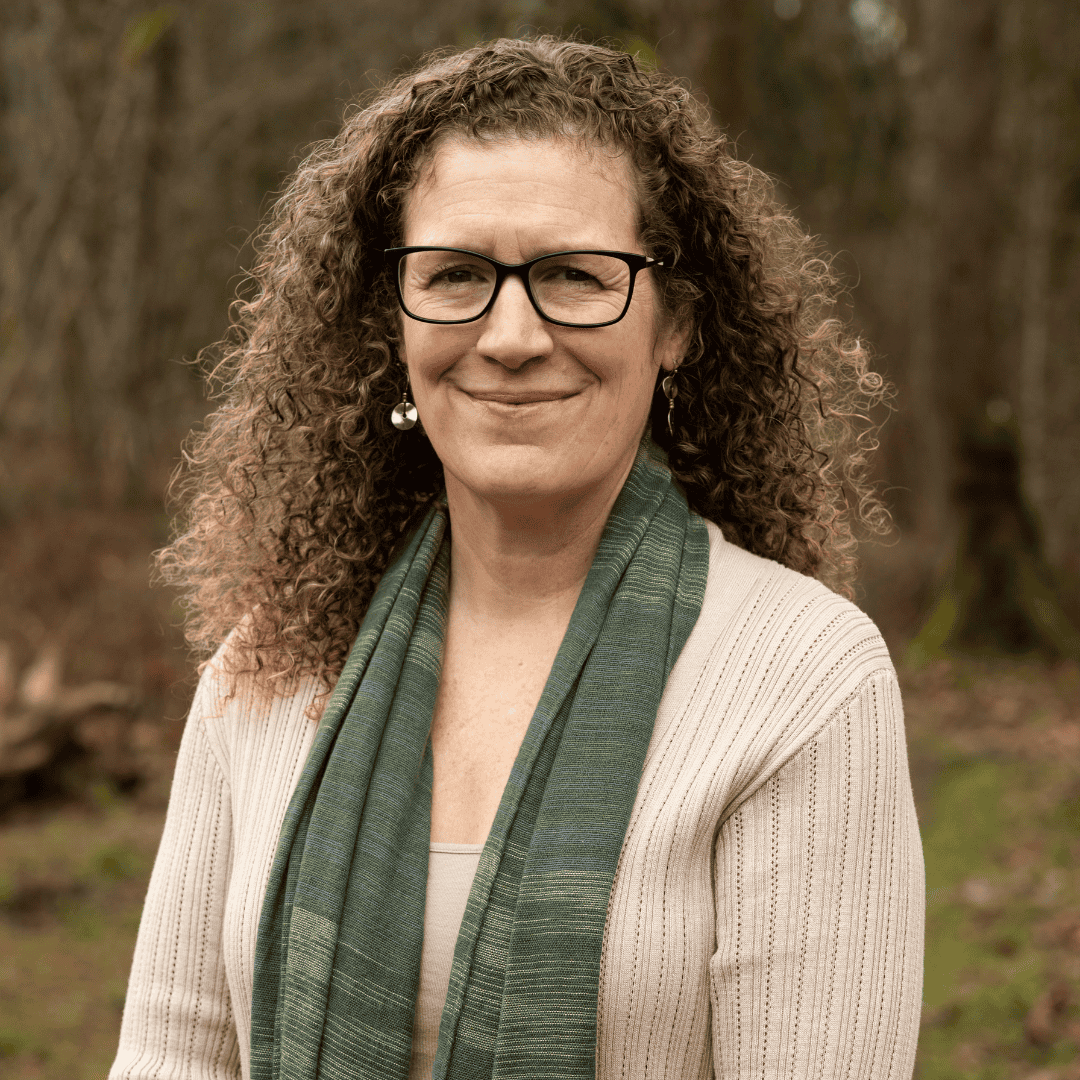 Melanie Springer Mock is professor of English at George Fox University, in Newberg, Oregon, where she primarily teaches first-year writing, memoir, and journalism courses. She is author or coauthor of seven books, including her forthcoming book, Whatever is True, about how Christian nationalism upended her hometown’s school board, and the hope she still has in community (forthcoming from Fernwood Press, 2027). Her essays and reviews have appeared in Ms. Magazine, The Nation, Christian Feminism Today, Chronicle of Higher Education, and Anabaptist World, among other places. Mock is a CSA pundit.

One Response
Thank you! Excellent and encouraging.
If we look down on the huge timeline of history and observe the arcs of justice and injustice we can find reassurance that our times we no different.
Only that the adversary has done another costume change.