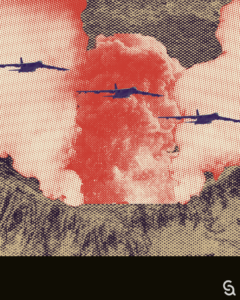
 At times, public discourse on war becomes detached from the lived realities experienced by those directly affected. It is troubling to hear everyday citizens in the United States, along with some commentators and journalists, speak about war without meaningful proximity to conditions on the ground, often engaging it from a place of detachment that distances them from its human consequences.
In many cases, this distance raises an important ethical question: Would those who advocate for or normalize war make the same claims if they themselves were confronted with the possibility of deployment? In my scholarly opinion, this kind of distance can border on apathy, especially when discussions of casualties, genocide, and loss are reduced to talking points and stripped of their humanity.
The cost of war continues to reveal how much we are willing to invest in destruction instead of using those same resources to support people in need. Human beings are taken by violence, both those deployed and those the military often refers to as “friendlies,” as a result of conflict. And that does not begin to account for those who return from war carrying trauma or the communities left in ruins.
I have to name that this is not okay.
In fact, it is one of the reasons Dr. Martin Luther King Jr. named militarism as one of the “triple evils.” In his speech “A Time to Break Silence“ on April 4, 1967, he said,
“A nation that continues year after year to spend more money on military defense than on programs of social uplift is approaching spiritual death.”(1) (2)
As I reflect on war, I find myself returning to its long-term effects, the toll it takes on mental health, on families who carry the weight of deployment, and on communities shaped by loss.
When War Comes Home
If we are honest, one of the questions we rarely ask is this: What happens to those who are sent to serve when they come home?
That question matters, because while political leaders and commentators debate military strategy, I am thinking about those asked to serve, to protect a country that, in many cases, struggles to receive them once they return. What happens after the uniforms come off? What happens when the battlefield is replaced by everyday life? Could this war increase homelessness for veterans, as wars have done in the past?
I raise these concerns because the billions of dollars already spent on war could have gone, instead, to supporting people who are unhoused.(3) These are funds, many argue, that could be used to address other pressing issues, like food insecurity, housing shortages, and inequalities in health care and education.
For over a decade, my work has placed me in close proximity to people who are unhoused across this country. Through storytelling, museum work, and leading a nonprofit centered on this issue, I have come face to face with veterans who are unhoused. These are some of the most heartbreaking conversations I have encountered, outside of meeting families with children experiencing homelessness.
Their stories may differ, but patterns emerge. They served with sacrifice, and somewhere along the way, the systems designed to support them failed.
I have encountered veterans who became unhoused because they could not access their benefits due to bureaucratic barriers or discharge status. Nearly 500,000 veterans have “other than honorable” discharges, many of whom are ineligible for full VA benefits despite their service.(4)(5)
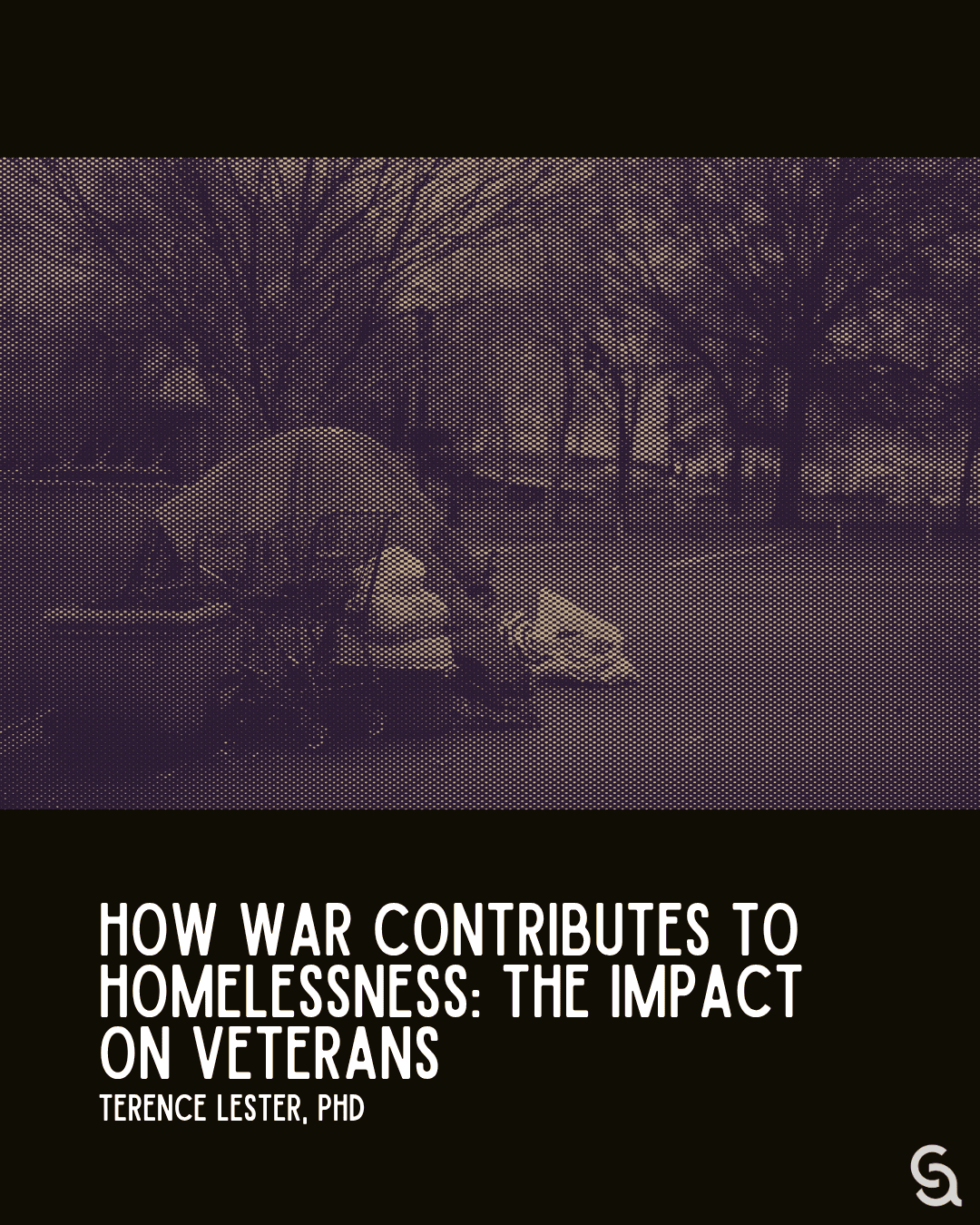
Others became unhoused because of job loss, health crises, family breakdown, or mental health challenges. On any given night, more than 32,000 veterans experience homelessness in the United States.(6)(7) Veterans are about 1.5 times more likely to experience homelessness than non-veterans, often due to a combination of economic hardship, trauma, and lack of support.(8)
The Long Shadow of War
This is why I want us to make the connection between war and homelessness. War does not end when the fighting stops, it produces long-term conditions that lead to instability and, in many cases, homelessness. It shows up in the inability to hold onto work, in relationships that begin to break down, and in the quiet weight of trauma that follows people long after they return home. And this is not only true for those coming back from service, but also for civilians in other countries whose lives are disrupted or destroyed by conflict.
This data points to a deeper reality: War is one of the pathways that has contributed to veteran homelessness. And then there are these words, which I have heard repeatedly: “I served my country, and now it does not serve me.”
Over a year ago, I met a veteran named Darryl, whose story I later shared on the “Imagine Dignity” podcast. He received an “other than honorable” discharge during the late 1960s, a period when racism within the ranks was not subtle but systemic.(9)
He asked a question of a superior officer. That question cost him his standing, his benefits, and ultimately his stability. Decades later, he was still living with the consequences, without access to the very resources meant to support him.
When we talk about war, we must also talk about what it produces beyond the battlefield and how it follows people home.
As a person of faith, I believe this raises a deeper theological question. What does it mean to follow a God who is concerned with all of human life if we ignore the long-term effects on those sent to war in the name of peace?
As a person of faith, I believe this raises a deeper theological question. What does it mean to follow a God who is concerned with all of human life through a lens of love, while ignoring the long-term effects on those sent to war in the name of peace?
This is a contradiction that cannot be ignored. Scripture reminds us that God is not distant from suffering but deeply present within it. In Luke 4:18, Jesus declares that he has been anointed to proclaim good news to the poor, freedom for the prisoners, recovery of sight for the blind, and release for the oppressed. This makes it clear that the work of God is rooted in liberation, not neglect, and certainly not violence.
To follow that kind of God means we cannot turn away from those whose lives have been shaped by violence, whether they return home carrying trauma or remain in places where conflict has left entire communities in ruin.
Many soldiers return home carrying invisible wounds, post-traumatic stress, depression, and anxiety, that shape how they engage work, relationships, and stability. Combat exposure increases vulnerability, and PTSD is closely linked to unemployment and housing instability.(10)
If the church is called to be a place of refuge, then this is one of those moments where that calling must move beyond language and take on real form. The church has a responsibility to help people understand the true cost of war, not just in terms of conflict, but also in the lives that remain disrupted long after it ends. The church must also use its voice prophetically, challenging the assumption that war is necessary, especially at a time when so many are already suffering.
That means creating spaces that educate, spaces that tell the truth about harm, and spaces that prepare communities to receive those who return carrying trauma, as well as those displaced by conflict. It means asking how our buildings, our resources, and our collective presence can be used to care for people navigating the long-term consequences of violence.
So when we talk about war, we have to interrogate the narratives we’ve accepted about it. The question is not only what happens on the battlefield, but also what happens long after. Because the cost of war is not only found in defense budgets or geopolitical outcomes, it shows up in homelessness and in veterans trying to understand how serving their country led to surviving on the streets.
Endnotes
(1) The Martin Luther King, Jr. Research and Education Institute. “Beyond Vietnam.” Accessed April 13, 2026. https://kinginstitute.stanford.edu/encyclopedia/beyond-vietnam.
(2) City Heights Community Development Corporation. “5 MLK Quotes Too Radical to White-Wash.” Accessed April 13, 2026. https://www.cityheightscdc.org/stories/mlk-quotes-too-radical-to-be-white-washed.
(3) Kogan, Bobby. “By the End of the Week, the Trump Administration’s War in Iran Will Likely Have Cost $25 Billion.” Center for American Progress, March 24, 2026. https://www.americanprogress.org/article/by-the-end-of-the-week-the-trump-administrations-war-in-iran-will-likely-have-cost-25-billion/.
(4) U.S. Department of Veterans Affairs. “Applying for Benefits and Your Character of Discharge.” Accessed April 7, 2026. https://www.benefits.va.gov/benefits/character_of_discharge.asp.
(5) Young, Chris, and Taylor Mirfendereski. “VA Struggles to Reach ‘Other Than Honorable’ Veterans Who Qualify for Help.” KING 5 News, May 14, 2019. https://www.king5.com/article/news/va-struggles-to-reach-other-than-honorable-veterans-who-qualify-for-help/281-eae620c7-2f93-4f16-9c24-a39ff3e3cf86.
(6) National Coalition for Homeless Veterans. “Veteran Homelessness.” Accessed April 7, 2026. https://nchv.org/veteran-homelessness/.
(7) Bob Woodruff Foundation. “Veteran Homelessness in the U.S.: Understanding the Numbers.” Accessed April 7, 2026.
(8) Veterans Place USA. “Why Are There Homeless Veterans? Facts About Veteran Homelessness.” Accessed April 7, 2026. https://www.veteransplaceusa.org/why-are-there-homeless-veterans-facts-about-veteran-homelessness/.
(9) Lester, Terence, Ph.D. “Veterans Who Face Homelessness | Forgotten Heroes | #ImagineDignityPodcast Ep. 1.” YouTube video. Accessed April 7, 2026. https://youtu.be/eE6ClgY-Yrk.
(10) Nichter, Brandon, et al. “Prevalence, Correlates, and Mental Health Burden Associated with Homelessness in U.S. Military Veterans.” Psychological Medicine 53, no. 9 (2023): 3952–3962. https://doi.org/10.1017/S0033291722000617.
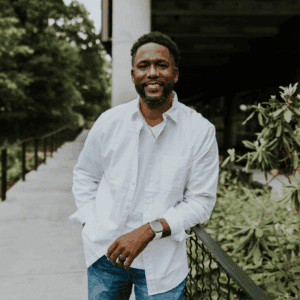 Dr. Terence Lester is a storyteller, public scholar, community activist, and author. He founded Love Beyond Walls, a nonprofit committed to raising awareness about poverty and homelessness, and writes a weekly newsletter titled From Streets to Scholarship. His latest book, From Dropout to Doctorate: Breaking the Chains of Educational Injustice (IVP, 2025), traces his journey from high school dropout to PhD and issues a bold call for equity. Through his life and writing, he uses narrative, policy insight, and faith to challenge systems that leave people invisible and to inspire practical change. Lester is a CSA pundit.