
 Last month, I took my 14-year-old daughter to Miami Beach for a girls’ getaway. We had never taken a vacation just the two of us, and she has always loved palm trees, beaches, and pastel architecture. I hadn’t been to Miami since I was young, probably during one of my family’s trips through Florida to the Keys or the Everglades.
Almost immediately, Miami Beach felt different from the part of Illinois I call home. Spanish seemed to be everywhere — in conversations around us, in music spilling across the beach, in restaurants and shops. Families crowded around restaurant tables late into the evening. Music was everywhere. My daughter and I joked that we might have been the two palest people on the beach.
What struck me over those few days was how much of my picture of Miami had been assembled before I ever got there. I knew the city mostly from a distance; namely, from news stories, politics, television, and whatever other impressions I had accumulated over the years. And then I was actually there. The place was louder and livelier and more ordinary and more complicated than the version that had existed in my head.
I’ve thought about that trip more than once in the past few weeks because our political vocabulary can do something similar. We hear a word — immigration, capitalism, socialism, democratic socialism — and an entire story can spring instantly into our minds. We may quickly approve or disapprove of each of them before we’ve even stopped to ask what these words mean or what experiences have made them compelling to some people.
And lately, one of these words seems to be showing up everywhere: democratic socialism.
So I started digging because I wanted to understand why a political philosophy that was nearly unspeakable in mainstream American politics for much of my lifetime (yes, I am Gen X!) suddenly seems to be finding a receptive audience. And, if I’m being transparent, I came to this with some skepticism. The word socialism still carries some pretty negative associations for me, and I realized that was all the more reason to understand what people actually mean when they use it today.
(A word of transparency before we go any further: I am not a political scientist, economist, or expert on democratic socialism. I am a voter, a citizen, and a Christian who cares deeply about what is happening in our country and how we respond to it. What follows is not an attempt to settle the debate. It’s an attempt to understand it, and to invite you to do the same.)
Is America Becoming Socialist?
I remember the first time I really noticed Sen. Bernie Sanders. It was when the memes of him seated in various locations during COVID-19 went viral. Do you remember those? You could plug in your address on a website and Bernie would appear in your front yard.
Sanders helped return democratic socialism to the national political conversation during his presidential campaigns. Rep. Alexandria Ocasio-Cortez brought the label to another generation. More recently, Zohran Mamdani’s election as mayor of New York City and victories by candidates backed by the Democratic Socialists of America (DSA) have again put democratic socialism in the spotlight.
DSA itself reports reaching an all-time high of 120,000 members in July 2026.[i]
But is America actually becoming socialist? The data suggests something more complicated.
A 2025 Harvard Youth Poll found that 29 percent of Americans ages 18–29 supported democratic socialism. This is down from 40 percent in 2020. Among young Democrats, however, support stood at 63 percent.[ii]
Gallup found that 81 percent of Americans view free enterprise positively, while 54 percent view capitalism positively. Only 39 percent view socialism positively.[iii]
That hardly looks like a socialist revolution. What we may be seeing instead is growing dissatisfaction among some Americans with the economic status quo, and growing openness to alternatives.
What Is Democratic Socialism?
One of the first things I discovered as I started reading was that I had been using several of these words too loosely. Socialism, democratic socialism, social democracy, and communism are not interchangeable.
Take Scandinavian countries, for example. I’ve heard them described as “socialist” plenty of times, but that’s not quite right. Countries such as Sweden and Denmark still have capitalist economies; they simply pair them with larger public programs and stronger social safety nets. That’s generally called social democracy.
Democratic socialism goes further.
The Democratic Socialists of America says its vision “pushes further than historic social democracy.” It rejects authoritarian socialism but seeks to move beyond capitalism, including through collective ownership of key parts of the economy.[iv]
Many policies that Americans associate with “socialism.” These include universal health care, paid family leave, stronger unions, and progressive taxation. But even these can exist within capitalist economies.
Supporting a particular government program does not make someone a socialist.
What I began to realize is that the argument is about bigger questions: Who gets economic power? What should markets decide? What responsibilities should government have? And what, if anything, does an economy owe the people living within it?
This Isn’t Actually New
American socialist movements go back to the 19th century, when industrialization created enormous wealth alongside terrible working conditions. By the early 1900s, Eugene V. Debs was running for president as a Socialist while labor movements were wanted greater protections for workers.
Interestingly enough, Christianity was part of that story too.
In the wake of the Gilded Age, the Social Gospel movement challenged Christians to consider not only individual charity, but also the social conditions contributing to poverty and exploitation. Catholic social teaching developed its own critique of both worker exploitation and socialist collectivism.
The Cold War later linked socialism in many American minds with Soviet communism and authoritarian government. But democratic socialism never disappeared completely. The organization we now know as Democratic Socialists of America formed in 1982.
Then came the Great Recession and Occupy Wall Street, and yes, Bernie Sanders.
And eventually a generation that had never lived through the Cold War began hearing the word socialism without quite the same baggage many of us Gen Xers and Boomers carried.
Why Does It Appeal to People Now?
I think the best way to understand democratic socialism’s renewed appeal is by starting with people’s lives. For many Americans, particularly younger adults, the promise of economic success feels less certain. It’s no longer just: get an education, work hard, find a good job, buy a home, raise a family, and gradually become more financially secure.
Housing is difficult to afford. Childcare and higher education can be enormously expensive. Medical bills remain a source of financial anxiety. I certainly don’t need an economist to tell me family budgets feel different. I feel it almost every time I walk out of the grocery store.
Workers also have less collective bargaining power than they once did. In 1983, 20.1 percent of American wage and salary workers belonged to unions. In 2025, only 10 percent did.[v]
At the same time, Americans encounter extraordinary concentrations of wealth alongside homelessness, medical debt, food insecurity, and families struggling to pay rent.
This doesn’t mean Americans are uniformly worse off, nor does it mean every critique of capitalism is accurate. But politics isn’t shaped only by economic statistics. It is also shaped by whether people believe the system is working for them.
That may help explain the seemingly contradictory polling. Americans overwhelmingly like free enterprise while feeling considerably less enthusiastic about capitalism.
Perhaps people aren’t rejecting entrepreneurship or markets as much as questioning an economic system they believe allows wealth and power to become concentrated while leaving ordinary families feeling like they are really struggling.
Democratic socialism offers an answer to that frustration. Whether it offers the right answer is another question, and one that I don’t think I can answer.
Why We, as Christians, Might Understand the Appeal
This is where our Christian faith gives us footing to enter into the conversation with nuance.
Democratic socialists frequently speak about dignity, solidarity, workers’ rights, economic security, care for vulnerable people, and the common good. Christians should recognize many of those concerns.
Scripture has a lot to say about economic relationships. Israel’s prophets condemned those who prospered through exploitation. Biblical law repeatedly protected widows, immigrants, laborers, and people experiencing poverty. Jesus warned about the spiritual dangers of wealth. James condemned employers who withhold wages. The Early Church practiced radical generosity so that “there were no needy persons among them” (Acts 4:34).
Economic justice is not a political add-on to Christian discipleship; it is woven throughout Scripture.
Christians for Social Action exists, in part, because evangelical Christians recognized this more than 50 years ago. The 1973 Chicago Declaration of Evangelical Social Concern, a foundational document in CSA’s history, rejected both economic inequality and economic materialism, alongside racism, militarism, and sexism.[vi]
Those two economic concerns are particularly interesting together.
Christianity doesn’t merely ask how wealth should be distributed, but it also asks what wealth is for.
But Christianity Isn’t Democratic Socialism, and Neither Is It Capitalism
Recognizing the questions raised by democratic socialism does not require Christians to embrace its answers. But neither should we assume that capitalism is somehow the Christian default.
Christianity cannot be reduced to an economic system. It is possible to recognize a real problem and still disagree about the solution.
Democratic socialism asks important questions about what happens when enormous amounts of wealth and economic power accumulate in private hands. But Christians should be wary of power wherever it accumulates, including in government.
What can government rightly do to protect vulnerable people without becoming too powerful itself? What belongs to government, and what belongs to families, churches, businesses, and communities? How do we encourage creativity, entrepreneurship, and ownership while restraining exploitation?
Christians have disagreed about these kinds of questions for centuries.
Catholic social teaching offers one example of resisting easy binaries. The Catechism of the Catholic Church rejects socialist systems that act as though human rights are less important than collective economic organizations.[vii] Christians from other traditions may think differently, but Scripture doesn’t give any of us permission to stop asking what our economic arrangements are doing to our neighbors.
Maybe “Capitalism or Socialism?” Is the Wrong Question
American politics frequently presses us toward a binary: Capitalism or socialism? But I think Scripture gives us something more complicated.
Here are some truths: Human beings bear God’s image. Work has dignity. Greed is dangerous. Generosity is commanded. Exploitation is condemned. People are not human resources–they are people. Those with power are accountable for how they use it. People who are poor and marginalized matter deeply to God.
And loving our neighbors has material consequences.
Those convictions should prevent Christians from giving unquestioning allegiance to any economic ideology.
Democratic socialism deserves serious questions about government power, property, freedom, and the historical record of socialist experiments. But perhaps it is easier for American Christians to recognize an ideology when it is unfamiliar to us. Capitalism can be harder to see because it is the economic world in which we live. We can take in assumptions about wealth, consumption, markets, and success without ever stopping to ask whether they align with the kingdom of God.
Perhaps, then, part of what makes democratic socialism compelling to some Christians is not simply what it proposes, but what it causes them to question.
Our allegiance, after all, is not to socialism or capitalism. It is to Jesus Christ.
Beneath the Label
I keep thinking about those few days with my daughter in Miami Beach. I arrived with a picture in my head assembled largely from a distance. Then I got there, and the place was more interesting and more complicated than the version I thought I knew.
I wonder if the same thing can happen with ideas.
We don’t have to suspend judgment or pretend every political or economic philosophy is equally good. Understanding something doesn’t require agreeing with it. But it does require actually understanding it.
And the fact that democratic socialism is getting more attention tells us something. Some Americans believe capitalism isn’t working for them. They worry they will never own a home. They wonder why getting sick can threaten a family’s financial security. They see enormous wealth existing alongside homelessness and poverty and wonder if there is a better way.
Democratic socialism offers one answer, but Christians don’t have to accept that answer. That said, our response to economic injustice also can’t simply be, “Don’t become a socialist.”
We have our own questions to wrestle with. What should an economy look like if we really believe every person bears the image of God? What do we owe workers? What do we owe people who are poor? When does wealth become too concentrated? When does government become too powerful? Where do markets serve people well, and where don’t they?
I started researching democratic socialism because I realized I had a reaction to the word before I fully understood the idea. I still have questions about it, but at least now I have better questions.
And maybe that’s enough of a place to start.
Endnotes
[i] Democratic Socialists of America, “From the National Political Committee—Socialism Is Practical,” July 2026. https://www.dsausa.org/news/jul2026_npc_newsletter/
[ii] Harvard Kennedy School Institute of Politics, 51st Edition—Fall 2025 Harvard Youth Poll. https://iop.harvard.edu/youth-poll/51st-edition-fall-2025
[iii] Gallup, “How Americans View Capitalism, Socialism and Free Enterprise,” August 2026.
https://news.gallup.com/poll/713144/americans-view-capitalism-socialism-free-enterprise.aspx
[iv] Democratic Socialists of America, “What Is Democratic Socialism?”
https://www.dsausa.org/about-us/what-is-democratic-socialism/
[v] U.S. Bureau of Labor Statistics, “Union Members—2025,” January 2026.
https://www.bls.gov/news.release/union2.nr0.htm
[vi] Christians for Social Action, “History.”
https://christiansforsocialaction.org/about-us/history/
[vii] Catechism of the Catholic Church, §§2423–2425, “The Social Doctrine of the Church.”
https://www.vatican.va/content/catechism/en/part_three/section_two/chapter_two/article_7/iii_the_social_doctrine_of_the_church.html
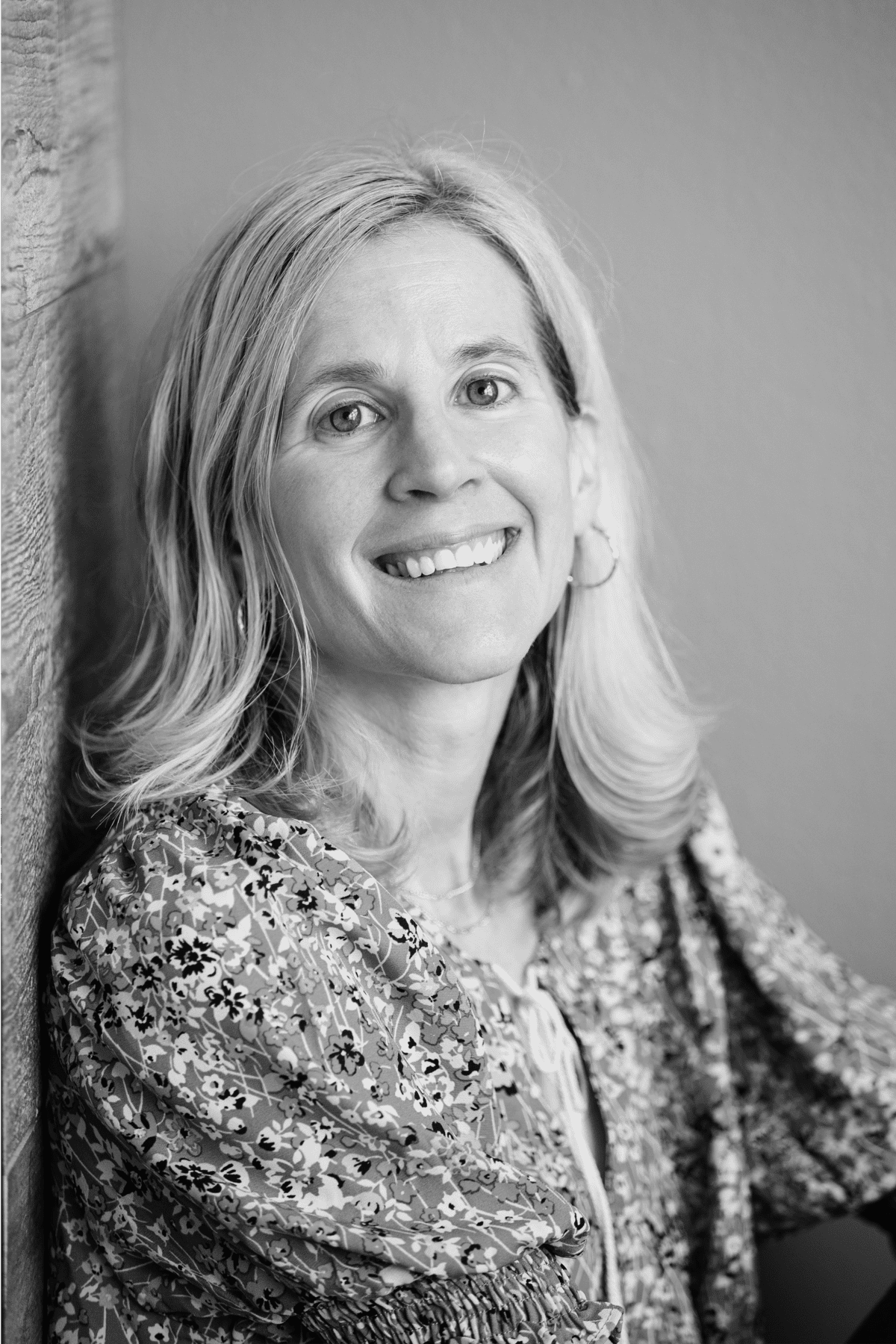 Laurie Nichols is a seasoned communications and marketing professional with over 25 years of experience in faith-based, nonprofit, and educational sectors. She serves as Director of Communications for Christians for Social Action. Previously, she served as Director of Communications & Marketing for both Northern Seminary and Seminary Now, where she led brand strategy, digital storytelling, and partnership relations. Her leadership extends into freelance work at Common Good Communications (founded April 2021), where she collaborates with mission-driven nonprofits and individuals to create strategic content, curriculum, and branding solutions.
Laurie is also the founder and co-host of the Heromakers Movement podcast, empowering emerging leaders in the faith and nonprofit world. Her expertise spans multi-channel communications — from editorial and social media to executive-level content and digital learning initiatives. Previously, she held communications leadership roles with the Billy Graham Center at Wheaton College and Media Associates International, and has worked with faith-based organizations through Pinkston PR, based in Falls Church, VA. She regularly blogs at Finding Faith Again on Substack. You can find her on LinkedIn here.