
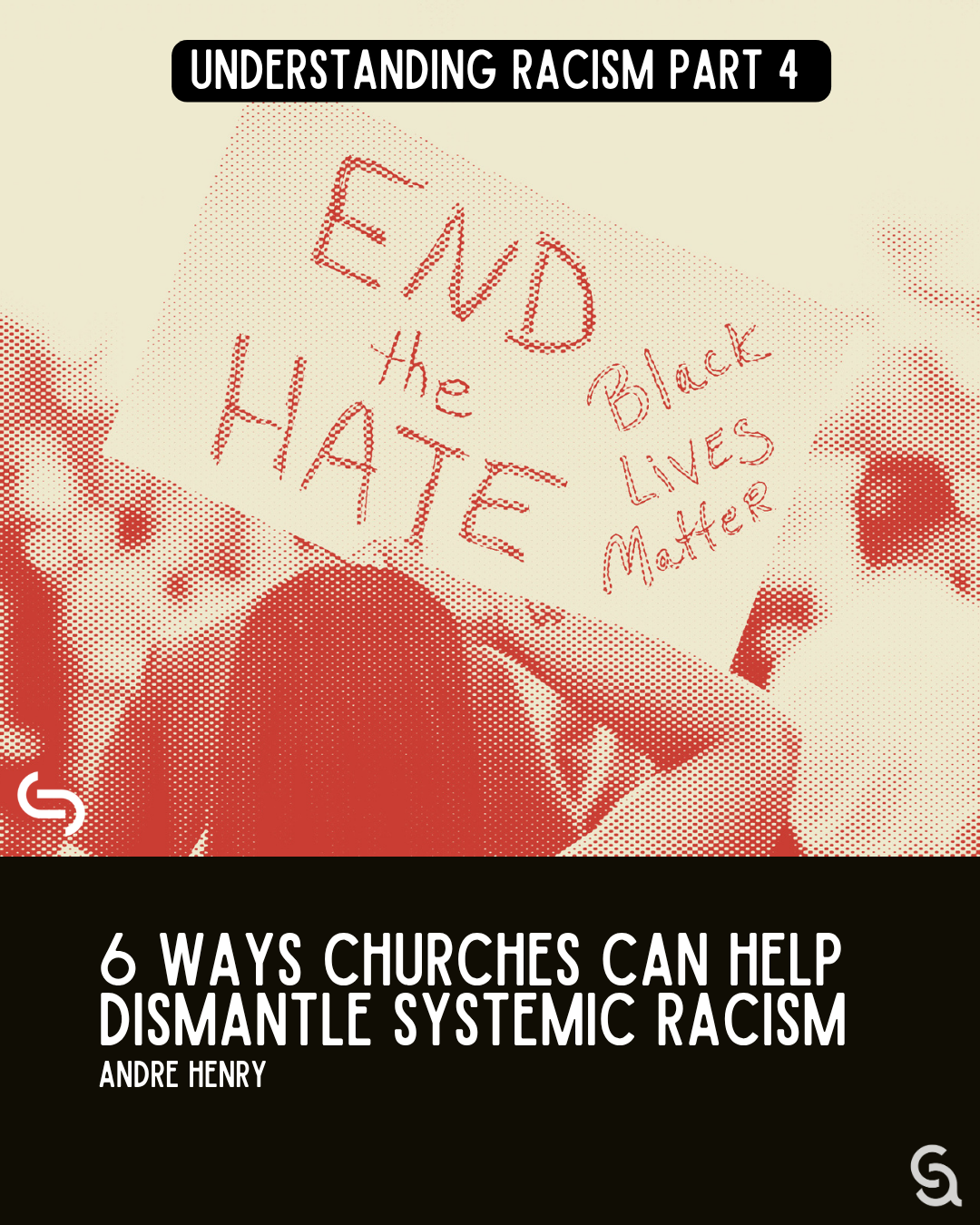
 (Editor’s Note: Racism is one of the most painful and misunderstood realities shaping both society and the church today. Many Christians want to engage these conversations faithfully but feel uncertain about where to begin, how to think biblically about race and justice, or how the church itself has contributed to racial harm throughout history. This four-part series from the Racial Justice Institute explores racism from theological, historical, and practical perspectives — helping readers understand what racism is, how Christian theology has been used both to uphold and confront it, what Scripture says about justice, and how churches can participate in meaningful repair and transformation today. Read Part 1, “What Is Racism?” here. Read Part 2, “How the Church Helped Construct Modern Racism” here. Read Part 3, “How the Bible Addresses Racial Justice,” here.)
In this series, we’ve established that racism is sin. We’ve shown that racism is not just personal hatred, but a system that unequally distributes power, opportunity, and resources based on race. We’ve also recounted how the Christian church has been deeply implicated in constructing that system.
Therefore, the church has a moral and spiritual obligation to repent of its participation in building and upholding global racism. True repentance goes beyond confessing the sin or even stopping it. It requires seeking repair where harm has been done, if possible, and committing to actively doing good (Deuteronomy 15:12; Ephesians 4:28). For the church, this means more than disavowing racism — it demands actively dismantling it.
Here are six practical ways the church can help dismantle systemic racism:
Make Anti-Racism a Core Value
Make your commitment to anti-racism explicit. List it alongside the other core values on your website, in your bylaws, wherever it lives. If “anti-racism” doesn’t feel like the right language, swap in “human rights,” “racial equity,” or “justice for the oppressed.” Whatever language you choose, make it unambiguous. This is important as a signal to people who have been racially oppressed that your sanctuary is a place where they will receive ministry relevant to the unique pain of racial harm. It is also an important point of repentance for the harms the church has historically participated in.
Preach and Pray Contextually
Treat biblical people as flesh-and-blood humans grappling with the political, economic, and social realities of their time. When you preach, spotlight power dynamics that already exist in the text. Make sure that a portion of your liturgies respond directly to the communal anxieties that arise from the headlines.
Support Direct Action Movements with Resources
Freedom movements thrive on mobilized resources: communication networks, trusted leaders, relationships, money, land, buildings, vehicles. Churches were in the vanguard of the 1950s-60s Civil Rights charge because they had all that in surplus: Think of the Montgomery Boycott, where churches volunteered their sanctuaries for strategy sessions and mass meetings. Offer your email lists for mobilization calls, parking lots for rallies, or meeting spaces for organizers. Have extra space, transportation, funding, or communication resources? Consider how those assets might support vulnerable communities, peaceful demonstrations, legal aid efforts, community organizing, or local justice initiatives.
Provide Spiritual Support to Social Movements
Burnout hits hard in the trenches. Step up with pastoral care: one-on-one spiritual direction for weary leaders and sermons that remind weary people that pursuing justice and loving neighbor are sacred callings. Go to actions and pray for them, offer water, counsel, or just presence amid chaos, like chaplains on the front lines. Create a therapy fund for organizers.
Accept Leadership from Marginalized Communities
Racism persists without diverse power-sharing. Prioritize leadership — volunteer and paid — that reflects your community’s demographics, ensuring that people from racially marginalized communities (Black, Indigenous, Latino, Asian, etc.) hold real decision-making authority, not just visible roles.
In White-led, Multiethnic Churches, Amplify Marginalized Stories in Worship and Education
Counter dominant narratives by centering racially marginalized voices. Diversify hymnals, prayers, lectionary resources, and educational curricula. Incorporate worship traditions and spiritual exercises in your liturgies from the communities represented in your congregation. Swap Eurocentric saints’ days with Christian exemplars from marginalized communities.
This is not an exhaustive checklist every church must implement in the same way. These ideas are meant to spark imagination and faithful discernment. Listen to your congregation, especially racially marginalized members, and work with trusted local leaders to determine what faithfulness looks like in your context.
 Andre Henry is program manager of the Racial Justice Institute. He is a student of nonviolent struggle and social change, including studying leadership in nonviolent movements for social change through the Harvard Kennedy School. He holds a BA in Practical Theology and an MA in Theology with an emphasis in Biblical Languages.

One Response
Hi Team,
I read about your work bridging the gap between faith and systemic challenges here on your website and wanted to reach out.
I’m sharing a tool we’ve developed called The Holy Text. It assists publishers and creators in providing their audiences with deeper, interactive scripture experiences through AI powered explanations and contextual insights, without needing theological expertise.
Our goal is to help faith based organizations keep their audiences engaged with the Word in a crowded digital landscape.
We’d love for your team to take a look and see if it could complement your content offerings.
All the best,
Jonathan Scaccia