
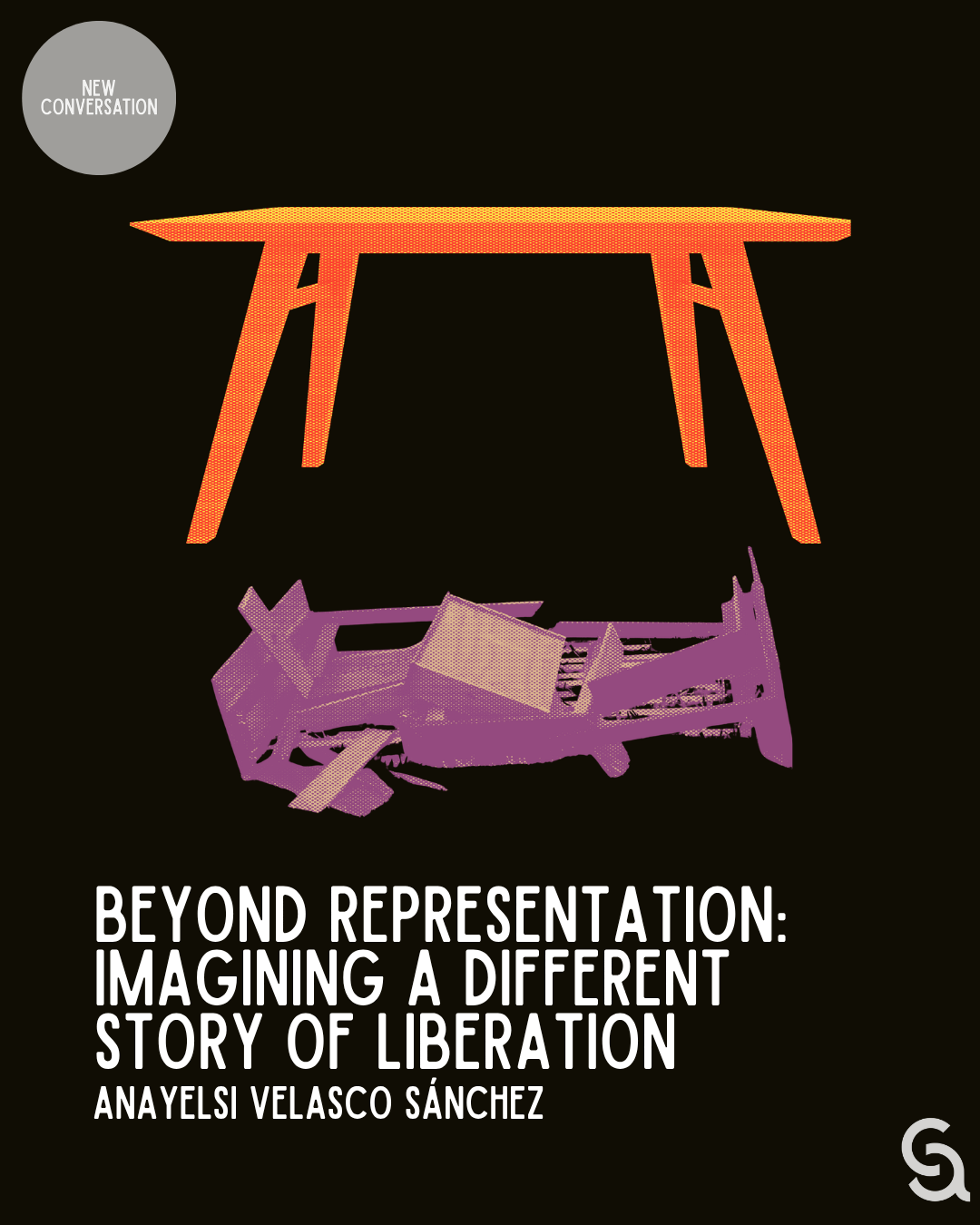
 (Editor’s Note: We often measure progress by who has gained access to power, influence, or opportunity. Representation matters, and history reminds us that those victories should never be minimized. But the Christian story invites us to ask an even deeper question: What if justice is not only about who has a seat at the table, but about reimagining the table itself? In this article, CSA pundit AnaYelsi Velasco Sánchez explores the relationship between representation, liberation, and imagination, challenging us to consider how the stories we inherit shape the futures we believe are possible, and how the gospel calls us to imagine something more.)
Those pushed to the margins have spent generations fighting to be included in stories that existed to exclude us. We have demanded to be seen and represented. That work matters. It has been foundational to creating change within our systems and communities, but it is not everything.
Somewhere along the way, we began confusing representation with liberation, assuming that being included in existing systems was the same thing as being set free. In some ways, we are incredibly imaginative. Yet too often, our imagination is rooted in creating more diverse versions of the same world.
We imagine women leading corporations built on exploitation. We imagine queer people serving in militaries that perpetuate violence. We imagine immigrants becoming millionaires through relentless hustle. We imagine disabled people succeeding by overcoming inaccessible systems rather than redesigning those systems altogether. Representation changes who is seen. Liberation changes the story itself.
Stories are essential to who we are. Stories tell us what success looks like. Stories tell us who deserves power. Stories tell us who is disposable. Stories tell us whether scarcity or abundance is normal. Stories teach us whether justice looks like punishment or restoration.
When Representation Isn’t Liberation
One of the most powerful stories we’ve inherited about justice is that of “a seat at the table.” It gave language to those demanding inclusion in spaces that had long excluded them. It names a deeply human desire to be seen, heard, and able to shape the decisions that affect our lives.
We shouldn’t dismiss this story. For generations, communities denied access to power had to fight simply for the ability to influence decisions that shaped their own lives. The demand for a seat at the table has opened doors and changed institutions. It has created opportunities previous generations were denied. It was never a meaningless goal.
Thurgood Marshall reminds us why a seat at the table can matter. His place at the table wasn’t merely symbolic. Before joining the Supreme Court, he helped dismantle legal segregation. Once there, he continued pushing the law toward greater justice. Sometimes gaining a seat at the table really does help transform it.
It’s also incomplete.
A Christian imagination reminds us that a seat at the table is only part of a much larger story of liberation. It prompts us to ask different questions: Who built the table? Who harvested the wood? Who wasn’t invited? Who decides what’s served? Why is there only one table in the first place?
Theologian M. Shawn Copeland reminds us of the importance of recognizing the full humanity and dignity of people whose bodies and experiences have been treated as objects within oppressive systems. Liberation is not simply about being invited into spaces that once denied our humanity; it is about transforming the conditions that made exclusion possible.
The goal was never simply representation within systems built upon our exclusion. The goal was always liberation—transforming those systems so that flourishing is no longer dependent on proximity to power.
Across generations, communities have practiced what it means to create new tables before the broader world was ready to recognize them. The Black Panther Party’s survival programs created community-based systems of free breakfast programs, health clinics, and education because they imagined care outside of state neglect. Indigenous nations practicing food sovereignty and land stewardship continue to model relationships with creation that challenge extractive systems built on ownership and domination.
These communities remind us that liberation is not only something we demand from existing structures. It is also something we practice by building alternatives.
Faith communities, too, are beginning to imagine forms of liberation that go beyond representation. In 2025, the Presbytery of San Gabriel in California returned land used for its La Casa de San Gabriel Community Center to the Gabrieleno-Tongva people. The act was more than a property transfer. It acknowledged that the church’s relationship to land must move from possession toward restoration.
Maybe justice isn’t simply about building a bigger table. Maybe it’s about imagining a completely different way of gathering.
Imagining a Different Story
Theologian Willie James Jennings argues that colonialism did not only take land and resources; it also reshaped human imagination by teaching people to see one another through categories of separation, hierarchy, and possession. The struggle for liberation is also a struggle over imagination. We cannot build a different world while carrying the same stories that created the old one.
We don’t have to accept someone else’s ending as the end of the story. Every story began in someone’s imagination, and imagination always leaves room for growth and change. We can take what we have inherited and imagine something better. That is where creativity gives birth to transformation.
The stories we inherit teach us what is realistic, what is possible, and what we should stop hoping for. This is why oppressed communities have always protected their stories as acts of resistance. Enslaved people preserving oral traditions, Indigenous communities safeguarding creation stories, and movements creating new art, songs, rituals, and traditions were not simply preserving culture. They were protecting visions of a future that dominant systems tried to erase.
Even empires depend on storytellers. Every oppressive system survives because someone keeps telling a story that makes it seem natural. Capitalism tells us our worth comes from productivity. White supremacy tells us hierarchy is inevitable. Patriarchy tells us domination is leadership. Christian nationalism tells us God blesses empire.
These aren’t facts. They’re stories we’ve repeated so often that they begin to feel like common sense.
Which means liberation requires counter-storytelling.
Counter-storytelling is not simply replacing one set of voices with another. It is the work of challenging the assumptions beneath the stories themselves. It asks us to imagine new relationships, not simply new representatives. New ways of belonging, not merely new people allowed inside old structures. It is one of the most powerful practices of liberation, because it refuses to accept the stories that make injustice seem inevitable.
We need to ask ourselves: What stories are keeping us from the future we desire?
Is our imagination limited to representation when God is inviting us toward liberation? Do we believe symbolic victories and inclusion are enough, or are we willing to imagine that the script itself can change?
The future won’t be created simply by putting different people in the spotlight. It will be created by those brave enough to write an entirely different story. The most revolutionary act of imagination is not claiming the spotlight in a story that no longer serves us. It is having the courage to write a new one altogether.
Perhaps the question before us is not simply, What future are we free to create together? Perhaps the deeper question is, What futures have we been taught are impossible, and who benefits from us believing that?
Stories are never neutral. They either reinforce the world as it is or help us practice becoming the world we long to see.
Representation matters. But liberation asks us to imagine—and live—a different story.
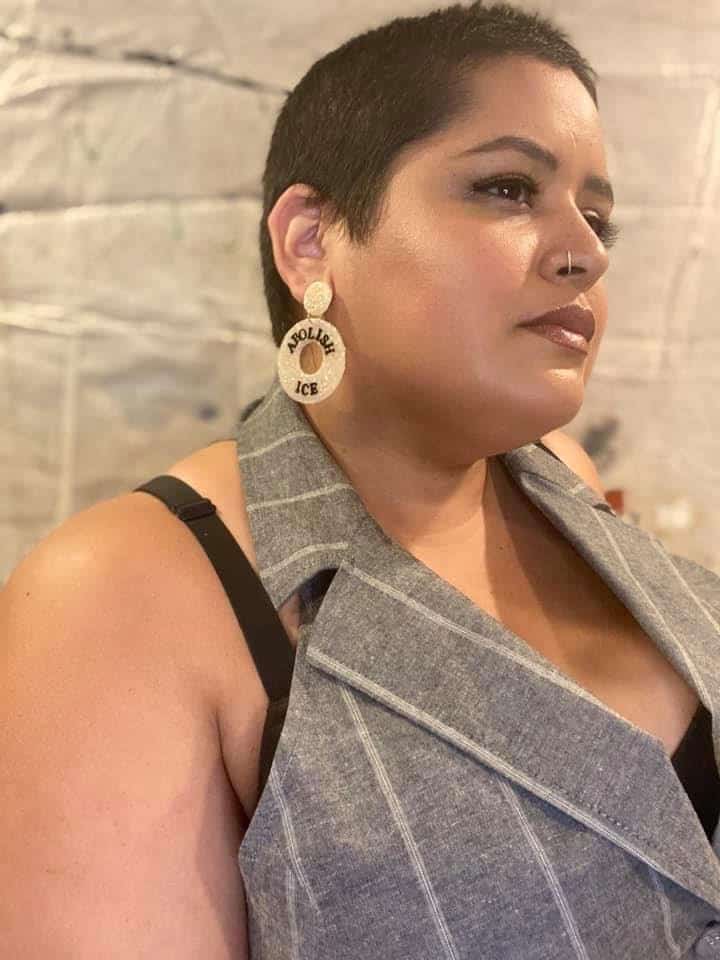 Born in Venezuela and raised in the U.S., AnaYelsi Velasco Sánchez is a visual artist, justice and liberation consultant, and community organizer who specializes in interlocking justice to create sustainable social change. Through her business, AVS Consulting, AnaYelsi works closely with organizations and businesses to design impactful strategies that foster healing and liberation.
She empowers individuals and communities with her diverse skill set, offering tailored anti-oppressive strategic plans, skills-building workshops, and advising on initiatives that connect art, culture, healing, and social justice. Whether supporting nonprofits, cultural institutions, or advocacy groups, Anayelsi empowers her partners to advance justice while ensuring that marginalized voices are at the center of every conversation. AnaYelsi also serves as the Board Chair of the Festival Center in Washington, DC.