
 (Editor’s Note: Every person who walks into a church carries a story. Some come seeking community. Others arrive bearing invisible wounds from spiritual abuse, exclusion, grief, injustice, or other painful experiences that have left them wondering whether the church is truly a place of refuge. In her four-part “Becoming a Safe Church” series, author Liz Cooledge Jenkins explores what it means for faith communities to embody the welcoming heart of Christ. Drawing on personal interviews, Scripture, church history, and practical wisdom, this series invites churches to move beyond simply attracting people and toward becoming communities where healing, dignity, and belonging can flourish.)
The Stories People Carry Into Church
“I was burnt out,” Grace[1] told me. “I don’t think I realized how burnt out I was.” Sometimes, she reflected, “you don’t realize how toxic a situation was until you’re out of it and you’ve had some time to heal.”
A Filipina-American woman now in her 30s, Grace was speaking of the many young adult years she spent in a Southern Baptist church, including in leadership there. The church was not talking about the “Black and Brown bodies being killed” — even though a large part of the congregation consisted of Black and Brown people. Her attempts to spark conversations around racial justice in the wake of George Floyd’s murder in 2020 were met with resistance from her fellow church council members.
At the same time, Grace was also carrying the extra burden of realizing her voice was not listened to with the same weight and respect as a man’s voice. “I was speaking out more,” she reflected. “I felt like I should, and I really did feel the Holy Spirit saying, ‘You need to speak out about this.’ But my husband would say the same things, and it would be more palatable to them.” The difference was undeniable. And it felt exhausting.
Michelle, a 30-something-year-old Black woman, remembered the days after Philando Castile was murdered in 2016. “I was so angry,” she told me. “Why are the police murdering people? Why are white people killing Black people?” In her distress, she recalled, “I made a video and posted it on social media. I was crying.”
Soon after, a white police officer in her congregation saw the video and approached her at church. “He came up to me super aggressive,” Michelle remembered. “He said, ‘You just need to chill and wait until you get more information.’ His tone was very aggressive. I stood there in shock, wondering, Why are you angry that I was crying? What I said in the video was, Why can’t we all get along? What is happening? Why are the police doing this?” Being confronted by this man in this way, after Michelle had shared so vulnerably about her own pain, “didn’t feel safe.”
“I went through many churches trying to find community,” Aaron, a white man, told me—“literally a dozen churches, maybe more, over seven years.” One of the reasons he found it so hard to build community in all these different churches was that he “didn’t make enough money.” “People wouldn’t hang out with me,” he reflected, “because I couldn’t do the things they wanted to do. I was too poor to be Christian. It was really awkward.”
I thought about my own young adult years, working for a bootstrapped start-up and then for a parachurch organization where I fundraised my own salary. Going out to eat with friends from church, many of whom worked as engineers, I would intentionally order less expensive entrees and skip the drink menu while others ordered wine and cocktails. When the check came and people wanted to split it evenly, I wasn’t sure what to do. The feeling of not belonging in a faith community can show up in many different ways.
As younger generations continue to disaffiliate from churches at rates many Christians find alarming, church leaders might feel compelled to ask questions such as “Where have the young adults gone?” “Where have the Millennials gone?” Or some other version of “Why are our church numbers declining?”
These questions are understandable. After all, according to PRRI research, the percentage of Americans who do not regularly attend religious services has risen rapidly from 42% in 2013 to 53% in 2025.[2] And while “the percentage of young men (ages 18-29) who identify as religiously unaffiliated has largely stayed the same since 2013,” the percentage of young women who identify as religiously unaffiliated has increased from 29% in 2013, to 40% in 2024, to 43% in 2025.[3] These are significant shifts. They might feel disconcerting. I wonder, though, if we can ask better questions as we ponder them.
Perhaps a more interesting, compassionate, humanizing set of questions sounds less like “How do we get more people in church?” and more like this: “What are people experiencing when they show up at our Sunday services?” “What feels safe or unsafe, hopeful or frustrating, healing or triggering?” “What baggage do people carry when they walk in?” And, “Are we a genuinely safe place for people to set some burdens down, work through and process other burdens, and generally be fully themselves?”
Churches Must Learn to See Invisible Wounds
I wonder if congregations are reflecting deeply enough on what it’s like to walk into a church — or to try to stay in a church — when so many of us are carrying so much hurt, so much baggage, often so much religious trauma. After all, as pastor and editor Jon Mathieu writes,
“It is almost a miracle that some ex-vangelicals ever step foot in a church again.”[4]
Some of us, like Aaron, carry the trauma of not fitting in. Of wanting to belong but finding it difficult. Of searching for community but unable to build it in a meaningful way.
Some of us have experienced faith communities that are homogenous racially or ethnically, and being in a racial minority there feels unsettling, like a hindrance to belonging. Sometimes homogeneity falls along other lines, like socioeconomic class or family situation. Some faith communities direct most of their efforts at support and community-building toward married couples or toward children’s ministries, and people who are single or do not have children are made to feel out of place.
Some of us, like Grace, show up at church — if we still take the risk of showing up at all — carrying the exhaustion of attempting to effect change in previous faith communities. We hold disappointment from trying to initiate better conversations than these churches were willing to have. We carry the frustration of feeling like our efforts didn’t go anywhere, perhaps because people in leadership did not want them to go anywhere. We wonder if our voices are wanted, if our views are considered important, if we could make a difference.
Some of us, like Michelle, when we walk into church, come from places where our trauma has been disregarded. Where our pain has been met with callousness. Especially for people of color who have spent time in white-dominated congregations, the wounds run deep. It has felt like a profound betrayal. “These people claimed to love me,” Michelle reflected of a different previous church. But “I was seeing their true colors online. I thought they were welcoming me with open arms,” she said. But eventually she realized, “Most of these people are Trump supporters and repeat talking points from Fox News. It’s a cognitive dissonance.”
In Shoutin’ in the Fire, Danté Stewart writes,
“I burned with rage as I thought of the myriad ways those around me tried to make me feel that I was crazy about speaking out against the injustices visited upon our Black bodies, and the suffocating nature of white supremacy that we had to live in.”[5]
So many people carry these wounds. They are looking for places that don’t feel suffocating, where they are not viewed with suspicion or made to feel that they are overreacting to injustice. We are looking for spaces where we might begin to heal.
From many years of embodiment coaching, working with people who have spent time in conservative streams of Christianity, Jamie Lee Finch writes, “people do not recognize that the evangelical power structure is churning out walking wounded at an alarming rate.” Many of the “refugees” of evangelical Christianity, she continues, “experience anxiety, depression, and panic that they aren’t able to explain, and they don’t feel the inner permission to own their emotions, trust themselves, find peace, or experience pleasure.”[6]
Faith communities can learn to acknowledge these realities, asking better questions that help them become places of healing rather than further wounding. Questions that center real humans and their real lives, gifts, and needs, not the perceived need of a church to refresh its membership numbers. Questions that acknowledge the gravity of what people have experienced in religious communities, that refuse to gloss over the ways church has often not been a healthy space in the past. And yet, church is a place where many of us still find value. We hope to find communities that feel different, that feel safe. In The Wisdom of Your Body, psychologist Hillary McBride writes,
“All forms of oppression affect the body. From research about the brain, especially through the use of neuro-imaging, we know that it is factually incorrect to say that physical violence is the most hurtful, and thus most valid, form of injury. Our brains and nervous systems process verbal, social, political, and physical injury in the exact same way.”[7]
What would it look like for pastors and other church leaders to recognize this truth, to lead in light of it? If people were walking into our churches visibly physically wounded and bleeding, they would hopefully receive immediate attention and care. But so many of us walk in with invisible wounds. We carry social, emotional, and spiritual traumas. We show up asking, Is this faith community safe? Will I be harmed in the ways I’ve been harmed in previous churches? Will I be harmed in different ways I haven’t thought of yet?
Like Michelle, Grace, and Aaron, we might wonder: Will people at this church see and empathize with my pain, my trauma? Will they react negatively if I show up grieved over violence done to people who look like me? Will they care about this violence? Do they want to make things right? Or will I end up feeling betrayed? Will I end up burned out from pushing for change? Will my voice be heard and received? Can I belong here, just as I am? Is there room for me?
Churches can make room for these sorts of questions, and for the people carrying them. Faith communities can focus on becoming safe places of healing, nourishment, and care, not caught up in numbers games but attending to the needs of each person and welcoming the perspectives and gifts each person brings.
We can turn our questions from What might attract more people? to What are people carrying when they walk in? And in this shift, we might find healing and hope. We might return to what the church was meant to be: a refuge for all people, not a toxic system that churns out wounded refugees.
Endnotes
1. Name changed for privacy.
[2] 2025 PRRI Census of American Religion, April 15, 2026, https://prri.org/spotlight/2025-prri-census-of-american-religion/.
[3] Ibid.
[4]Jon Mathieu, “How Can Mainline Denominations Care for Ex-vangelicals?” in The Presbyterian Outlook, Jan 13, 2022, https://pres-outlook.org/2022/01/ex-vangelicals-are-coming-how-will-mainline-denominations-welcome-them/.
[5] Danté Stewart, Shoutin’ in the Fire: An American Epistle (Convergent Books, 2021), 108-9.
[6] Jamie Lee Finch, You Are Your Own: A Reckoning with the Religious Trauma of Evangelical Christianity (Independently published, 2019), 85.
[7] Hillary McBride, The Wisdom of Your Body: Finding Healing, Wholeness, and Connection Through Embodied Living (Brazos, 2021), 160.
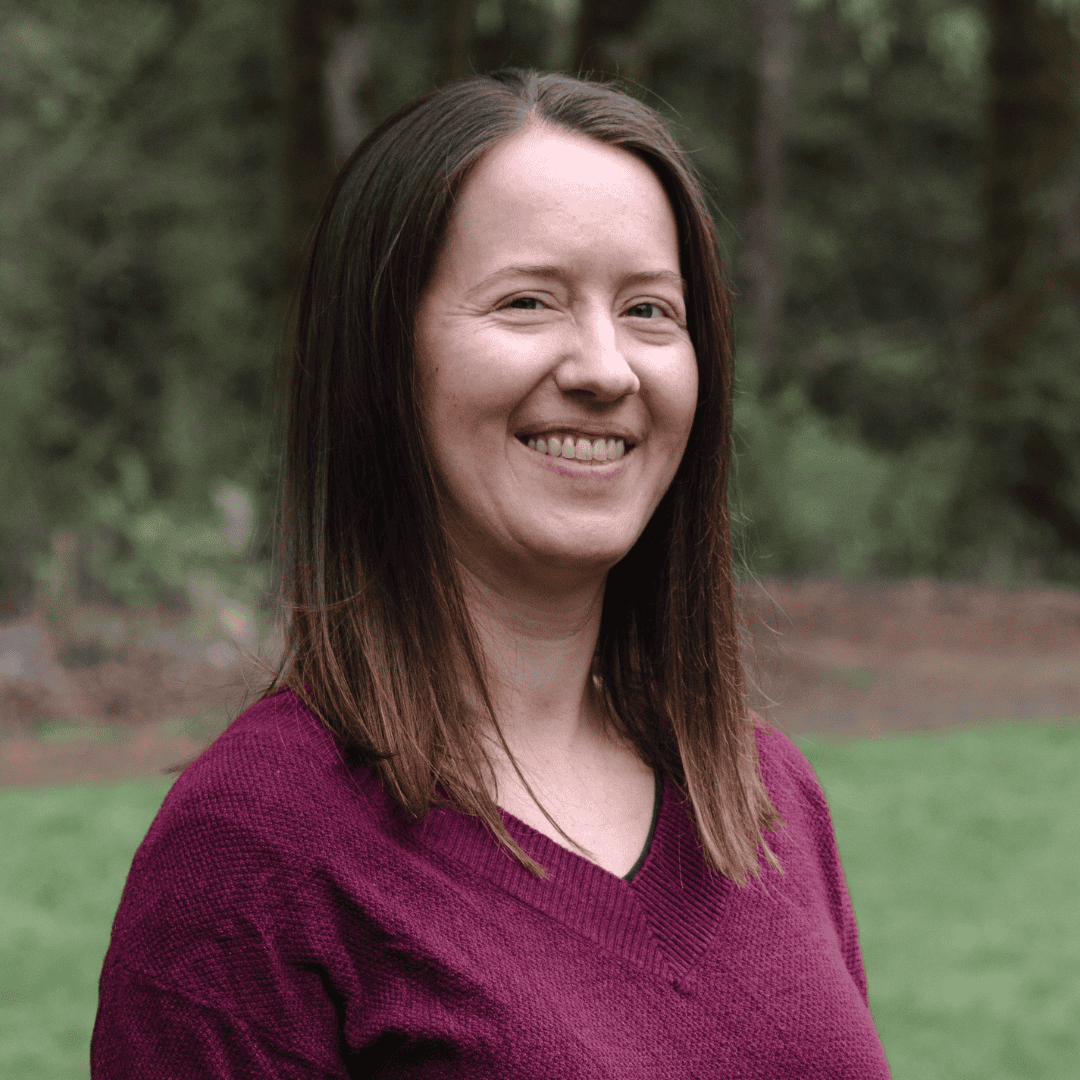 Liz Cooledge Jenkins is a Seattle-based writer, preacher, former college campus minister, and the author of Nice Churchy Patriarchy: Reclaiming Women’s Humanity from Evangelicalism. She writes regularly at growingintokinship.

One Response
Thank you for this article. I wish you would have included sexual minorities in this article. I think most of them feel very unsafe in most churches.