
 (Editor’s Note: What does it mean to live courageously as a follower of Jesus, not only in defining moments but also in the ordinary choices that shape who we become? In this four-part “Practicing Moral Courage” series, Dr. Terence Lester and Dr. Emiola Oriola Jr. explore the formation behind a courageous Christian life: learning to resist fear and “othering,” allowing ourselves to be interrupted by compassion and truth, standing with our neighbors in the pursuit of justice, and remaining faithful when change is slow or difficult to see. Together, they invite us to consider moral courage not as a heroic act reserved for a few, but as a daily practice of discipleship, one that forms us to love, speak, act, and hope faithfully in the world as it is. In Part 1, Dr. Lester begins with the forces of fear and othering shaping our public life and asks what kind of people Christians are being formed to become in response. He argues that moral courage doesn’t suddenly appear when the stakes are high; it is cultivated over time, in community, through the choices we make long before a defining moment arrives.)
On September 30, Secretary of Defense Pete Hegseth¹ (since rebranded as Secretary of War) stood before military leaders gathered at Marine Corps Base Quantico and said these words: “No fatties,” followed by a slur for transgender people, then “no beardos, no weirdos. No wimps, no radicals. Just warriors.”² He went on to promise “no more diversity quotas. No more gender pronouns. No more identity months.”³
While some who align themselves with a form of patriarchal authoritarianism might see that as a sign of strength, many others who experience harm from this kind of rhetoric and practice see it as a sign of something becoming more pervasive in our society: violence and fear. Fear of people who come from different social locations. Fear of people who look, live, love, worship, or vote differently than those in power. Fear of losing power. Fear of losing a place at the center.
I have spent most of my adult life alongside people our society has learned to look past. Neighbors without an address. Children whose families are one missed paycheck away from losing their housing. Elders who outlived their savings. I have watched people walk past them on the sidewalk as if they were part of the scenery.
That kind of invisibility is its own form of violence. Nobody asks their name. Nobody makes eye contact. Benches get armrests so no one can lie down, and cities pass laws that make it a crime to sleep outside even when there is nowhere else to go. None of that happens by accident. Somebody decided these neighbors were a problem to be managed instead of people to be seen.
So when I heard one of the most powerful people in our government mock whole groups of human beings from a podium, I did not hear anything new. I heard an old message delivered more loudly. The peace scholar Johan Galtung called this cultural violence: the parts of a culture, including its language, religion, and ideology, that can be used to justify or legitimize direct and structural harm.⁴
Rhetoric of this kind falls first on the people it names, including service members and anyone whose body or identity departs from a narrow ideal of strength. It signals that those in power regard them as less welcome and less worthy. It also teaches everyone else that looking away is acceptable. I heard othering.
And I heard a question every follower of Jesus has to answer right now. What will we do with our fear? Will we let it shape us, or will we let God form something stronger in us? That something is moral courage.
Moral courage requires that we first name clearly what we are facing. So before going further, it is worth understanding what othering is and how it moves from rhetoric into public policy.
What Othering Is
Othering is what happens when we take a difference between people and turn it into a line between who counts and who does not. Othering and Belonging Institute leaders john a. powell and Stephen Menendian describe it as:
“a set of dynamics, processes, and structures that engender marginality and persistent inequality across any of the full range of human differences based on group identities.”⁵
In plain words, othering says: You are not one of us.
And it never stays in speeches. In 1993, political scientists Anne Schneider and Helen Ingram showed that public policy tends to follow the stories we tell about people. Groups described as deserving receive benefits. Groups described as undeserving or dangerous receive burdens.⁶
Later, researchers found that punishing policies are most politically feasible when the people targeted lack the power to push back and the rest of the public believes they deserve harsh treatment.⁷
We can see it right now. This year, gas has climbed above $4.40 a gallon, and over $6 for deisel gas, pushed up by the war with Iran.⁸ This summer, Grad PLUS loans ended and parents were limited to borrowing $20,000 a year per student, narrowing the door to a degree for first-generation students.⁹ And since the summer of 2025, about 5.2 million people have lost SNAP benefits under new work requirements. Lori Covelli, an unemployed social worker in Kenosha, Wisconsin, told CBS News,
“It feels as though people are being punished.”¹⁰
She is right. Somebody decided ahead of time who was worthy and who was not, and then wrote it into law. Isaiah saw the same thing in his day: “Ah, you who make iniquitous decrees, who write oppressive statutes, to turn aside the needy from justice” (Isa. 10:1-2).¹¹
And I would argue that this moment is calling those who believe to act and respond with moral courage.
What Is Moral Courage?
Moral courage is doing what is right when doing right will cost you something. It can risk your comfort, your reputation, and your standing with people whose approval you worked hard to earn. Courageous people still feel fear. They just refuse to let fear have the last word over their conscience.
What we heard at Quantico was a celebration of toughness. But toughness and courage are two different things. It takes no courage to mock people who have less power than you. Moral courage moves in the opposite direction. It moves toward the people being pushed out, and it tells the truth to the people doing the pushing.
Howard Thurman understood this. In Jesus and the Disinherited, he named fear as one of the forces that hound the lives of people living with their backs against the wall.¹² He also pointed to who can stand against it: A person who knows they are a child of God carries a sense of worth that no one in power can take from them. That knowledge loosens fear’s grip.
Why Jesus Calls Us to It
Jesus embodied this kind of courage from the beginning. When he returned to Nazareth and stood in the synagogue where he was raised, he unrolled the scroll of Isaiah and announced the agenda of his ministry:
“The Spirit of the Lord is upon me, because he has anointed me to bring good news to the poor. He has sent me to proclaim release to the captives and recovery of sight to the blind, to let the oppressed go free, to proclaim the year of the Lord’s favor” (Luke 4:18-19).
Every person named in that passage lived under the weight of someone else’s power (Roman oppression): the poor, the imprisoned, those living without sight, the oppressed. In a world that was designed to define human worth by wealth, health, and lineage, Jesus began by naming the very people that order had been built to ignore or make invisible.
The crowd loved it until Jesus made it clear that God’s love was bigger than their boundaries. Jesus never backed away from that message. He spent the rest of his life proving it with his presence, sitting with people others avoided, being proximate to and touching people others feared, and calling people beloved whom others called social outcasts and problems. That is moral courage. And it cost him everything, even his life.
But I have seen that same spirit in the church. It rarely shows up as rage. It shows up as silence. “I don’t want to be divisive.” “That’s not my issue.” “Now is not the right time.” But silence in the face of injustice is still a choice. When the church says nothing, people in power are empowered to abuse that power.
Formed for This Moment
We often hear the story of Rosa Parks told as if a tired seamstress sat down one afternoon and accidentally changed history.
But Mrs. Parks had served for years as secretary of the Montgomery NAACP. In the summer of 1955, she attended a workshop at the Highlander Folk School. When she kept her seat that December, she was acting out of who she had already become. She later said,
“The only tired I was, was tired of giving in.”¹³
The world saw one afternoon on a bus. It did not see the years that prepared her for it.
That is what this series is about. Moral courage has less to do with heroic moments and more to do with daily formation. And formation like that rarely happens alone. It happens in community, which is why the church has to consider its own role in this moment. Are our congregations forming people who can see the neighbors our society has learned to look past? Are our pulpits naming harm when it happens, or only after it becomes safe to do so? Are our buildings, budgets, and relationships being used on behalf of people who have been pushed to the margins of society? A church that forms people only for comfort should not be surprised when its people stay silent.
The parts that follow explore how moral courage is formed in us: compassion, hospitality, and truth that keep us human; justice, advocacy, and solidarity that move us toward our neighbors; and hope that keeps us faithful for the long haul.
None of this requires us to be perfect. It requires us to be faithful. To pray. To draw near. To tell the whole truth with love.
Endnotes
- “Peter B. Hegseth,” Biographies, Office of the Secretary of Defense Historical Office, accessed October 2, 2026, https://history.defense.gov/Multimedia/Biographies/Article-View/Article/4244292/peter-b-hegseth. An executive order signed September 5, 2025, authorized “Secretary of War” as a secondary title for the secretary of defense.
- Malcolm Ferguson, “‘No Beardos, No Weirdos’: Hegseth Goes on Bizarre Rant to Silent Crowd,” New Republic, September 30, 2026, https://newrepublic.com/post/216053/pete-hegseth-goes-bizarre-rant-silent-crowd; Chantelle Lee, “Defense Secretary Pete Hegseth Announces More Sweeping Cuts to the Military’s Top Ranks,” Time, September 30, 2026, https://time.com/article/2026/09/30/hegseth-pentagon-us-military-generals-admirals-cuts/.
- Lee, “Defense Secretary Pete Hegseth Announces.”
- Johan Galtung, “Cultural Violence,” Journal of Peace Research 27, no. 3 (1990): 291.
- john a. powell and Stephen Menendian, “The Problem of Othering: Towards Inclusiveness and Belonging,” Othering and Belonging, June 29, 2017, https://belonging.berkeley.edu/.
- Anne Schneider and Helen Ingram, “Social Construction of Target Populations: Implications for Politics and Policy,” American Political Science Review 87, no. 2 (1993): 334-47.
- Jill Nicholson-Crotty, Susan M. Miller, and Lael R. Keiser, “Administrative Burden, Social Construction, and Public Support for Government Programs,” Journal of Behavioral Public Administration 4, no. 1 (2021): 3, https://journal-bpa.org/index.php/jbpa/article/view/193.
- Matt Durr, “Gas Prices for 09/22/26: National Average Remains Well Over $4.40 per Gallon,” OregonLive, via Yahoo Finance, September 22, 2026, https://finance.yahoo.com/energy/articles/gas-prices-09-22-26-142109950.html.
- Reyna Gobel, “2026 Changes to Student Loans You Need to Know,” Kiplinger, April 26, 2026, https://www.kiplinger.com/personal-finance/college/2026-changes-to-student-loans-you-need-to-know.
- Aimee Picchi and Mary Cunningham, “Millions of Americans Are Losing SNAP Benefits: ‘It Feels as Though People Are Being Punished,'” CBS News, September 30, 2026, https://www.cbsnews.com/news/snap-benefits-millions-lost-obbba-work-requirements/.
- Scripture quotations are from the New Revised Standard Version unless otherwise noted.
- Howard Thurman, Jesus and the Disinherited (1949; repr., Boston: Beacon Press, 1996), chap. 2.
- Rosa Parks with Jim Haskins, Rosa Parks: My Story (New York: Dial Books, 1992), quoted in Darlene Clark Hine, “‘The Only Tired I Was, Was Tired of Giving In,'” OUPblog, Oxford University Press, December 1, 2010, https://blog.oup.com/2010/12/rosa-parks/.
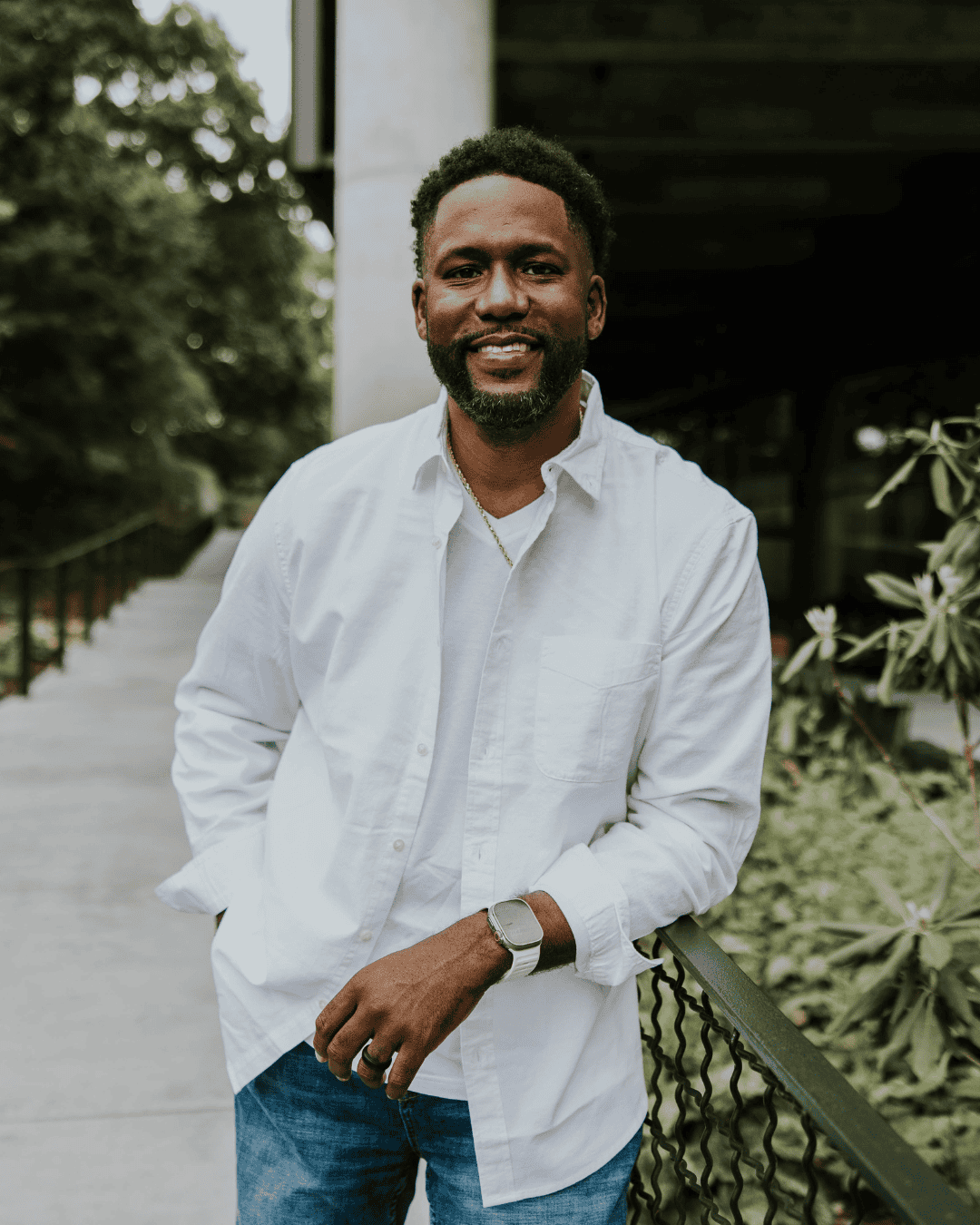 Dr. Terence Lester is a storyteller, public scholar, community activist, and author. He founded Love Beyond Walls, a nonprofit committed to raising awareness about poverty and homelessness, and teaches public policy and social change at Simmons College of Kentucky. His latest book, From Dropout to Doctorate: Breaking the Chains of Educational Injustice (IVP, 2025), traces his journey from high school dropout to PhD and issues a bold call for equity. Through his life and writing, he uses narrative, policy insight, and faith to challenge systems that leave people invisible and to inspire practical change. He is author of the four-part CSA series on Economic Injustice.