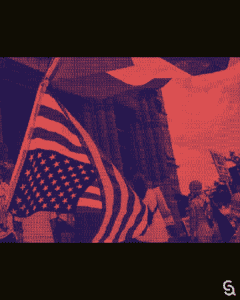
 We are told to reach for personal resets in January. We resolve to exercise more often, cultivate better habits, pray more faithfully, and so on. This annual ritual is predicated on the idea that we have the power to become better versions of ourselves through personal effort.
But individual resolve can’t bear the weight of this world.
It will fail by February.
The pressures around us are bigger than any one of us. ICE raids are shredding social fabric. Climate disruptions are wiping out whole communities. People are falling out of the bottom of this economy. Wars and genocides seem impervious to ceasefire. And the public spaces that might invite thoughtful response are awash in meaningless slop.
Many of us feel simultaneously hyper-alert and exhausted in such a world.
“Better habits” will not help us with these problems. We don’t need self-improvement.
What we need instead is discipleship in communities of alternative moral imagination.
Going Further Together
I’ve been learning this lesson in an unexpected place.
After moving to Illinois more than a decade ago, I struggled to form deep relationships. Like many young families, ours was busy, tired, and short on margin. The suburban environment we landed in was friendly, but people already had their circles. Making friends required more than good intentions.
Then I joined a running group at my church.
Most of us were not “real runners.” But we committed to train for the Chicago Marathon together to raise support for clean water projects in communities where access to safe water is life-changing. I was sore for the first several weeks, but the group helped me keep going. Eventually, I started looking forward to our Saturday morning runs. We encouraged one another, raised money together, and each of us went further than we could have gone alone.
Over time, something deeper happened.
They absorbed me into their community. The cause gave us shared purpose, and friendships grew because we were doing something together that mattered.
That experience showed me the power of pursuing good goals with others—and the joy that grows from shared purpose. We become who we are together, especially when we gather around something bigger than any one individual.
When Isolated People Find Each Other
I have learned a similar lesson through my work for peace in Palestine.
I have carried a concern for justice in Palestine for decades. More recently, it has become part of my daily work. For a long time, though, it was something I carried largely on my own. I read, studied, listened, and cared deeply, often without knowing who else around me was wrestling with the same questions.
Caring deeply went hand in hand with feeling isolated.
Family and friends didn’t know how to engage my convictions. I lost friendships over it. You can hold strong moral commitments and still lack a community that helps you carry them with wisdom and endurance.
What it looks like when people of conscience find one another came into sharper focus this year when I helped plan the Church at the Crossroads conference. More than 850 Christians gathered from across North America to learn from and connect with Palestinian brothers and sisters. People lingered long after the program ended. It was clear they were hungry for this.
Again and again, I heard some version of the same thing: “I experienced the church the way it is meant to be.” Alongside grief and conviction, many of us felt something unexpected: relief. Relief that we were not alone in our dismay—and not alone in our hope for something better.
Being together revealed that what many of us have been carrying privately is, in fact, shared. There are more of us out there.
Here’s what I’ve learned: when people realize they are not isolated in their moral longings, hope feels less naïve, courage becomes more sustainable, and collective action can take root.
This need for moral connection is not limited to one issue. Across the country, people are confronting multiple moral crises—and in need of the power of community to respond.
The Limits of Private Virtue
Private virtue has limits. It cannot, by itself, generate the resilience or imagination required for the long haul. Without communities that offer encouragement, formation, accountability, and love, even sincere commitments lose momentum.
Scripture consistently addresses people not merely as individuals, but as a people. Faith is not only believed in the heart; it is practiced in place, with others. We learn to love our neighbors not by private resolve alone, but by being formed in communities that teach us how — and then do it with us.
This is what I mean by communities of moral imagination: spaces where people learn together to see the world more clearly and act within it more faithfully.
These communities take many forms: congregations that choose to press in; activist networks that train people to show up for their neighbors; dorms and campus groups where students risk asking hard questions; book groups, prayer circles, and online spaces.
Sometimes they are formal. Often they are not. What they share is a determination not to look away.
Finding or forming such communities often begins with a question: Who else is longing for something different from the prevailing responses — or lack of response — to the moral desolations of our moment?
It may require speaking a concern out loud, showing up to an unfamiliar gathering, or staying in a conversation longer than is comfortable. These small risks, taken again and again, help people find one another.
One Example: The Church at the Crossroads Declaration
The Church at the Crossroads Declaration is catalyzing one such community.
Emerging from the conference, the declaration calls Christians to listen attentively to Palestinian Christians, to lament their suffering honestly, to repent of harmful theologies and economic complicity, and to act with humility and courage.
But it is more than a statement.
People who have signed are talking with one another. The declaration offers shared language—and in doing so, helps transform private conviction into public responsibility.
Many signatories are forming loose but growing communities. Pastors, students, scholars, organizers, and ordinary church members are learning together how to remain faithful in a moment of profound moral darkness. Through conversation, study, and collaboration, they are discovering that their longing for integrity is shared.
The declaration also offers a template that can be applied far beyond a single issue. More powerful than New Year’s resolutions, these are shared practices meant to sustain people over time: listening to those most affected, lamenting honestly, repenting where needed, articulating shared commitments, and acting together for repair.
More than 4,000 people have already signed. At a certain scale, collective commitments reshape what a community can imagine is possible. Signing is not the end of anything — it is a beginning. A small but meaningful step into a larger process of formation. It says: I don’t want to carry this alone.
A Different Kind of Resolution
As another year begins, many of us are weary. We feel the weight of the world and the limits of our own capacity. Perhaps what we need most is not a new set of personal goals, but a renewed sense of belonging—to Christ, to one another, and to our neighbors.
What if our resolution this year were not to become better individuals, but to become more faithful people, together? What if we committed ourselves to communities that help us see more clearly, repent more fully, and act more courageously?
If you find yourself longing for a Christianity shaped by humility, mercy, and hope, you are not alone.
Let’s get to work — together.
___
 Ben Norquist, PhD, is a writer and educator whose work focuses on Christian formation and the pursuit of justice. He has served with Churches for Middle East Peace and the Network of Evangelicals for the Middle East. He also spent several years at Wheaton College, where he supported students in vocational discernment and helped them connect their faith, studies, and sense of calling. His forthcoming book, Every Somewhere Sacred: Rescuing a Theology of Place in the American Imagination (IVP Academic, 2026), explores why place matters for Scripture, community, and public life.
Ben’s writing brings together lived stories, close reading of the biblical and historical record, and a commitment to listening to voices that are often marginalized by mainstream American Christian culture — especially Palestinian Christians, Indigenous Americans, and leaders from the Global South. He aims to help evangelical Christians develop steadiness, clarity, and moral courage in moments where truth feels contested or threatening. Ben is a CSA Pundit.