
A new resource from CSA’s Racial Justice Institute and authors Andre Henry and Lauren Grubaugh Thomas
What does love look like in the face of injustice?
For many Christians, that question feels urgent and unresolved. We see suffering, inequality, and fear in our world — and we long to do something faithful about it. But where do we start?
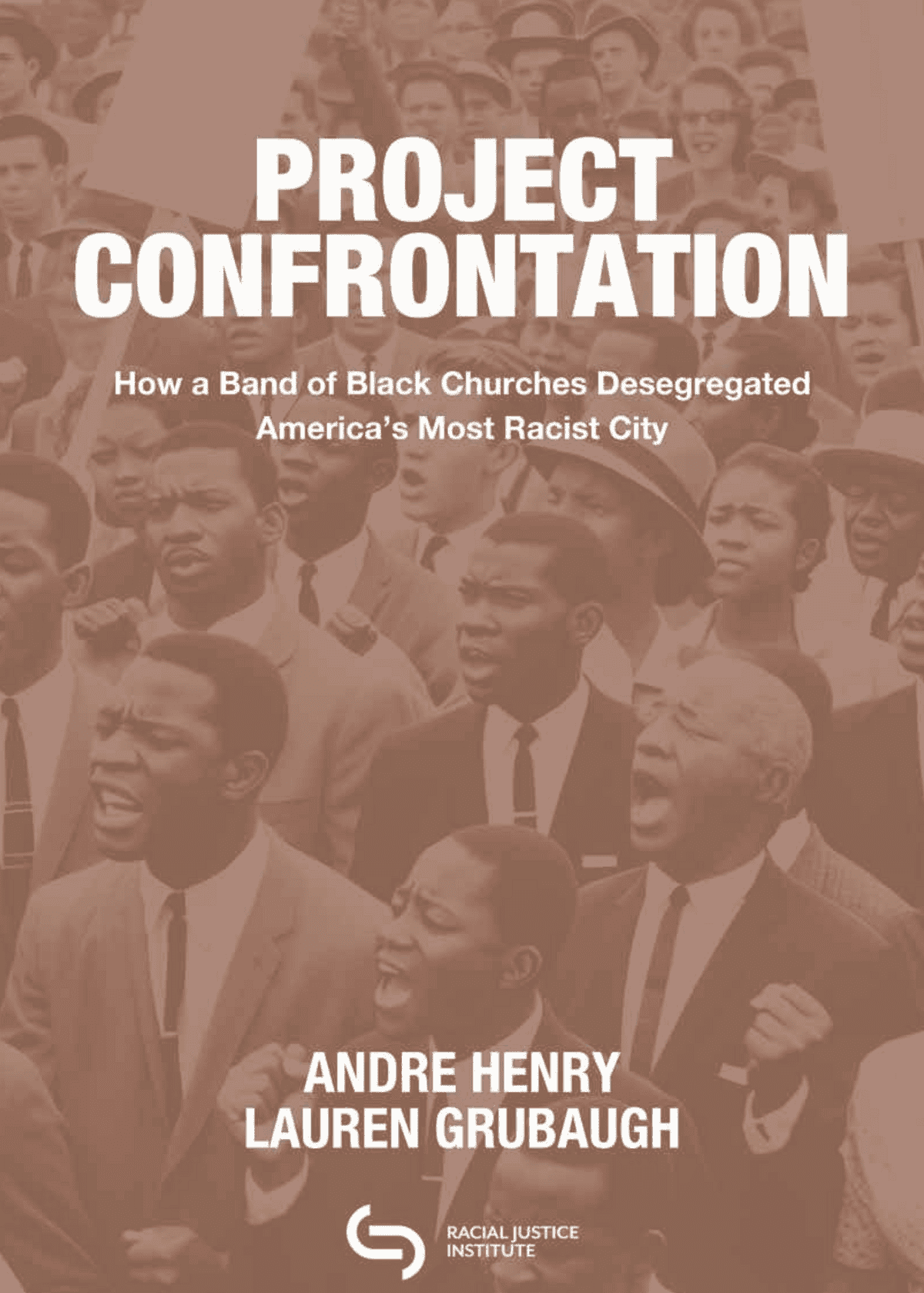
Project Confrontation, the newest resource from Andre Henry and Lauren Grubaugh Thomas and CSA’s Racial Justice Institute, offers a way forward. It’s a short, powerful field guide for Christians who want to move from conviction to strategy — from feeling overwhelmed to faithfully organizing for change.
 From Conviction to Strategy
Project Confrontation invites Christians to reimagine justice work as an act of discipleship. Drawing from Scripture, history, and their own organizing experience, Henry and Grubaugh Thomas help readers understand what it means to plan, not just pray, for God’s kingdom to come. “Faith without strategy is sentimentality,” they write. “Strategy is what turns love into justice.”
Across its pages, Henry and Grubaugh Thomas outline three levels of strategy — vision, campaigns, and tactics — and walk readers through how movements like the 1963 Birmingham Campaign applied those principles. They then give readers practical tools for mapping power, setting achievable goals, and discerning next steps as communities of faith.
A Theology of Repair
Project Confrontation isn’t just about activism — it’s about hope. Henry and Grubaugh Thomas remind us that the work of social change is not separate from our faith, but rooted in it. “Those who dream of a world where all people can flourish must be strategic about making that dream a reality,” they write. “You are a co-conspirator with the Divine to make the world whole.”
Strategy, in this vision, is a spiritual discipline — an act of co-creation with God to repair what’s been broken.
For Churches, Campuses, and Community Groups
Designed for churches, small groups, classrooms, and community teams, Project Confrontation combines biblical reflection with movement-tested practice. Each section includes exercises and discussion prompts to help groups discern how to act faithfully in their own context.
Use it to spark conversations about Christian public witness, strengthen leadership formation, or guide your community toward nonviolent, justice-seeking action.
Why It Matters Now
At CSA, we believe the credibility of Christian faith depends on how we show up in the world. Project Confrontation helps us do that with both courage and love — giving the church a way to act justly without losing sight of mercy, and to confront power without abandoning hope.
Order your digital copy here.


3 Responses
tema muy importante e interesante que ayuda a los cristianos a no ser pasivos, inactivos en la obra terrenal de Cristo Jesús.
So, so timely! I can’t wait to read and study it!
Great article and project! I look forward to seeing the data in the areas where you are working and areas nearby that do not have the program. Congratulations on the implementation! This is great!