
 When Home Is More Than a Place
I stood outside with Eddie, a friend and community member who had been sleeping in the same spot for weeks, and I watched as people walked past him as if he wasn’t there. Cars stopped at the light, the public train passed by, and life kept moving, but although Eddie’s reality was temporary, it seemed no one could see him. At one point he looked at me and said something I haven’t been able to shake:
“I don’t think people understand… I’m tired of not feeling at home in this community…”
In that moment, I realized that his words had nothing to do with walls or a roof. It had everything to do with being unseen.
We talk about home as if it’s a place you return to, a dwelling that gives you rest, protection, a space you get to call your own.
But home is more than that. It’s an immaterial location.
It’s where you belong, where you are accepted, where you are seen. In my book I See You: How Love Opens Our Eyes to Invisible People, I write about how love has the power to open our eyes to people who have been made invisible. I put it this way:
Home is more than four walls and a roof. It’s more than the place where you put your head down at night or where you store your most valuable possessions. Home is where you feel safe. A place with people you can count on and where you can be yourself. Home is a place of unconditional belonging. No matter what you do or where you go, home is the place you can come back to and belong. It might not even be a place at all. For some, home is a person or a group of people. Some people feel at home when they are in a small group at church or worshiping with their church family. Some people find home in places like barbershops or in beauty salons—among peers with whom they can discuss all of life’s ills and social problems. Some people find home in book clubs and other environments where they connect with people who accept them fully and completely…[1]
The Psychology of Belonging
In many ways, that act of truly seeing someone is what begins to create a sense of home.
In his 1985 essay “Home and Homelessness,” architect and scholar Kim Dovey argued that home is not an object but a relationship, emotionally rooted, built over time, and inseparable from a person’s sense of identity and place in the world. A house, he was clear, can exist without any of that.[2]
Judith Sixsmith took it further, spending years studying what home actually means to people and finding that belonging and emotional safety came up far more than shelter or structure. In her 1986 study, she found that home is not one fixed location but a multidimensional experience, first personal, then social, and only last physical.[3]
This, then, means housing and home are not the same thing, and confusing the two costs people more than we realize. It shows up in real people and in real communities who are left navigating a world that has conflated the two for far too long.
A sense of home is deeply tied to safety and trust. It is where people experience psychological safety, where they are not bracing for harm, rejection, or removal. It is where trust can be built over time, where a person can rest not just physically, but emotionally and socially. Without that, even the most stable structure can feel empty. And with it, even the most fragile circumstances can hold meaning.
When Systems Disrupt Home
So, the question becomes, What happens when that kind of home is disrupted or never formed at all? For many people, home is not something they’ve lost once. It’s something they are denied over and over again, and that reality must inform the conversation on homelessness.
If we’re honest, the loss of home in the U.S. is rarely just about personal circumstance. It is shaped by systems that decide who gets stability and who is left to survive without it.
Across the U.S., laws continue to criminalize people for surviving without housing. Sleeping outside, resting in public, or simply existing without a permanent address can lead to fines, citations, or arrest. The National Homelessness Law Center documented these ordinances across 187 cities, finding that every single one had at least one law criminalizing homelessness in some form.[4]
Following the Supreme Court’s Grants Pass decision in 2024, which ruled that cities could punish people for sleeping outside even when no shelter exists, 260 new laws criminalizing homelessness were passed in a single year.[5] Instead of addressing the root causes of housing instability, these policies treat people as problems to be removed rather than neighbors to be supported.
We see this clearly in recent proposals like the Louisiana bill (HB 211) that introduces punitive measures such as unpaid labor for people experiencing homelessness.[6] Policies like this don’t create pathways to stability or create a sense of home, but instead reinforce cycles of displacement by adding pressure to people who are already navigating intolerable conditions.
Immigration and the Loss of Belonging
But this idea of disruption in home doesn’t just stop with the patterns of homelessness in the U.S.; it is also something we must wrestle with in the conversation around immigration.
When families and communities live under the constant threat of removal, separation, or restriction, home doesn’t just feel unstable, it becomes unstable by design. Sociologist Cecilia Menjívar spent years studying this, and what she found was that many immigrants exist in what she calls “liminal legality,” not fully included, not formally removed, just suspended in a legal gray zone that never resolves.[7]
That kind of prolonged uncertainty makes it nearly impossible to build the safety, continuity, and sense of belonging that home actually requires. You cannot put down roots when the ground beneath you is always shifting. For many people, that is not a temporary season. It is just life.
A house cannot, on its own, hold your humanity; only other human beings can do that.
There is a reason why stories like Home Alone resonate with many of us. Beyond its humor, it reveals a more practical truth: One can be surrounded by many eyes and still be unseen, spoken to by many voices and still never truly heard, housed in many rooms but not held by human hands. Home is not solely about securing a fixed location, but also the ongoing formation of a people, a reality often only understood when we are forced to live without its assumptions.
Around the world, I have encountered people, from migrants to refugees, who are not simply without housing and shelter, but are navigating what it means to be a human without a stable sense of belonging. In places like Israel/Palestine and along the U.S./Mexican border, I witnessed how home is not just a structure that people lose physically, but a language that people forget relationally, and ultimately a future negotiated, delayed, or denied by borders both visible and invisible.
Divine Image Bearers in Liminal Spaces
When divine image bearers are unable to find rest for their bodies because of their nationality, they are forced to do what is virtually impossible: remain stable in instability and hopeful in prolonged uncertainty.
Every person caught in this liminal space carries the full weight of their humanity not despite their displacement, but within it. To be a divine image bearer is to carry God’s imprint regardless of what any border, document, or system says about your status or your worth.
It makes sense, then, that Jesus tells those who wish to follow him that “foxes have holes and birds of the air have nests, but the Son of Man has nowhere to lay his head” (Matt. 8:20).
In choosing to walk this earth without a resting place, Christ not only identifies with those literally and relationally living at the margins of society, but he also becomes the place for all who are weary of moving. His life reminds us that home is not just where you are sheltered from the harsh conditions outside; it is where our story is deeply seen, held, and embraced on the inside. Perhaps this is what many are searching for: not simply a house to return to, but a place where they no longer have to be home, alone.
A Call to the Church
The question is no longer whether the need exists. The question is whether we are willing to become the answer to creating home for all who have had their home disrupted in some way.
The church has too often offered programs instead of presence, services instead of selves, and charity instead of community. We have helped people from a distance when what they needed was for someone to close the gap entirely.
But the church cannot claim to follow Christ while remaining distant from those who have nowhere to lay their heads. If anything, the life of Jesus calls the church closer to the margins, not further from them. It calls for more than awareness. It calls for embodiment.
This call to action is less about doing and more about remembering what we have forgotten. We too were once strangers, foreigners, and sojourners, dependent on a welcome, shaped by mercy, and sheltered by the kindness of others who saw us. To forget that is to forget our testimony.
Thankfully, God does not forget, continuously calling us to become what many are searching for, not just people who offer help, but people who become a home for others.
So the invitation to the church is this: Become what so many are desperately searching for. Not a program, not an outreach initiative, but a people who open the table, learn the names, and stay long enough to be trusted. When the church becomes home for someone who has none, it is not doing them a favor—it is finally becoming who it was always meant to be.
Endnotes
[1] Terence Lester, I See You: How Love Opens Our Eyes to Invisible People (Downers Grove, IL: InterVarsity Press, 2019), 9.
[2] Kimberly Dovey, “Home and Homelessness: Introduction,” in Home Environments: Human Behavior and Environment, vol. 8, ed. Irwin Altman and Carol M. Werner (New York: Plenum Press, 1985).
[3] Judith Sixsmith, “The Meaning of Home: An Exploratory Study of Environmental Experience,” Journal of Environmental Psychology 6, no. 4 (1986): 281–298, https://www.sciencedirect.com/science/article/abs/pii/S0272494486800020?via%3Dihub
[4] National Homelessness Law Center, Housing Not Handcuffs 2021: Ending the Criminalization of Homelessness in U.S. Cities (Washington, DC: National Homelessness Law Center, 2021), https://homelesslaw.org/housing-not-handcuffs/
[5] Shelterforce, “Criminalizing Homelessness Doesn’t Work, Study Finds,” January 30, 2026, https://shelterforce.org/2025/07/03/criminalizing-homelessness-doesnt-work-study-finds/
[6] Sam Hozian, “Louisiana Advances Bill to Funnel Homeless People into Forced Treatment and Unpaid Labor,” Housing Not Handcuffs, April 16, 2026, https://housingnothandcuffs.org/2026/04/16/statement04162026/
[7] Cecilia Menjívar, “Liminal Legality: Salvadoran and Guatemalan Immigrants’ Lives in the United States,” American Journal of Sociology 111, no. 4 (2006): 999–1037, https://doi.org/10.1086/499509.
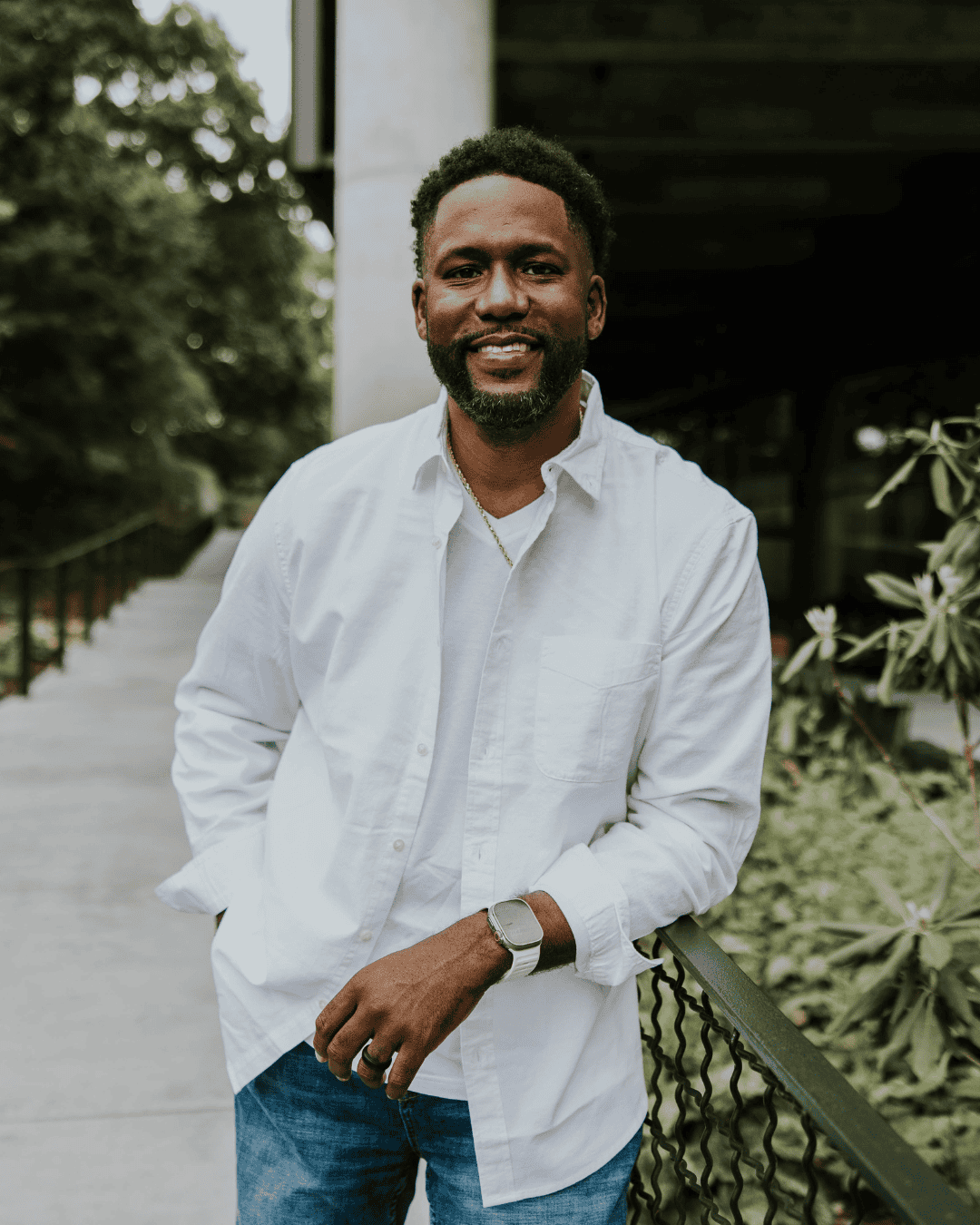 Dr. Terence Lester is a storyteller, public scholar, community activist, and author. He founded Love Beyond Walls, a nonprofit committed to raising awareness about poverty and homelessness, and teaches public policy and social change at Simmons College of Kentucky. His latest book, From Dropout to Doctorate: Breaking the Chains of Educational Injustice (IVP, 2025), traces his journey from high school dropout to PhD and issues a bold call for equity. Through his life and writing, he uses narrative, policy insight, and faith to challenge systems that leave people invisible and to inspire practical change. He is author of the four-part CSA series on Economic Injustice.
 Dr. Emiola Oriola Jr. is a scholar-practitioner, educator, and storyteller whose work explores belonging, dialogue, and what it means to remain human in a fractured world. His scholarship and leadership focus on global citizenship, experiential learning, cross-cultural engagement, and organizational culture, helping people and institutions cultivate deeper forms of connection and responsibility. He holds a Doctorate in Education from the University of Pittsburgh, where his research examined communal dialogue, out-of-school learning, and holistic human development. Professionally, Dr. Oriola has led initiatives centered on dialogue and belonging, including serving as the inaugural leader of the Office of Interfaith Dialogue and Engagement and the Office of Inclusion and Belonging at the University of Pittsburgh. He has also served in executive leadership at Vibrant Pittsburgh and currently serves on the boards of the World Affairs Council of Pittsburgh and ARYSE, supporting global engagement, refugee support, and intercultural learning. Through teaching, immersive learning experiences, and public scholarship, he helps people and organizations navigate questions of identity, justice, and community with greater compassion and humanity.