 (Editor’s Note: Throughout this series, we’ve explored what people carry with them into church, how Scripture and church history envision communities of refuge, and why justice is essential to building trust and belonging. In this concluding installment of “Becoming a Safe Church: Cultivating Communities of Healing, Justice, and Belonging,” Liz Cooledge Jenkins offers 10 practical ways churches can embody these values—from practicing transparency and honoring healthy boundaries to welcoming honest questions and pursuing healing together. Read Part 1, Part 2, and Part 3 to explore the full series.)
In this series, we’ve explored the different kinds of baggage people carry when they walk into church. We’ve looked to the Bible and church history to find models of individual and communal healing through a consistent focus on acceptance, hospitality, and affirmation of the dignity and agency of all people. And we’ve seen why a wholehearted pursuit of justice is essential in any faith community that wants to be a place of safety.
Given all this, we might wonder: How, specifically, can churches put these ideas about safety into practice? What might we change? What might we reconsider, think more deeply about, or do differently? What spiritual practices can we pursue together that might lead to personal and communal healing?
Practices That Build Trust
Of course, any list of such things will be incomplete. But I’d like to offer a few thoughts. In order to become safer churches, here are 10 things we can do:
1. Name the harm and hold perpetrators accountable.
For several of the millennials I spoke with, a church’s willingness to name the harms of racist justice systems, genocide, restrictions on women’s autonomy, and immigration systems that oppress rather than welcome went a long way toward helping them feel safe in a religious community. Silence on these matters felt like violence. From the pulpit to Bible study groups to community gatherings, churches and their leaders can clearly name the violence being done in our world.
And where harm is perpetrated within a community, churches can name this too, holding its perpetrators accountable. We can take seriously the need for repentance and repair. The practice of naming harm might ruffle some feathers, but it can also open up much-needed conversations. It can help churches become places that feel safe—for people directly impacted by the harm, for people who care about those who are impacted, and ultimately for us all.
2. Exercise transparency.
Groups of humans who engage deeply with one another will always have moments of tension, mistakes that need to be grappled with, and differences of opinion. There does not need to be any shame or secrecy around any of these things—or any other issues a church might be wrestling with.
Those of us who have experienced spiritual trauma are often especially perceptive of the secrets a faith community or its leaders hold. We do not expect church communities to be perfect or conflict-free; when a church and its leaders address issues with openness, this helps us know that they can be trusted. It might seem easier to try to keep some things quiet or cover them up. But if secrets are exposed—as they often are—the attempt at hiding them may break people’s trust in a way that will be difficult to repair.
3. Actively work to dismantle white supremacy as it shows up in our communities.
For white-dominated or multiracial churches, becoming a safe community for all people means that we are actively working to uproot racism in all the forms it might take, including among us and within us. This includes intentionally listening to and learning from Black theologians and other Black thinkers. As Ally Henny writes,
“Racism is some white Jesus nonsense. For centuries, Black people have chosen to worship a God who promises freedom from oppression.”[1]
Non-Black Christians can learn from the Black Christian tradition’s historical commitment to justice.
As individuals and as communities, we can deliberately engage in what therapist and trauma specialist Resmaa Menakem calls the process of “separating whiteness from supremacy.”[2] Menakem explains,
“You have the power to stop intergenerational and historical trauma in its tracks, and to keep it from spreading from your body into others. Above all, you have the power to heal. But first you have to choose to heal.”[3]
White supremacy is not going away on its own. It takes sustained unpacking, examination, repentance, change, and healing. Without these things, we continue to pass on our own wounds, especially from white people to people of color, and our communities are not safe.
4. Welcome those who speak up for justice.
Kathy Khang writes,
“There is a chance that your community will experience tension and confusion as you experiment with raising your voice.” But, she continues, “Speaking up doesn’t increase division. It brings injustice and sin to the forefront. Speaking up can be an avenue of truth and healing.”[4]
Churches that are safe spaces to grow and heal recognize this. They make it a habit to listen to the voices speaking up among them—and in their broader communities—on behalf of justice. They choose not to be threatened by these voices, but to welcome the chance to learn and grow. For those who, like some of the people we met in part 1, have spoken up in previous faith communities but found themselves dismissed, belittled, or edged out of positions of influence, a church that humbly learns from critique can feel like a healing balm.
5. Take a nuanced view of forgiveness.
The Christian practice of giving and receiving forgiveness can be beautiful and life-giving. But if it is practiced without centering the emotional and psychological needs of those who have been harmed, it can feel like another weapon aimed against already-oppressed people.
People who have experienced harm in religious settings might find Emily Joy Allison’s words healing:
“When and if you forgive is up to you. It is a gift you give to yourself, not a tax you pay for being abused in a Christian community.”[5]
Forgiveness should never be forced, coerced, or expected. Churches can support people in forgiving if or when they are ready to do so and offer acceptance and non-judgment when they are not.
Taking a more nuanced view of forgiveness—one that focuses on the safety of those harmed—helps create an environment where everyone knows that everyone’s dignity is honored.
Practices That Foster Healing
6. Reexamine how we talk about God.
When it comes to making a faith community feels safe, the language and images we use to talk about God matter. As Christena Cleveland writes,
“Our idea of God determines who is sacred and who is profane, whose life matters and whose does not, whose testimony is believable and whose is not, who is a fugitive and who is not, and who is safe and who is not.”[6]
If we want all people to feel safe in our churches, we can practice speaking of God in expansive ways, intentionally bringing God-talk and God-images into our church services that challenge any implicit idea of God’s maleness or whiteness. In doing so, we make room for people of all genders and races to know that God identifies with them and is for them, to know that their safety matters to God and to the community, to be recognized as God’s image-bearers fully.
7. Engage in embodiment practices.
We carry trauma in our bodies, and in order to heal, we need to engage our whole beings. As Prentis Hemphill writes,
“For healing to take place, for it to be felt, for it to root, remake, and rearrange us, it has to happen not only in the realm of our thinking, but in the soil of our bodies. Healing has to be embodied.”[7]
Churches can make space for this and lead in practices that help us do this.
We can engage, for example, in creative activities together, encouraging people to make art and share it with the community. We can engage in practices of rest, like those Tricia Hersey leads in her Nap Ministry and writes about in Rest Is Resistance. We can engage in collective grief practices, opening up doors toward healing. We can engage in practices that reconnect us with Earth—“a consistently proven way to soothe the effects of trauma on our minds and bodies,”[8] as Shannon K. Evans writes.
Churches that make room for embodiment practices live out their commitment to being places of transformation, healing, safety, and care.
8. Avoid language that pressures conformity.
One pastor I talked with said,
“I try to use the language of invitation as much as I can—because I am not going to force a meditation practice, communion, or any other ritual on someone.”
Language that uses any sort of control, coercion, pressure, or shame to try to get people to do particular things (or avoid other things) does not create an environment of safety.
For all of us, and especially for those who have been harmed by overly-controlling faith communities in the past, we need communities who can encourage and accompany us as we seek God in ways that resonate with us—ways that might look very different for each person. Churches can make room for all the different ways people are wired, all the different ways we connect with God and one another. Safe communities embrace this diversity as a great strength rather than trying to squeeze people into one particular mold of what it looks like to follow Jesus.
9. Encourage and affirm healthy boundaries.
The first time my current pastor asked if I wanted to lead a small group, I said, “No, thank you; that feels more stressful than life-giving to me right now.” I remember feeling unsure how this would be received. And I remember how much it meant to me when my pastor immediately and unhesitatingly accepted my “no.” She did not want me to engage in church in any way that did not feel life-giving.
This is what safety looks like. Faith communities that serve as places of safety offer a variety of opportunities for people to connect, engage, or serve in different ways, but those opportunities never feel required or expected. Whatever churches invite people to consider, try, or do, it is crucial that each person feels completely free to opt in or out as they choose. Church communities can be places where healthy boundaries are affirmed, not crossed or challenged or bent at every possible point, as they sometimes are.
10. Welcome the questions, welcome the deconstruction.
Kaitlin B. Curtice reflects,
“Every few years, it seems there are folks within Christianity who rise up and declare that deconstruction is harmful and only leads people away from their churches into an unsafe world.”
But, she continues,
“folks who say this have little faith in those of us who have left the institutional church to find Creator where Creator has always been—everywhere, especially in the places the church told us God was not.[9]”
Many of us in my generation resonate with this. If we want to be involved in faith communities, still, we want to be involved in faith communities that welcome the deconstruction process: the seeking, the searching, the unraveling. The questions, the transformation, the sorting, the keeping, the uprooting. The finding God wherever God might be found.
Churches that feel safe are ones that encourage all of this, recognizing it as a spiritual journey that is authentic and good. They embrace questions as a sign of honest, thoughtful engagement. Safe churches are places where we all encourage one another to find our Creator everywhere, places where this is seen as a beautiful thing.
With these practices in mind, churches can become places where wounds are healed rather than deepened, trauma is addressed rather than denied or minimized, and people who carry all sorts of baggage from previous faith communities can set down their burdens and find rest.
People who still have hope in the local church can find their hope affirmed and strengthened rather than beaten down again. And church leaders or members who want to sustain and grow a vibrant community can refocus on what matters most: following faithfully in the tradition of the prophets, Jesus, the Early Church, and the streams of the church that have pursued justice and well-being for all people through the ages.
We become more just communities and safer communities at the same time.
Endnotes
[1] Ally Henny, I Won’t Shut Up: Finding Your Voice When the World Tries to Silence You (Baker Books, 2023), 84.
[2] Resmaa Menakem, My Grandmother’s Hands: Racialized Trauma and the Pathway to Mending Our Hearts and Bodies (Central Recovery Press, 2017), 271.
[4] Kathy Khang, Raise Your Voice: Why We Stay Silent and How to Speak Up (IVP, 2018), 66.
[5] Emily Joy Allison, #ChurchToo: How Purity Culture Upholds Abuse and How to Find Healing (Broadleaf Books, 2021), 176-7.
[6] Christena Cleveland, God Is a Black Woman (HarperOne, 2022), 15.
[7] Prentis Hemphill, What It Takes to Heal: How Transforming Ourselves Can Change the World (Random House, 2024), 48.
[8] Shannon K. Evans, The Mystics Would Like a Word: Six Women Who Met God and Found a Spirituality for Today (Convergent, 2024), 73.
[9] Kaitlin B. Curtice, Living Resistance: An Indigenous Vision for Seeking Wholeness Every Day (Brazos Press, 2023), 29.
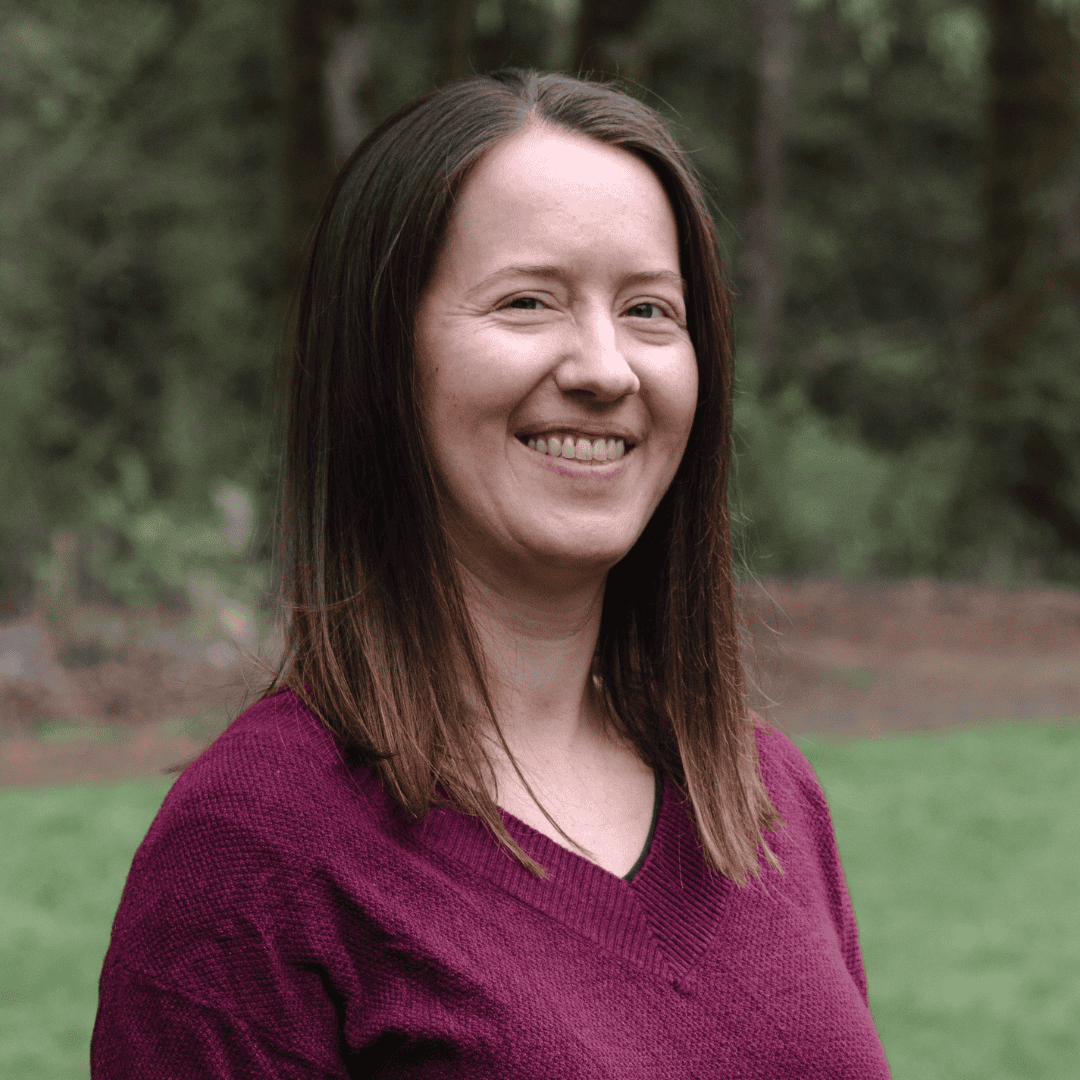 Liz Cooledge Jenkins is a Seattle-based writer, preacher, former college campus minister, and the author of Nice Churchy Patriarchy: Reclaiming Women’s Humanity from Evangelicalism. She writes regularly at growingintokinship.