When the News Breaks Your Heart
By Melanie Mock
Two days after the United States began bombing Iran, I dropped my oldest son at the airport in Portland, OR. He was headed to National Guard boot camp, and will be gone for 10 weeks.

By Melanie Mock
Two days after the United States began bombing Iran, I dropped my oldest son at the airport in Portland, OR. He was headed to National Guard boot camp, and will be gone for 10 weeks.
(A Storytellers Collective Feature)
In neighborhoods across the United States, cycles of violence, incarceration, and disinvestment have shaped generations. Yet within these same communities, there are also stories of resilience — stories that challenge us to imagine what becomes possible when people refuse to be defined by their worst act, and when communities commit themselves to the long work of repair and flourishing.

By David Swanson
I grabbed my phone and texted, “What do you think about the news from Venezuela?” It was Sunday morning, just hours after the U.S. launched a military strike in Caracas, the country’s capital and location of President Nicolás Maduro’s compound.

By Ben Norquist
We are told to reach for personal resets in January. We resolve to exercise more often, cultivate better habits, pray more faithfully, and so on. This annual ritual is predicated on the idea that we have the power to become better versions of ourselves through personal effort.

By Rohadi Nagassar
John the Baptist spots his cousin off in the desert distance and beckons with excitement:
“Look, the Lamb of God, who takes away the sin of the world!” (John 1:29)
John’s words are worthy of our attention, because he articulates the future vocation of Jesus in a single sentence — a vocation that has been lost to many contemporary Christians, particularly those who reduce salvation to merely “personal” experience.

By Amy Knorr
I can still feel my eyebrows arch when I think about the words my mother spoke to me during a rough patch as a (very) young adult.
“Amy, I don’t want you to suffer, but that is actually not my prayer for you.”
I’m pretty sure my response was something like, “Thanks a lot, Mom.” (Insert all the sarcasm of a late teenager.)
But she followed that declaration with words that have anchored me in every hard season since:
“I know you will walk through hard things.
By Daniel Yang
As Senior Director of Global Mission and Church Movements at World Relief, I work to equip churches and Christian organizations to embody the biblical mandate to welcome vulnerable immigrants and refugees. For years, I’ve seen congregations across the U.S.

By Laurie Nichols
Every powerful system has a way of telling its own story.
It tells us who matters, who gets to speak, and who should stay quiet. It rewards certainty and punishes nuance.

By Mark Glanville
Christmas Day is a celebration that Herod must not hear of — it is a whispered celebration. What would it feel like to celebrate Christmas with a whisper?
The dead of winter seems to welcome whispers.
Interviewed By CSA Staff
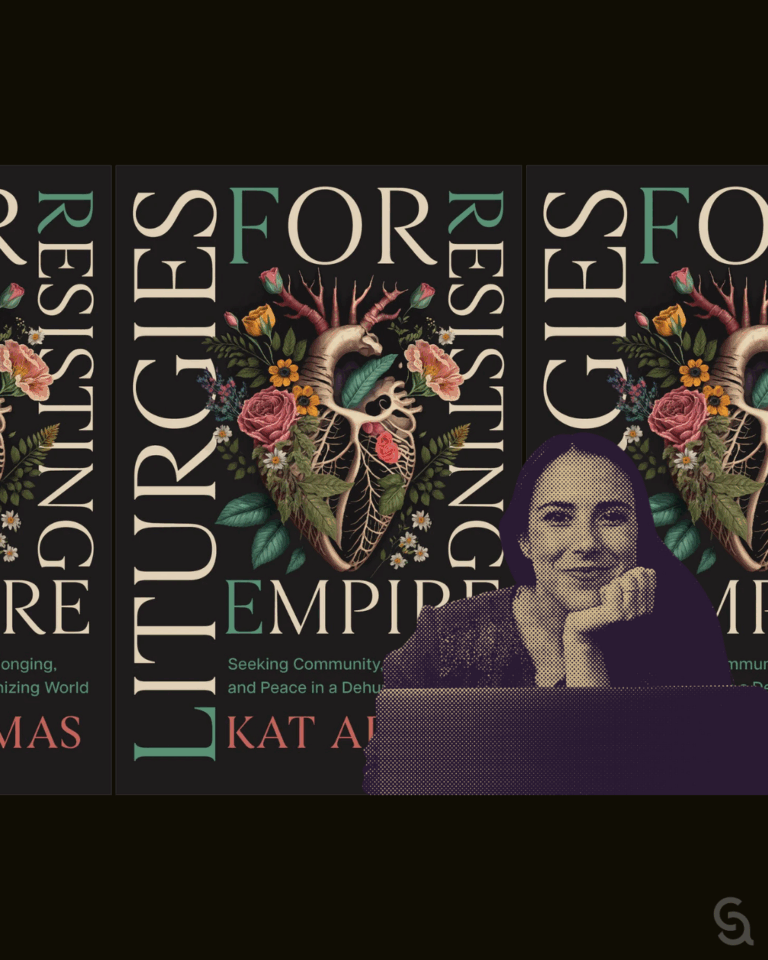
In a world shaped by invisible systems of control and conformity, the call to worship often looks like productivity, power, and performance. But what happens when we reclaim liturgy—not just as ritual, but as resistance?

By Christine Sine
I am currently in Australia visiting my family.
I love coming at this time of year — not only because it gives me a break from Seattle’s cold, rainy autumn, but also because November usually sits just before the Christmas rush.
By Liz Cooledge Jenkins
On January 21, 2025, Episcopal Bishop Mariann Edgar Budde preached at the presidential inauguration prayer service, and her words reverberated far beyond the walls of the National Cathedral.
Bishop Budde called our new leaders to build “the foundations we need for unity”: foundations that include “honesty,” “humility,” and “honoring the inherent dignity of every human being.” She called for mercy toward all people—and, particularly, mercy toward “the people in our country who are scared.” Toward queer and transgender people.
By Terence Lester, PhD
(Editor’s note: This is the final piece of our 4-part series on economic injustice. You can find Part 1 here, Part 2 here, and Part 3 here. In this final piece, Dr.
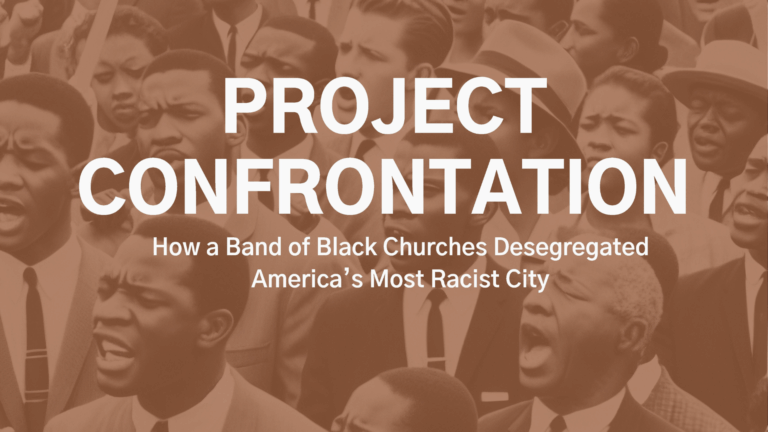
By CSA Staff
A new resource from CSA’s Racial Justice Institute and authors Andre Henry and Lauren Grubaugh Thomas
What does love look like in the face of injustice?
For many Christians, that question feels urgent and unresolved.
By Terence Lester, PhD
(Editor’s note: This is Part 3 of a 4-part series on economic injustice. You can find Part 1 here and Part 2 here. In this post, Dr. Terence Lester shows how compassion can grow into systemic change.)
____
In 2016, with the support of my family and board of directors, I launched a campaign called MAP16 (March Against Poverty) to walk from Atlanta, GA, to the White House to raise awareness about homelessness in the U.S.
By Rev. Dr. Mae Elise Cannon
(Editor’s note: We’re honored to welcome Rev. Dr. Mae Elise Cannon as a regular contributor to Christians for Social Action moving forward. Dr. Cannon is an author, scholar, and activist who has spent decades working at the intersection of faith, justice, and peacemaking in the Middle East.

By Terence Lester, PhD
(Editor’s note: This is Part 2 of a 4-part series on economic injustice. In his first post, Terence Lester exposes the spiritual and systemic crisis of “educational redlining” and calls the church to defend the futures of marginalized students.