
Practicing Moral Courage: Forming the Character to Love, Speak, and Act Faithfully (A Four-Part Series)
What does it mean to practice moral courage in a world shaped by fear, division, injustice, and uncertainty, and how do we sustain that courage for the long haul?
We live in a time when it can feel easier to retreat into our own circles, dismiss those who disagree with us, or grow discouraged by the slow pace of change. We see suffering and injustice around us, but knowing how to respond faithfully isn’t always simple. Even when we want to do what is right, fear, exhaustion, and the desire for certainty can shape our choices more than we realize.
What does courage look like for followers of Jesus in a moment like this? And how do we become people who are capable of practicing it, not only when the stakes are high, but in the ordinary decisions that shape our relationships, communities, and public witness?
In this four-part series, Dr. Terence Lester and Dr. Emiola Oriola Jr. explore moral courage as an ongoing practice of Christian discipleship. Drawing on Scripture, history, lived experience, and their work alongside communities affected by injustice, they examine what it means to resist fear and othering, remain open to compassion and truth, stand with our neighbors, and stay faithful when the change we hope for is slow or difficult to see.
The series begins with the question of how we are formed. It then moves into how we encounter others, how we respond to injustice, and how we continue when the work remains unfinished.
Together, these four articles invite us to consider not only what we believe or what we are willing to do, but what kind of people we are becoming, and whether our lives reflect the courageous, compassionate way of Jesus.

Part 1: The Courage to Be Formed: Why Moral Courage Matters Now
Moral courage doesn't suddenly appear when we face a difficult decision. It develops over time, through the habits, relationships, and convictions that shape who we are. In the opening article, Dr. Terence Lester examines the influence of fear and othering on American public life and the church's witness. When political and cultural divisions encourage us to see certain people as threats or outsiders, how should followers of Jesus respond? Drawing on Scripture and examples of courageous people throughout history, Lester challenges Christians to consider whether our communities are forming people who will speak and act faithfully when doing so comes at a cost. He reminds us that courage isn't the absence of fear, but the willingness to refuse fear the final word.
Part 2: The Courage to Stay Human: Letting Compassion, Hospitality, and Truth Interrupt Us
We can know someone's politics, beliefs, or opinions without ever really knowing the person. And once we begin seeing people primarily through the categories we've assigned them, it becomes easier to dismiss their experiences, question their motives, or withhold compassion. In Part 2, Dr. Emiola Oriola Jr. explores what it takes to resist that tendency. Through the practices of compassion, hospitality, and truth, he invites readers to consider what happens when another person's humanity interrupts our assumptions and certainty. Drawing on the example of Jesus, Oriola challenges us to make room for genuine encounter, including with people whose lives and convictions differ from our own. Moral courage, he argues, sometimes means allowing ourselves to be changed by the people we meet.
Part 3: Can a Church Be Safe Without Justice? Why the Safety of One Person Is Bound Up with the Safety of Everyone
Compassion matters, but what happens when caring about our neighbors requires more than meeting an immediate need? In Part 3, Dr. Terence Lester explores the movement from charity toward justice, examining why Christian love must also pay attention to the policies and systems that shape people's lives. Drawing on his work with Love Beyond Walls and the examples of advocates including Dr. Martin Luther King Jr., Ida B. Wells, and Fannie Lou Hamer, he challenges readers to consider how they use their voices, resources, and influence. Lester also makes an important distinction between speaking for people and standing with them. Genuine solidarity begins with listening, taking seriously the experiences of those closest to injustice, and allowing their voices to lead. This article asks what happens when compassion becomes a commitment to act, even when speaking up or challenging injustice comes at a personal cost.
Part 4: The Courage to Remain: Living Faithfully for the Long Haul
What happens when we've prayed, advocated, worked, and waited, but the change we long for still hasn't come? How do we remain faithful when the story is unfinished, and when we may never see the outcome we hoped for? In the final article, Dr. Emiola Oriola Jr. explores the difficult experience of deferred hope. Drawing on the lives of Simeon and Anna, the witness of Hebrews 11, and the image of a tree planted by streams of water in Psalm 1, he reflects on the spiritual practices that sustain us through disappointment and uncertainty. Rather than offering easy assurances that everything will work out as we expect, Oriola invites us to consider a different understanding of faithfulness. We cannot always control the outcome, and the fulfillment of our hopes cannot be the only measure of whether our lives have mattered. The courage to remain is the courage to keep loving, praying, pursuing justice, and becoming faithful people, even when we don't know how the story will end.
Read Online or Download the Series
Explore the complete four-part Practicing Moral Courage series in our interactive guide below, featuring all four articles along with key themes, discussion prompts, guided reflection questions, practical ways to take action, and a closing prayer.
Created for individuals, churches, classrooms, and small groups, this free resource invites readers to consider how moral courage is formed through everyday choices, and what it means to practice compassion, stand alongside those experiencing injustice, and remain faithful and hopeful when change is slow.
Flip through the guide below, or download the free PDF to read and share.
Read the Interactive Guide
Click the cover to begin, then use the arrows to flip through the pages.
About the Authors
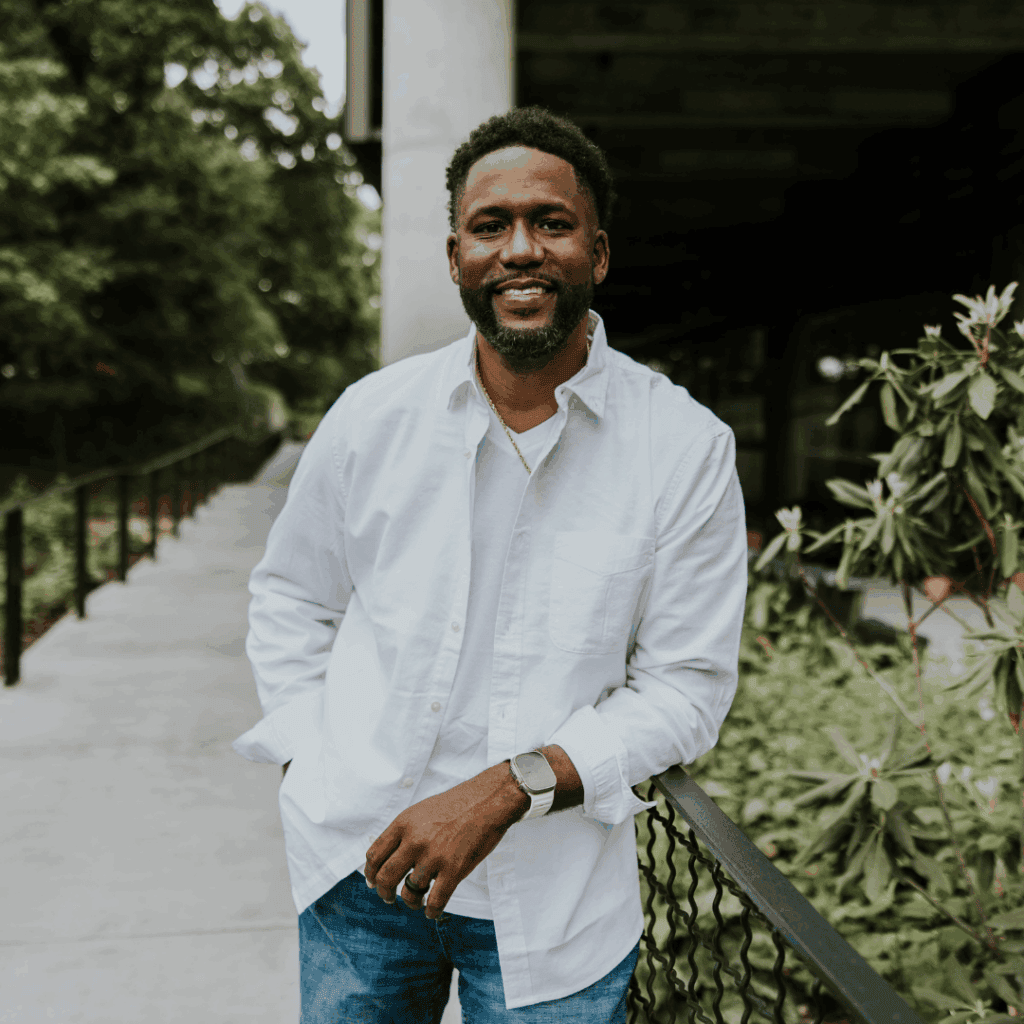
Dr. Terence Lester is a storyteller, public scholar, community activist, and author. He founded Love Beyond Walls, a nonprofit committed to raising awareness about poverty and homelessness, and teaches public policy and social change at Simmons College of Kentucky. His latest book, From Dropout to Doctorate: Breaking the Chains of Educational Injustice (IVP, 2025), traces his journey from high school dropout to PhD and issues a bold call for equity. Through his life and writing, he uses narrative, policy insight, and faith to challenge systems that leave people invisible and to inspire practical change. He is author of the four-part CSA series on Economic Injustice.
Dr. Emiola Oriola Jr. is a scholar-practitioner, educator, and storyteller whose work explores belonging, dialogue, and what it means to remain human in a fractured world. His scholarship and leadership focus on global citizenship, experiential learning, cross-cultural engagement, and organizational culture, helping people and institutions cultivate deeper forms of connection and responsibility. He holds a Doctorate in Education from the University of Pittsburgh, where his research examined communal dialogue, out-of-school learning, and holistic human development.
Professionally, Dr. Oriola has led initiatives centered on dialogue and belonging, including serving as the inaugural leader of the Office of Interfaith Dialogue and Engagement and the Office of Inclusion and Belonging at the University of Pittsburgh. He has also served in executive leadership at Vibrant Pittsburgh and currently serves on the boards of the World Affairs Council of Pittsburgh and ARYSE, supporting global engagement, refugee support, and intercultural learning. Through teaching, immersive learning experiences, and public scholarship, he helps people and organizations navigate questions of identity, justice, and community with greater compassion and humanity.